Showing posts with label Jaggery. Show all posts

Tuesday, 16 September 2008

Banana Blossom Patrode: Try Something New and Delicious!

Photobucket
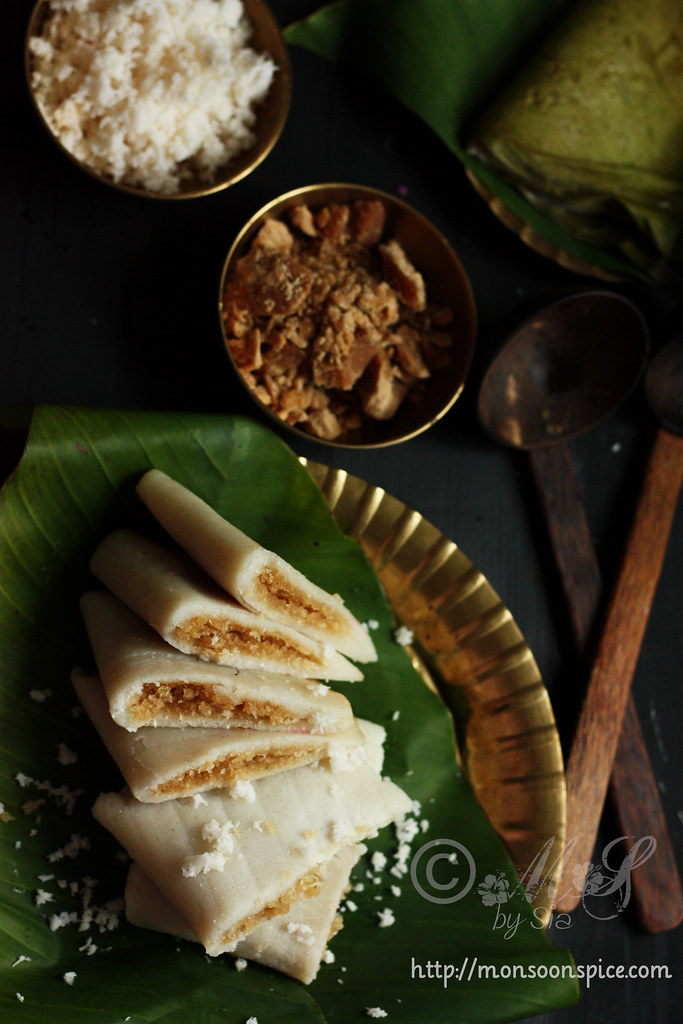
Banana Blossom Patrode

Mangaloreans love two things, one coconut and another curry leaves. Between these two there is another vegetable/fruit which is indispensable to us and it's plantain or banana. Most of the houses in South Canara, even with small garden, will have one coconut tree and a banana tree along with wildly grown Curry plant swinging to cool evening breeze. I grew up with three banana plants in the backyard and hundreds of them in our estate. So it is no surprise that I have tasted almost everything cooked from its stem, fruit and even its flower/blossom using banana leaves as organic and bio-degradable plates.

I have had tasted many recipes using Banana Blossoms ranging from simple stir-fries to delicious Chutneys cooked by my Amma, aunts and Ajji. Our recent summer trip to India I was first time introduced one very novel dish by my mother in law and that dish is Banana Blossom Patrode. Last year during casual chat with my MIL she mentioned about making Patrode/Patra using Banana Blossom and like any foodie I was totally intrigued and couldn’t wait to try it. In spite of being really busy with the last minute wedding preparation of my BIL’s, my Atte managed to cook this for me. And to my surprise it turned out to be one of the very best foods I have ever tasted. I have been craving for this Patrode ever since we came back from India but never got around to make this as Banana Blossom is not easily available at my neck of woods and I was not very sure if I will be able to manage chop them in a right way and cook without any problem.

During our recent trip to down under (nope, not Aussie ;) I couldn’t resist from buying two banana blossoms in hope of making patrode. And boy, did I manage to cook it beautifully or what!!! Traditionally Patrode is made using Taro/Colacasia Leaves by spreading spicy paste on their surface, rolling and then cooked to perfection using a steamer. Same spicy batter is used here but banana blossom is used in place of taro leaves and no rolling is involved. This was the first time I have ever used Banana Blossom in cooking without any help from my mother or MIL and I was really proud with the end result. Except for laborious cleaning and chopping of banana blossom, this is really a very simple recipe and can be cooked very quickly. To top it all, it can be simply stored in a freezer for months together. Banana Blossom Patrode is spicy with mild note of sweet and tanginess from dry red chillies, tamarind, coconut and jaggery used; a taste which is hard to resist and even harder to forget. Without further delay let me give you step by step instructions on how to make Banana Blossom Patrode and please make sure that you go through the instructions carefully before cooking it. I am sening it to this week's Weekend Herb Blogging guest hosted by Zorra & initiated by dear Kalyn.

Photobucket
Banana Blossom & Florets


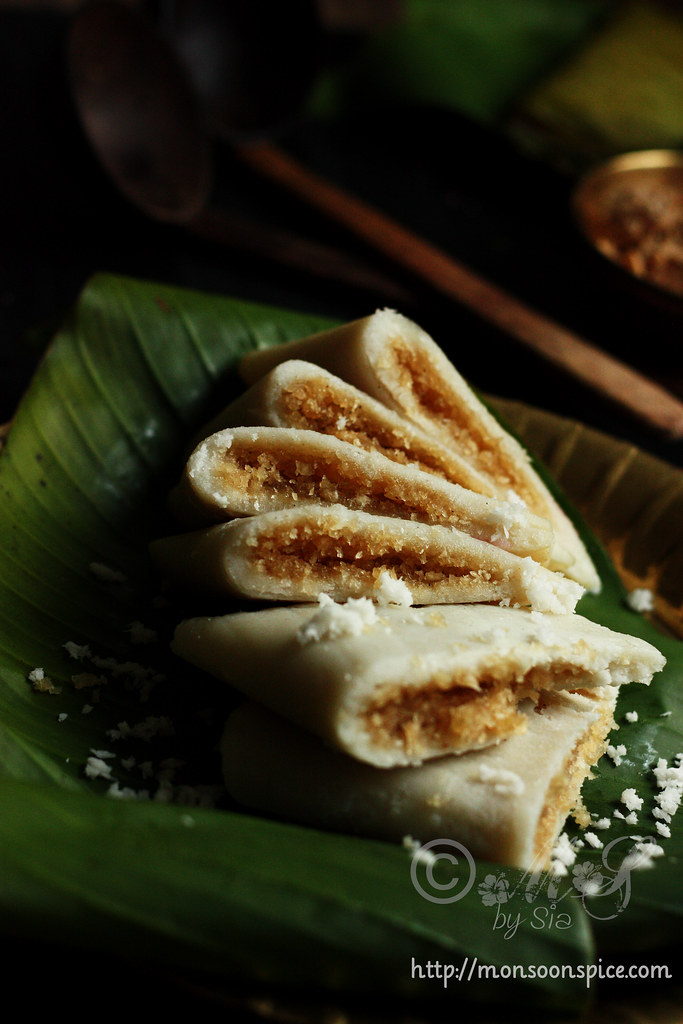
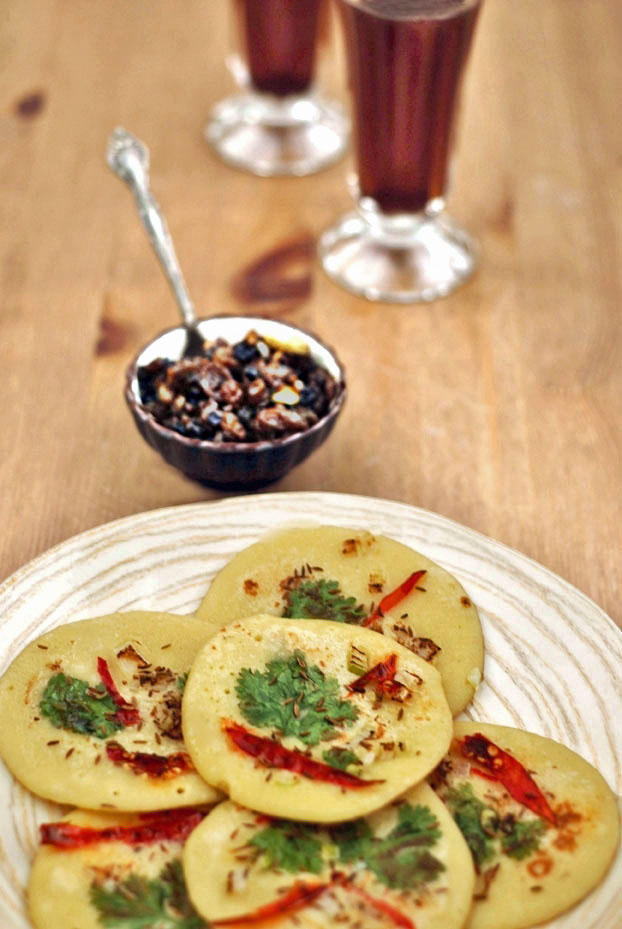
Banana Blossom Patrode (Steam cooked & Pan fried Spicy Rice Cakes made using Banana Blossoms)
Prep Time: 15-20 mins
Cooing Time: 20-30 mins
Serves: 4-6
Recipe Source: MIL
Ingredients:
1 Banana Blossom
1 large Onion, finely chopped
2-3 tbsp Oil, preferably Coconut Oil
1 tsp Turmeric Powder
10-12 Curry Leaves, finely chopped

Grind to thick Batter (Dosa batter consistency):
2 cups Rice, washed and soaked overnight for about 8-10 hrs
½ packed cup Coconut, fresh/frozen/dried
1 tbsp Coriander Seeds
½ -¾ tbsp Jeera/Cumin Seeds
Medium lime sized Tamarind Pulp (Adjust acc to taste)
6-8 Dry Red Chillies (Adjust acc to taste)
1 inch cube Jaggery
Salt to taste
Photobucket
Banana Blossom Patrode- Before Steaming

Method:
Drain water from rice and grind it to smooth batter by adding water and all the ingredients listed above. Make sure that you have little thick batter than that of dosa batter consistency. Adjust tamarind, chillies and jaggery according to your preference.
Now comes the little tricky bit of chopping the banana flower. First apply 1 tbsp of coconut oil to your palm and rub well. Applying oil to your palms help in preventing the sticky sap oozing from banana blossom to your hand which leaves nasty black colour for few days. Remove the outer tougher covering and discard, around 2-4 outer tough skins. In my case I had to remove two outer skins. Don’t discard the florets. Now chop this banana flower and florets into very fine pieces.
Usually these chopped pieces are soaked in very sour butter milk to prevent from discolouring. In spite of doing so it discolours to some extent. So you can simply skip this step as we will be mixing them in the prepared batter.
Add 2-3 tbsp of Coconut oil and mix them well. This way you can easily separate layers which otherwise would be sticking to one another.
Now add this chopped banana flower, finely chopped onion, turmeric and chopped curry leaves to the ground batter and mix well.
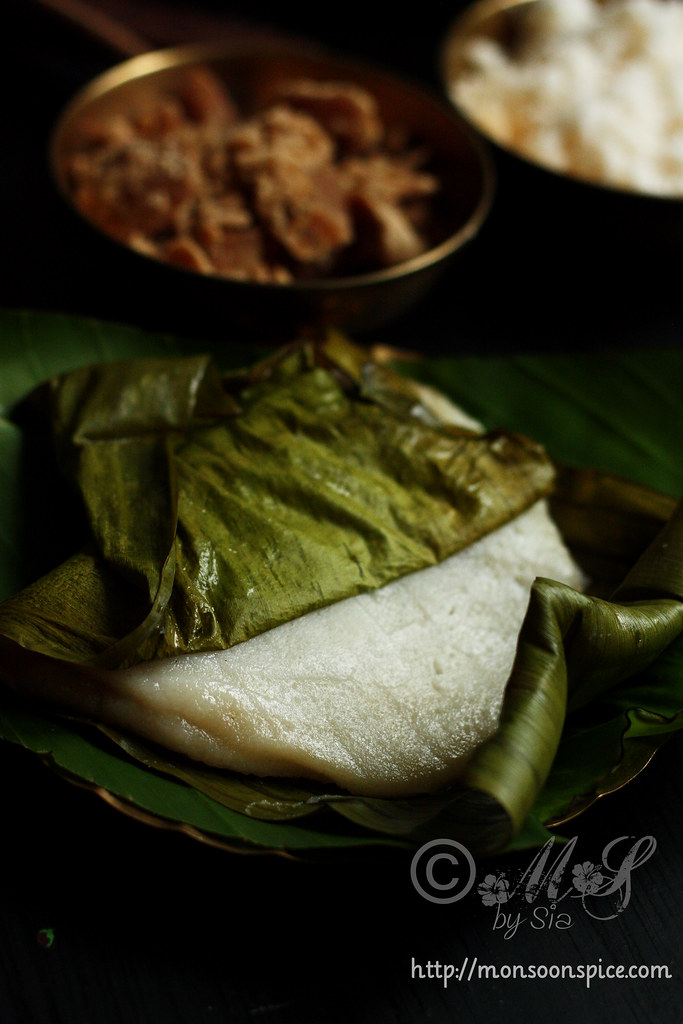
Here comes the important step of steaming. You can either use usual Idli stand or flat bottomed vessel and steam cook them in a streamer or pressure cooker without putting its weight. Or another best way is to wrap it in banana leaves and steam cook it, same way as Genasale. I have used Tatte-Idli Stand. Grease the plates with oil and pour the batter with ladle into each plate. Place each plate back in the stand and steam cook in pressure cook or Idli steamer or Steamer for about 20-30 minutes till cooked properly.
Let it cool for 5 minutes before opening the lid. Remove cooked Patrode from plates and cut them into desired shapes. You can serve it with Ghee/Coconut oil or proceed to next step.
Heat tawa/griddle and place cut Patrode pieces on it. Add a tsp of Oil/Ghee for each piece and cook on both the sides for about 2 minutes till nice brown spots starts to appear on the surface.
Serve it immediately with or without any chutney or plain tomato ketchup and enjoy. It tastes best when roasted with Ghee/Coconut Oil.

Photobucket
Banana Blossom Patrode- After Steam cooked and Pan fried


Notes:
Banana Blossom or Banana Heart grows on the end of long stem holding cluster of Bananas and this deep cherry red blossom is id considered as one of the delicacy in southern Indian states, both when cooked or eaten raw. Banana blossom has layers of tightly packed reddish flaps which wrap around rows of creamy florets with black stigma. Usually this black, hard stigma and transparent covering on every floret is removed as they are difficult to cook. I skipped this step as the steaming process helps in cooking them thoroughly. You can go ahead and remove them or just leave them as they are.
Try to stick to the amount of Tamarind and Jaggery used as they helps in mellowing the bitter taste of Banana Blossoms and spicy red chillies. If using old tamarind, reduce the quantity by ¾ th of the original quantity.
To steam cook, add about water depending on the size of pressure cooker you use. In my case I had to add about 2½ cups of water (about 1½-2 inches). Place the Idli stand and cover the lid without putting its weight and steam cook for about 20-30 mins.
The left over Patrode pieces can be stored in zip lock bag once they are completely cooled and can be frozen for about 1-2 months in freezer. When needed heat then in microwave (don’t thaw) and then roast them on tawa with ghee/oil and serve.

Continue Reading...

Monday, 15 September 2008

Dudhi-Aloo Masala: What's Your Favourite?

Photobucket
Dudhi-Aloo Masala
6 months back: Mushrooms
4 months back: Bell Peppers
2 months back: Baby Corns
A month back: Fenugreek Leaves
At present: Dudhi/Sorekai/Bottle Gourd
Well, these were the vegetables which ruled our kitchen in the past few months. As I have a short span of memory, I can’t think beyond 6 months as which vegetables played centre role in everyday cooking. You see there is nothing normal in our household, ahem, except us if we can say so;) If we are to fall hard for particular vegetable, we end up cooking it almost day and night till we are tired of it. This obsession of our lasts at the maximum for 2 months and then again we fall in love with some other vegetable and the saga continues.

Our latest obsession is Bottle Gourd and poor gourd is undergoing various operations in our lab, err, kitchen for the past 2 months. Curry, stuffed, fried, chutney, dessert etc etc… you name it and we have tried them all and we are still in love with this unpretentious squash. What I love about this veggie is the way in which it simply compliments and blends with any other vegetable or lentils or spices and yet leaves lasting impression on your taste buds.

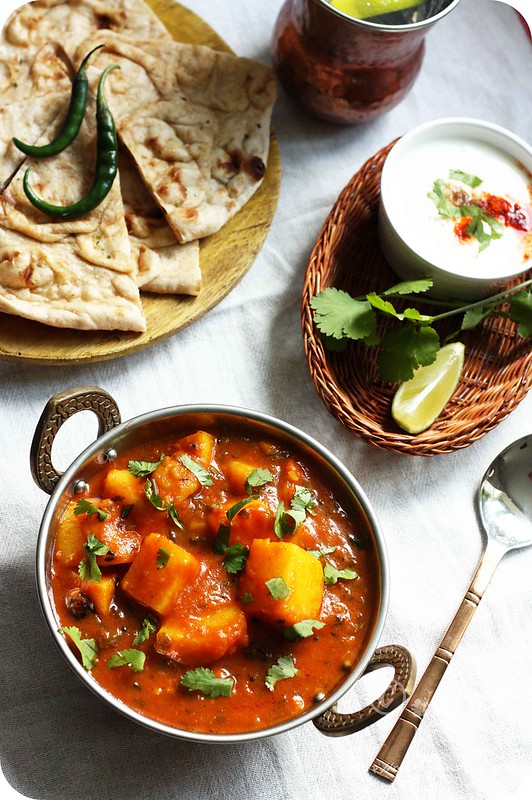
This time I decided to pair Dudhi with very much loved Tuber and cook in very delicious tomato gravy. Not wanting to cook with usual Garam Masala, I opted for Sambar Powder giving it a Southern Indian make-over. And it turned out to be one of the most delicious curries I have ever made. I chose to cook it in a pressure cooker to save energy as well as time and within no time this curry was ready to serve with Chapatti out from freezer. Make it in a large quantity as it tastes best on the next day when all the flavours blend well. Cook it little or more but cook for sure as this is one simple yet delicious treat which sure to please you and your loved ones. Off this goes to Lore’s Original Recipe event where she invites the bloggers to send your own creations.

Photobucket
Dudhi-Aloo Masala


Dudhi-Aloo Masala (Bottle Gourd & Potatoes simmered in tangy Tomato Gravy)
Prep Time: 10 mins
Cooking Time: 20-30 mins
Serves: 4-6

Ingredients:
1 medium Bottle Gourd/Sorekai/Lauki, peeled, deseeded and diced into 1 inch cubes
2 medium Potatoes, peeled and diced to 1 inch cubes
1 large Onion, finely chopped
1 can chopped Tomato/3 large Tomatoes, roughly chopped
1 inch Ginger, finely chopped
2-3 Garlic Cloves, finely sliced
1-2 tbsp Sambar Powder (adjust acc to taste)
½ tsp Turmeric Powder
1 tsp Kashmiri Chilli Powder (Adjust acc to taste)
1 tbsp Jaggery/Brown Sugar
1 tsp Tamarind Paste
2 tbsp Coriander Leaves, finely chopped
Salt to taste

For Tempering/Tadka:
1 tsp Mustard Seeds
½ tsp Jeera/Cumin Seeds
1 Dry Red Chilli, halved
¼ tsp Hing/Asafoetida
Few Curry Leaves
1 tbsp Oil
Photobucket
Dudhi-Aloo Masala

Method:
Heat oil in a pressure cooker and add mustard seeds. When it starts to pop and splutter add cumin seeds, dry red chilli, hing and curry leaves. Sauté on medium flame till jeera turns light brown.
Now add finely chopped onion, ginger and garlic and sauté till onion turns light golden brown, about 3 mins.
Mix in sambar powder and sauté it for 30 seconds. Add chopped tomatoes and cook till it turns pulpy, about 3 mins.
Add 3-4 cups of water, turmeric powder, jaggery, chilli powder and tamarind paste. Increase the heat and bring the water to boil, about 3 minutes.
Mix in cubed potatoes and bottle gourd and reduce the heat to medium. Cover and cook for about 12-15 minutes or 2 whistles till the vegetables are cooked to tender.
Once the pressure is released, open the lid and mix in finely chopped coriander leaves. Serve it hot with Poori, Chapatti or steamed Rice and enjoy. It tastes better the next day.

Notes:
Substitute Sambar Powder with 1- 1½ tsp Garam Masala for different flavour.
Same way, you can also substitute Tamarind with Amchur/Dry Mango Powder.
Replace Bottle Gourd with Zucchini/Courgette or Yellow Cucumber or any other Squash for different taste.
If you don’t have a pressure cooker, make sure that you use cooked potatoes instead of directly adding raw one as cooked ones will reduce the time in cooking. And also make sure you chop the vegetables to bite sized pieces for fast cooking.
This curry tastes superb the next day. So make sure you have cooked enough to have it on next day.

Continue Reading...

Thursday, 21 August 2008

Serving Crazy with Lauki & Kala Channa Curry

Photobucket
Lauki-Kala Channa Curry

Have you read Amulya Malladi’s “Serving Crazy with Curry”? It is a story of protagonist, Devi, who is fired from her job at Silicon Valley and is suffering from a miscarriage. Tired with the way her life is leading Devi attempts to commit suicide and consequently is brought to her parents' home to recuperate and be looked after. The novel describes the tensions and frustrations, triumphs and tribulations within Veturi family. What happens next is nothing less of a Bollywood movie. After moving to her parents home Devi refuses to talk with anyone and channels all her emotions into cooking elaborate meals. She sprinkles more chilli when she is angry, cook sour food when she is sad and she churns sweets when she is happy. She uses unusual ingredients, as in non-traditionally Indian ones and yet succeeds in cooking extraordinary dishes that pleasantly surprises her family. What happens in the end is something you need to read yourself.

Although I am not much impressed with the novel, I enjoyed reading Devi’s bold character when she takes in charge of kitchen and starts to appreciate her mother who otherwise was portrayed by her as nosy, intrusive and Desi inspite of spending half of her life in other part of the globe. It is Devi’s cooking which prompts her family to initiate honest conversation with one another making them closer than ever before. I would recommend this novel to anyone who is interested in reading something different and the bonus is every chapter ends with Devi’s culinary creations.

Few days back I was in a mood to create my own curry instead of following some recipe book or something which we had already tasted. The result was this delicious Lauki-Kala Channa Curry. Instead of adding cubed Bottle Gourds to curry base and cooking it, I sliced them to half-moon discs and pan fried them in batches till they turned golden brown. Then I simmered them in tangy and spicy tomato gravy till they were cooked to perfection. Don’t be shocked to see unusual use of ingredients like Curry leaves used in almost all the South Indian recipes and Kasuri Methi which adds extra flavour for any North Indian dish. And there are also tamarind, jaggery and garam masala. I used Kala Channa to much loved Kabuli Channa as I like its rustic and earthy flavour and it beautifully complimented the Bottle Gourd. But what I loved the most is the way in which all these ingredients blend together harmoniously and deliver extraordinary taste which tickled our taste buds. There is nothing like feeling of ecstasy when you create something from scratch and it is much appreciated and loved by your loved ones. Pure bliss!
This recipe is on its way to Lore's Original Recipe event.


Lauki-Kala Channa Curry (Bottle gourd and Black chickpeas cooked in spicy and tangy Tomato gravy)
Prep Time: 10 mins
Cooking Time: 30 mins
Serves: 4-6
Ingredients:
1 large Onion, finely chopped
1 medium Bottle Gourd (approx 4-5 cups)
1 can Black Chickpeas or 1 cup Dry Black Chickpeas cooked in pressure cooker
1 large Potato, cooked, peeled and roughly mashed
1 can Chopped Tomatoes or 3 Large Tomatoes, pureed
1 tbsp Kasuri Methi/Dried Fenugreek Leaves (Optional but recommended)
½ tbsp Jaggery/Brown Sugar (to balance the tartness of Tomatoes)
1 tsp Tamarind Paste (Adjust acc to taste)
1 tsp Garam Masala
1 tsp Kashmiri/Deghi Chilli Powder (Adjust acc to taste)
¼ tsp Turmeric Powder
1 tbsp Oil
Salt to taste

For Tempering:
½ tbsp Oil
½ tsp Jeera/Cumin Seeds
½ tsp Mustard Seeds
¼ tsp Hing/Asafoetida
Few Fresh Curry Leaves
Photobucket
Bottle Gours, Kala Channa & Tomatoes

Photobucket
Bottle Gourd Slices -Before & After Pan Frying

Method:
Trim the ends of Dudhi/Lauki/bottle gourd and peel it with a vegetable peeler. Slit it length-wise in middle so that you are left with two long pieces. With a help of a spoon, scoop out the seeds and the surrounding spongy mass carefully so that you are left with two dudhi ‘boats’. I left the seeds as they were very tender. Cut them into 1 cm slices as shown in the picture.
Heat a tbsp of oil in a flat pan and arrange bottle gourd slices so that they fir in single layer. Cook them on both the sides till they turn golden brown in colour and place them in a kitchen towel till required. Do it in batches so that you have evenly fried bottle gourd pieces. This step is purely optional. Skip this step if you wish.
Heat ½ tbsp of oil in a pan and add mustard seeds to it. When it starts to pop and splutter, add hing, cumin and curry leaves. Sauté it on medium flame till cumin starts to brown, about 30 seconds.
Mix in finely chopped onion and sauté it on medium flame till it turns golden brown, about 2 mins. Now add turmeric powder, red chilli powder, kasuri methi and garam masala and sauté it on low flame for about 30 seconds.
Pour in pureed tomatoes and mix well. Add jaggery and tamarind and mix well. Cook this at medium heat for about 2-3 minutes, stirring occasionally.
Add cooked kala channa, fried dudhi and mashed potatoes and mix well. Mix in salt to taste and add about cup of water. Simmer and cook the curry, stirring occasionally, for about 15-20 mins till dudhi is cooked properly and flavours blend well.
Serve hot, garnished with chopped coriander leaves if desired, with Chapatti or Rice and enjoy. Tastes better the next day.

Photobucket
Lauki-Kala Channa Curry


Reminder for JFI-Soya:
I invite you all to celebrate Jihva for Ingredients with this month’s theme JFI-Soya. Choice of Soya products, the recipe, ingredients, method etc is entirely left to you. I would greatly appreciate if you can send me any Vegan or Vegetarian recipes but I leave it to your choice. Soya foods include tofu, tempeh, textured vegetable protein (chunks, mince etc), miso, soya sauces, soya oil and margarine, and soya dairy alternatives.

Deadline: 31st August, 2008

Please go through the guidelines and include all the required information in your post and also in your e-mail while sending your entry. Don't forget to add Your Name, Your Blog Name, Name of the Dish, Type of Dish and Perm Link of the entry along with the gorgeous Photo of final dish.

Click Here or on the logo to find out more information on this event.

P.S: I will be away for next 5 days on short break to make most of the last remaining bits of British Summer and hence will not be able to respond to your e-mails and queries. I will get back to you as soon as we come back from holidays.
Till then, Happy Cooking and Blogging :)

Cheers
Sia

Continue Reading...

Wednesday, 9 April 2008

Cooking with Love: Huli-Menasina Kodhel

Photobucket
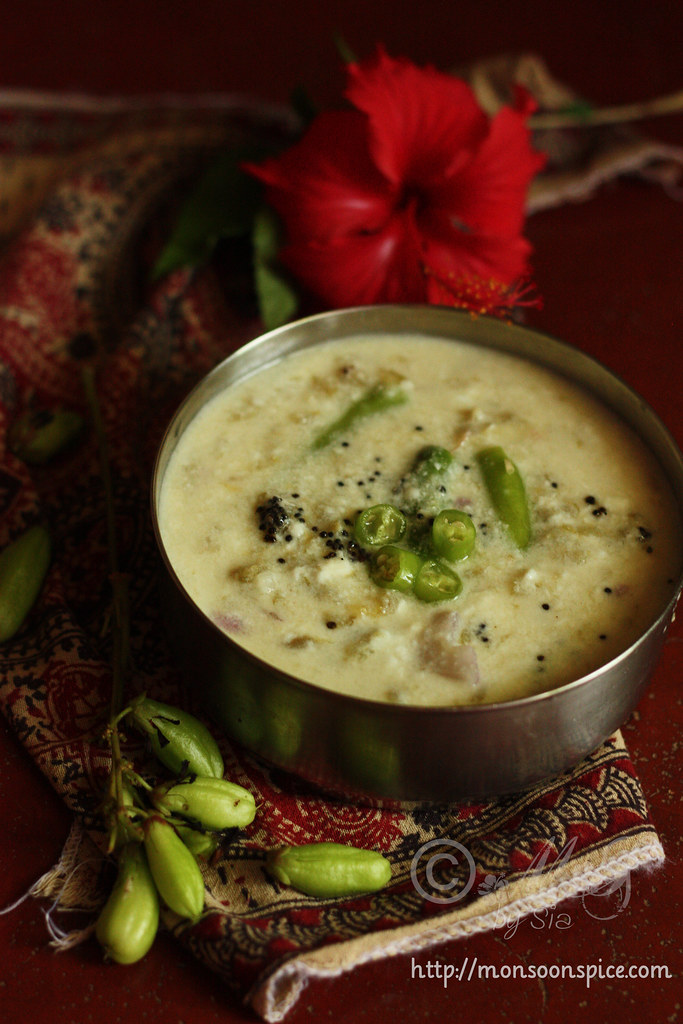
Huli-Menasina Kodhel


Ajji, my paternal grandma was the most beautiful lady I have had ever seen. Whenever I think of her, the aroma of fragrant Jasmine wafts away which she would wear on her scented oiled hair combed back in a knotted bun. Most of the times she was seen wearing silk sarees with half a dozen of green and red glass bangles in between lovely gold bangles. While the brightest of bright shade of Kumkum on her forehead always reminded me of bright shining sun, the sparkling diamond studs on her ears and nose reminded me of twinkling stars. Her eyes heavily lined with Kaadige (Kohl/Kajal) would twinkle with all the love and kindness and her beautiful smile would spread warmth in our heart. No wonder my Ajja (paternal Grandfather) fell in love with her the moment he met her when he was just 20 and she was at tender age of 16. Amma always would recall how much they were in love even after 50 years of marriage when she joined our large joint family as third daughter-in-law and she was warmly welcomed as a daughter by her in laws.


Although I don’t remember much about my Ajji as I was just 5 years old when she left this world I do remember two things as clearly as if it was only yesterday. It was my Ajji’s cooking and every weekend oil bathing sessions. Unlike these days bathrooms were separate from main house building. We had this huge bathroom built with thick red mud walls and thatched roofs at some distance from the main house. The sun light coming from small wooden windows would compete with the sparkling lights from kerosene lamps. Out side the bathroom there was big granite stone stand used for washing the cloths. The other side of the bathroom had a big water well which was used for washing and bathing. The bathroom floor was made of thick, rough, unpolished granite stone and had thatched grass roof with wooden beams. At one corner of the bathroom was this huge (I mean really huge) Copper pot fitted to thick mud wood-burning stove and only the mouth of this round pot was visible from outside. Gallons of water filled to the brim from water well next to the bathroom was heated from the bottom by burning the wood which would make the dark bathroom steamy and smoky and lightly aromatic.

Although we had dozens of domestic helpers and maids at home Ajji would never leave a chance to give us the oil bath every weekend. First she would change from her silk saree to light cotton one. She would apply warm scented oil on our body and hair and give a thorough massage for at least half an hour starting from head to toe. I would always doze off by this time. Then she would take us to steaming bathroom and make us sit on wooden stool. First she would wash our hair with natural herbal shampoo made using Shikakai and then apply herbal conditioner made from Dasavala (Hibiscus) leaves. Then she would wash off the oil with a mixture of Gram flour and water rubbing vigorously. By this time we would be content and half asleep. After towelling us dry she would take us to main house to our recreational room on first floor to dry our hair with the Saambhrani/Dhoop (Dry leaves of Sambhrani being sprinkled on burning coal in a large clay container and is covered with cane basket). This aromatic, warm smoke of Sambhrani would slowly dry our hair so that we wouldn't catch cold.

And then came our weekend lunch time. Green plantain leaves would look like some artist’s palette with colourful dishes adorning them from top to bottom with every kid’s favourite dishes. After a heavy lunch cooked by our Amma, Aunties and Ajji, there was no way we could keep our eyes open. With heavy eyelids we would straight get into our kids room and I bet our mother’s would have been happy to see us naughty ones to doze off leaving them enough free time to take nap in the afternoon. Even today I just have to close my eyes to see my Ajji smiling at us, ready with platter full of munchies when we would get up from our nap and ready to go out for playing. Memories of her face, her smile, her soft, wrinkled hands, her bright, sparkling eyes, her perfume, our weekend oil baths, and her delicious food is very fresh in my heart.

One of my favourite food memories from my Ajji’s kitchen is Huli-Menasina Kodhel. It’s a typical Udupi-Managalorean curry made using very few ingredients and its one of the finest example as how simple food cooked with very few ingredients can taste utterly delicious. While Byadagi Menasu gives that fiery red colour with kick of spiciness, tamarind gives it much needed tang. Coconut and Jaggery makes it creamy, a hint of sweetness and pungent Garlic tadka takes it to another level of taste. Huli-Menasina Kodhel is usually made using Yellow Cucumber or Tindora/Tondekai or combination of both and is a very special dish for me, from my native. Coming from a Brahmin family who followed very strict vegetarian diet, we kids would imagine that Tondekai/Tindora as fish and annoy our elders. Ajji would laugh at our wild imaginations and made sure to cook this Kodhel during weekends for our pleasure. Even now when I cook this Kodhel, I can’t help but think of my blissful childhood days with dozens of cousins. I am sending this special dish to this month’s Jihva for Love which is guest hosted by Jigyasa and Pratibha who have started this beautiful blog A Tribute to Pedatha.


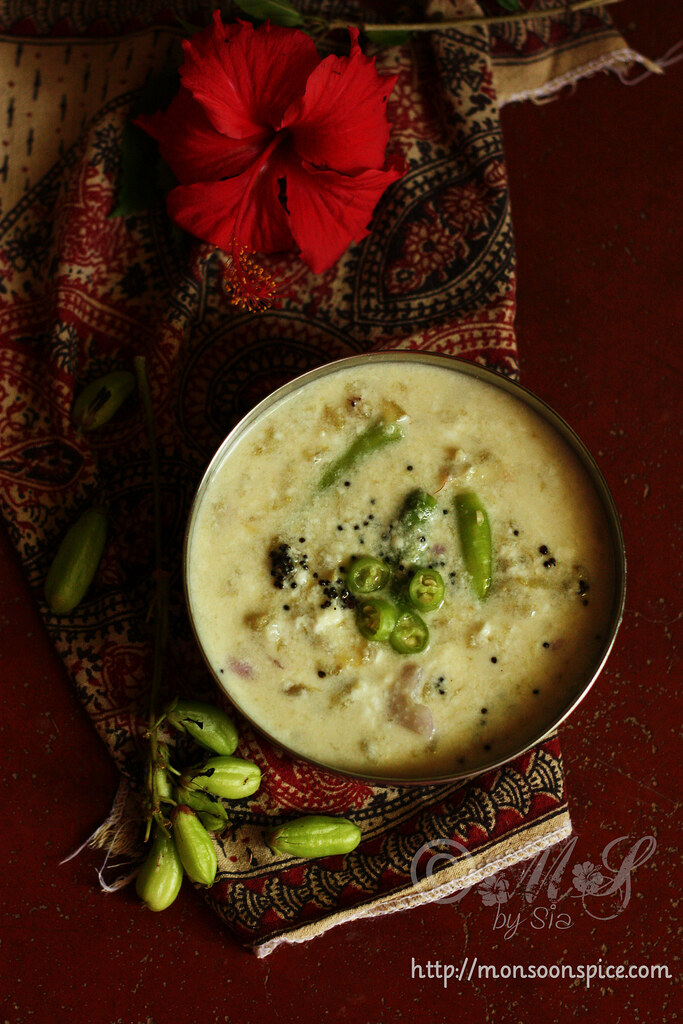
Huli Menasina Kodhel (Mangalorean Recipe for Tindoras cooked in Coconut, Tamarind and Chilli Gravy)
Prep Time: 10 mins
Cooking Time: 20-30 mins
Serves: 5-6

Ingredients:
5-6 cups Tindora/Tondekai, trimmed and halved
1 tbsp Jaggery (Adjust acc to taste)
½ tsp Turmeric Powder
Salt to taste

For Ground Masala:
4-6 Dry Red Chilli, preferably Bydagi/Kashmiri Chilli (Adjust acc to taste)
1 big marble sized Tamarind Pulp
¾ -1 cup Coconut, fresh/frozen
½ tsp Jeera/Cumin Seeds

For Tempering:
6-8 Garlic Cloves, sliced
1 tsp Mustard Seeds
1 Dry Red Chilli, halved
Few Curry leaves
½ tbsp Oil, preferably Coconut Oil
Photobucket
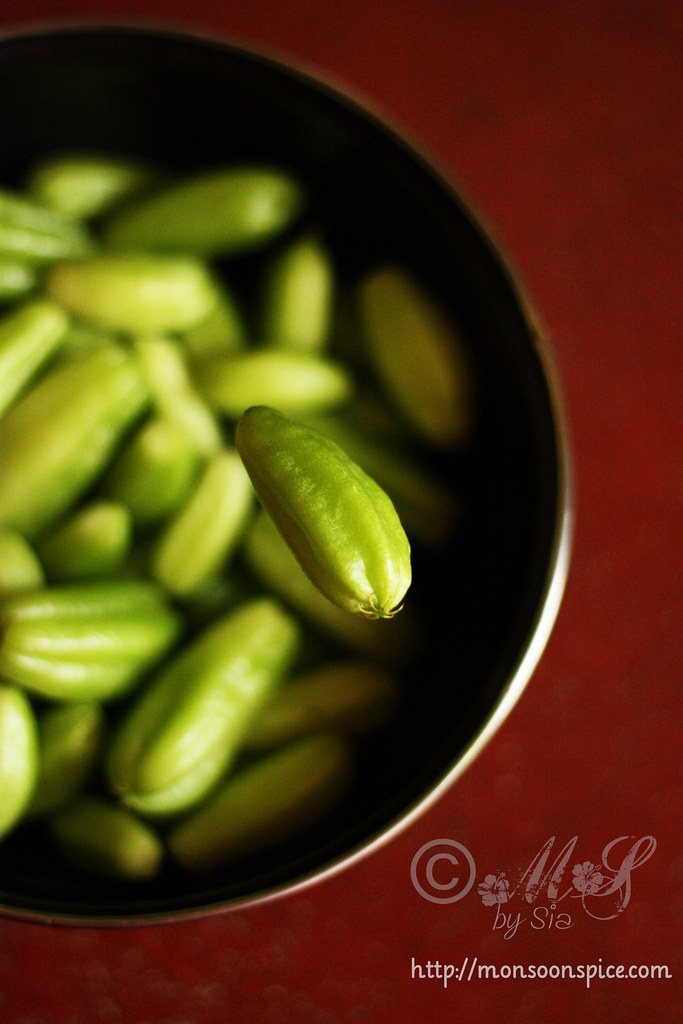
Tindora/Tondekai

Method:
Take a pan with 3-4 cups of water and bring them to gentle boil. Meanwhile, wash, dry and trim the ends of tindora and halve them horizontally.
Add these tindora pieces into boiling water along with jaggery, turmeric powder and salt to taste. Cook uncovered on a medium flame for around 10-15 minutes till they are half cooked.
Grind coconut with tamarind, dry red byadagi chillies and cumin seeds to smooth water adding little water at time.
Add this ground paste to cooked tindora and mix well. Cook on a medium to low heat for about 10-15 minutes and bring the curry to gentle boil and turn of the heat. Adjust the seasoning as per taste.
Heat oil in a pan and add garlic slices to it. Sauté till garlic turns golden yellow in colour. Add mustard seeds, dry red chilli and curry leaves and sauté. Once the mustard seeds starts to pop and splutter transfer the tempering to Kodhel and mix well.
Serve this Huli-Menasina Kodhel with steamed rice or Dosa or Idli and enjoy.

Photobucket
Huli-Menasina Kodhel


Note:
The bright red beautiful colour of the curry is due to special type of Chilli used called Byadagi Chillies. They are milder in compared to other chillies and gives beautiful red colour to the curry.
Use Dosekai/Yello Cucumber in place of Tindora or mix both the vegetables in equal quantity and follow the same recipe.
Garlic is a must for this Kodhel as it gives Kodhel wonderful flavour.

Continue Reading...

Friday, 21 March 2008

Cooking with the Queen: Bendekai Gojju

Photobucket
Bendekai Gojju

Ladies Finger… such an elegant name for Okra/Bhindi. Considered as the queen of vegetables with its slender shape and crown on top, it is one of my favourite vegetable to cook with. Not many people prefer it because of its sliminess. When cut into pieces this queen likes to cling to anything it touches, knife, chopping board, your fingers. Well, no wonder that it’s not everyone’s favourite vegetable to deal with, especially the person who is in charge of the kitchen. Who would really want to deal with this slimy vegetable when you have so many other wonderful vegetables to choose from? It will be me and millions others like me who simply love this vegetables in spite of its clinging nature. The reason behind this is the taste which lingers for long hours. Okra is one vegetable that absorbs all the wonderful flavours of spices and transforms into smooth, silky in texture and unbelievable taste still maintaining its crisp crunch. When cooked to perfection, you will not hear any grumblings or see that ugly frowns or much of resistance from the same people who just moments ago were not very fond of it.

One such dish which undoubtedly is loved by most people is Bendekai/Bhindi/Okra Gojju. Gojju is a classic Kannadiga dish cooked for everyday meal. The recipe varies from one part of the state to another and hence don’t be surprised if you come across other recipes using whole different ingredients and cooking style. This is my Aunt’s recipe which is different from the way my Amma makes it. Crisp, fried okra is simmered in the delicious gravy of tamarind, coconut, jaggary and chilli is everything one can ask for.
Is it spicy? Yes, it is.
Is it sour? Yes, it is.
Is it sweet? Yes, it is.
And is it delicious? You bet…
I am posting this recipe for Archana, one of the readers of Monsoon Spice who wants to introduce Bendekai/Bendekaayi Gojju to her hubby. Archana, I hope you both enjoy this Gojju.


Bendekai Gojju (Okra/Bhindi in Tangy & Spicy Coconut Gravy)
Prep Time: 10 mins
Cooking Time: 15 mins
Serves: 4-5

Ingredients:
15-20 tender Okra/Bhindi
2 Green Chillies, slit (Adjust acc to taste)
1 lemon sized Tamarind Pulp/1 tsp Tamarind Paste (Adjust acc to taste)
1 lemon sized Jaggary (Adjust acc to taste)
¾ cups Grated Coconut, fresh/frozen
1 tbsp Oil

For Spice Powder:
4-6 Dry Red Chillies (Adjust acc to taste)
½ tbsp Sesame Seeds
1 tsp Black Peppercorns (Adjust acc to taste)
1 tsp Jeera/Cumin Seeds
1 tbsp Chana Dal/Bengal Gram Dal
½ tbsp Urad Dal/Split Black Gram
A big Pinch of Methi Seeds
¼ tsp Hing/Asafoetida

For Tempering:
1 tsp Mustard Seeds
Few Curry Leaves
A big pinch Hing/Asafoetida
1 tsp Oil
Photobucket
Ground Spice Powder for Gojju

Method:
Wash the Okra and dry thoroughly using a clean dry cloth. Make sure that all the moisture is removed. This is important step when using Okra in cooking to reduce its sliminess. Once they are dried, cut them into ½ inch rounds using dry knife and keep them aside.
Soak tamarind pulp in a cup of warm water for about 10 mins. Squeeze out the tamarind pulp and discard the seeds. Keep this squeezed tamarind puree aside.
Dry roast all the spices listed, from dry red chillies to hing on a low flame till they are lightly browned. Takes about 2-4 mins of time. Cool the spices and grind them to smooth paste with coconut adding very little water.
Heat 1 tbsp oil in a pan and when it is hot add cut okras. Sauté them continuously at medium to high flame till okra turns brown and retains its crispiness. Usually it takes around 5-7 mins.
Once the okras have turns crisp and brown, add tamarind puree, slit chillies if using and mix well. Add about 1 cup of water, salt and jaggary and let it simmer for about 3-4 mins.
Now add ground paste and mix well. Depending on the required consistency of gravy add water and mix well. Cook uncovered on a medium to low heat for about 5-10 mins till all the flavours blend well and small bubbles start to appear.
Remove Gojju from flame. Heat 1 tsp of oil in a pan and add mustard seeds and curry leaves. When mustard starts to pop and splutter transfer this tadka/tempering into Gojju and mix well. Cover and let it sit for about 10 mins for the flavours to blend well.
Serve this tangy, sweet and spicy Bendekai Gojju with plain steamed white rice and enjoy. You can serve this hot or cold depending on your preference.

Photobucket
Roasted Spices for Gojju


Note:
Beginners, always remember not to wash the okra once it is cut into pieces (been there, done that).
To reduce the sliminess of Okra, clean the knife and cutting board in between with kitchen towel or napkin.
Stir fry okra at medium to high temperature till it turns brown and crisp. This way the okra will not be gooey with slime.
When using frozen Okra, thaw and wipe it using kitchen towel. Preheat the oven at around 250 deg C. Line the baking tray with baking sheet or simply spray it with cooking spray. Spread it on a baking tray in single layer and bake it for about 5-10 minutes. I picked this tip from here and it works very well.

Continue Reading...

Thursday, 7 February 2008

Bitter Love: Bitter Gourd Saaru & Chips

Photobucket
Bitter Gourd Marinated in Salt

Bitter gourd, either you love it or hate it. I have seen many people who initially hated this bitter, odd looking vegetable and lately fall in love with it. It takes many meals over years to develop a taste for Hagalakai, as we call it. But there are some who still don't seem to come in terms with this vegetable even after they have had upgraded their wardrobe from sneakers to tailor-made pants;) Unlike my siblings, who are still struggling to acquire taste for this vegetable, I have grown up appreciating its rich bitter and pungent flavour for some strange reasons which are unknown to me. I was always a picky eater as a kid and my love for this bitter vegetable was unsolved mystery to my parents. Every fortnight my Amma made it a point to cook some bitter vegetables and bitter gourd always topped the list. We always had bumper crop of bitter gourd growing in backyard and hence there was no chance of Appa pretending to have amnesia when asked to buy them. The vegetable is reported to be a blood purifier, digestion enhancer and stimulating agent of liver. And now when your read how good Bitter Gourd is for your health, all grown-up and mature ME (!!!???) can’t ignore it right? No fat chance!

When my sister and brother would run a mile at the bare mention of this vegetable, I would happily lick my plate clean whenever Amma made Bitter Gourd dish. One such recipe from my mother’s large collection is Hagalakai Saaru, roughly translated as Bitter Gourd Rasam where bitter taste of Bitter Gourd is lightly concealed with the sweet Jaggary, sour Tamarind and spicy blend of spices. This mixture of five flavours- bitter, sweet, sour, salty and spicy defines the taste of life in a bowl. I love to eat this lightly bitter, spicy, tangy, sweet Saaru with aromatic Basmati rice with a dollop of Ghee and Tender Mango Pickle.

Photobucket Print This Recipe
Bitter Gourd Saaru
Prep Time: 10 mins
Cooking Time: 20-25 mins
Serves: 4-5
Ingredients:
2 medium Bitter Gourd
1 medium Onion, finely chopped
½ tbsp Garlic, finely chopped (Optional)
2 Green Chilli, slit
½ inch Ginger, crushed and chopped
1 small Lime sized Tamarind
1-2 tbsp Jaggery (Adjust acc to taste)
½ - 1 tbsp Rasam Powder
¼ tsp Turmeric Powder
¼ tsp Chilli Powder (Optional)
1 tbsp Coriander Leaves, chopped
Salt to taste

For Tempering:
1 tsp Mustard Seeds
1 Dry Red Chilli
A big pinch of Hing/Asafoetida
Few Curry Leaves
1 tbsp Oil
Photobucket
Bitter Gourd Saaru

Method:
Cut thin round slices of bitter gourd, about 1 packed cup, and add little salt to it. Mix well and keep it aside for at least 30 mins. This way the bitter taste of bitter gourd will be released from them.
After 30 minutes or so squeeze as much of water as possible from these bitter gourd slices. Wash them with cold water and drain and keep aside.
Mean while, soak tamarind in hot water for about 10 minutes and extract its juice and keep it aside.
Heat oil in a pan and add mustard seeds to it. When mustard starts to pop and splutter, add halved dry red chilli, hing and curry leaves. Sauté it for few seconds.
Mix chopped onion, garlic and sauté on medium flame till they leave raw smell and lightly browned.
Add slit green chillies, bitter gourd slices, ginger and mix well. Keep sautéing for about 5 minutes till bitter gourd turns light brown.
Mix in tamarind juice, about 1 cup of water, jaggery, turmeric powder and salt to taste. Bring the mixture to gentle boil at medium flame.
If required add more water and add rasam powder and red chilli powder. Check for the seasoning and make changes according to taste. Cook on a low to medium flame for another 5 minutes and bring it to boil.
Switch off the flame and add chopped coriander leaves. Cover and let it sit for about 10 mins for the flavours to blend well. Serve hot with steaming bowl of rice and pickle and enjoy this bitter goodness.

Another recipe I tried over weekend was Kay’s No Fry Bitter Gourd Chips. Being a bitter gourd fanatic I couldn’t resist trying this recipe which is not just simple to make but also uses very less oil and not much work is involved. I made little changes to the ingredients used and simply followed her recipe. Thank you Kay for this wonderful recipe. Try them to see how good they are.

Photobucket
Bitter Gourd Slices Marinated with Spices

Photobucket Print This Recipe
No Fry Bitter Gourd Chips
Prep Time: 5 mins
Cooking Time: 15 mins
Serves: 3-4
Ingredients:
2 Bitter Gourds
1-2 tbsp Oil
1 tsp Red Chilli Powder (adjust acc to taste)
½ tsp Turmeric Powder
¼ tsp Amchur/Dry Mango Powder (Optional)
Salt to taste
Photobucket
No Fry Bitter Gourd Chips

Method:
Slice bitter gourd to thin round slices using mandolin or knife.
Mix in oil, chilli powder, turmeric powder, amchur and salt and marinate for at least half an hour.
Pre-heat the oven at 375 F. Arrange the slices neatly in rows, on a foil covered baking tray and bake it in a middle rack of the oven for about 10 mins. Place the tray on top rack for 3-5 mins so that chips becomes crisp and brown or else broil them. Watch them closely and make sure that they don’t get burned.
That’s it. Serve bitter gourd chips with Rice and Rasam and enjoy.

Continue Reading...

Wednesday, 5 September 2007

Akki Shavige with Rasayana & Menthe Chutney

Photo Sharing and Video Hosting at Photobucket
Akki Shavige with Rasayana & Menthe Chutney

She was sleeping soundly, smiling in her sleep while she dreamt of chasing colourful butterflies in garden. When the persistent sun shone brightly on her face, little girl with pigtails sighed and snuggled back under the covers, blissfully embracing slumber. The mild caress of heavenly aroma coming from kitchen nudged her gently to open her heavy eyelids. Dragging her feet on cool marble floor with her favourite doll tucked under one arm and blinking her eyes to the golden glow of sunshine streaming from high ventilator and windows, she blissfully inhaled the wonderful aroma of ground coffee beans and spices. The sight of her mother with long hair tied in a loose knot adorned with pearls of water, standing in kitchen stirred the feeling of love and happiness. She ran and hugged her mother inhaling the heady perfume of her herbal soap and shampoo. Mother gently lifted her daughter planting kisses on her daughter’s blushed chubby cheeks and placed her away from heat, close to window where she could see the world waking up to the glorious sunshine. As her mother churned delicious food in lightening speed, little girl watched her dad entering the kitchen with special device to make one of her favourite food. As her dad and mom smiled at each other knowingly, little girl sat on the floor cross legged with a twinkle in her eyes as she watched her dad rotate the noodles presser which turned the steaming rice dough into thin, stringy white noodles. She smiled brightly at her parents looking over the food, simple home food, food that made her happy and content.

Yes, I am talking about my favourite breakfast item, Rice Semige/Shavige. Also known as Sevai or Santhakai in Tamil and Idiappam or Noolappam in Malayalam, Shavige is made from rice and coconut in my native Mangalore and it is usually served with sweetened coconut milk and spicy chutney or sambar. This was the only time when my mother would allow my dad to help her in kitchen as it required an extra pair of helping hand to make these stringy rice noodles. While my mom inserted the steaming balls of rice dough in the Sevai container and rotated the plate kept under the container collecting Shavige, dad would quickly rotate the sturdy handle in clock-wise direction. This Shavige Presser although might look like something out of medieval torture device to some people is a must device in every house-hold in Mangalore. Back in my Ajji’s house she had wooden Shavige Presser which looks quite different to what we have now. Instead of rotating the handle, the wooden one would press down the dough like hand water pumps in rural India. Unlike my Ajji and Amma, I use simple Chakkli Presser to make Shavige. Chakkli presser works fine for two growling tummies and moreover it’s quite easy to clean. But I must add that rotating Shavige Presser is equlivalent to working out those muscles in gym, so will not get enough of arm exercise when using Chakkli press ;)


Akki Shavige with Menthe/Methi Chutney and Baale Hannu Rasayana is my contribution to this month’s RCI-Karnataka hosted by our blog queen Asha of Foodie’s Hope and also to this month’s JFI-Banana hosted by lovely Mandira of Ahaar.


Akki Shavige (Rice Noodles)
Prep Time: 30 mins (excluding soaking time)
Cooking Time: 20 mins
Serves: 2-3

Ingredients:
1 cup Rice
1 cup Fresh/Frozen Coconut
2 tbsp Oil, preferably Coconut Oil
Salt to taste
Photo Sharing and Video Hosting at Photobucket
Akki Shavige

Method:
Wash and soak rice in 2 cups of water for 4-5 hours or overnight.
Drain and grind this rice with grated coconut and salt to taste adding little water at a time to very smooth paste. Note that there shouldn’t be any lumps and the paste should be silky smooth. Usually my Ajji and Amma make very thin batter of buttermilk consistency but I grind it to Dosa batter consistency which works fine for me.
Apply coconut oil to heavy bottomed kadai/wok covering it well. Pour the batter in this wok and keep mixing this batter in medium flame till all the water evaporates and it turns to a thick lump of dough.
Switch off the gas and start making big lemon sized balls by applying little cold water to stop it from sticking to your hand.
Steam cook these rice balls in a steamer or pressure cooker without putting its weight for about 10 minutes.
Place two steaming rice balls in Shavige presser or Chakkli maker and press the noodles. Place these noodles in a banana leaf or wet cloth and let it cool. This noodle needs to be cooled down to hold their shape. Serve these noodles with Chutney, sweetened Coconut Milk or Sambar. You can also make Tamarind or Lemon Rice Noodles with the leftovers.
Check Shilpa or Aayi's Recipes and Manjula of Dalitoy's recipes for Shavige where they use Shavige Press here and here. And also check here for Viji of Vcuisine's recipe for Vella, Lemon and Ulundhu Sevai using Chakkli Press.

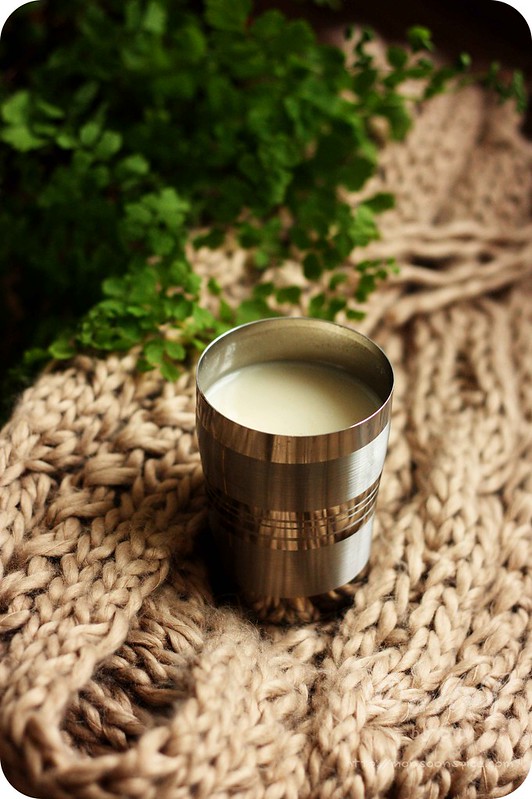
My Ajji and Amma usually served Akki Shavige with Sweetened Coconut Milk or Rasayana and Menthe Chutney. Rasayana (Rasa means Juice/essence/flavour/taste in Sanskrit) is basically a sweetened coconut milk mixed with chopped Bananas or Mangoes depending on seasonal availability of fruits. Freshly extracted Coconut milk is flavoured with Jaggery and pinch of Cardamom and made wholesome by adding chopped bananas or mangoes.


Rasayana (Banana in Sweetened Coconut Milk)
Prep Time: 20-25 mins
Cooking Time: -
Serves: 2-3

Ingredients:
1 cup Bananas, quartered and sliced
1½ cup freshly extracted Coconut Milk (big no-no to Canned Coconut milk)
1-2 tbsp grated Jaggery, adjust according to taste
2 Green Cardamoms, skins removed and seeds crushed
1 tsp roasted Sesame Seeds (Optional)
Small pinch of Salt


Photo Sharing and Video Hosting at Photobucket
Rasayana

Method:
Dissolve grated Jaggery in coconut milk and mix all the ingredients.
Serve cold with Akki Shavige or drink as it is.


Variation:
You can use ripe sweet mango in place of bananas.
Replace coconut milk with milk and add 2-3 tbsp of banana or mango puree to give it thick base.


Photo Sharing and Video Hosting at Photobucket
Akki Shavige with Rasayana & Menthe Chutney

Methi/Fenugreek seeds are one of the most importance spices in Mangalorean cuisine. My Ajji would soak few methi seeds in buttermilk and make us drink after heavy meals as methi is good for digestion. Read more about benefits of Methi here and here. Menthe Chutney is one dish which is full of different flavours. Bitter methi is ground with creamy coconut and spicy chilli and then cooked with dash of jaggery to give it little sweet flavour.


Menthe Chuteny (Methi Seeds Chuteny)
Prep Time: 10 mins
Cooking Time: 10-15 mins
Serves: 2-3

Ingredients:
1 tsp Methi/Fenugreek Seeds
1 cup grated Fresh/Frozen Coconut
3-4 Dry Red Chillies
1-2 tbsp Jaggery, adjust acc to taste
1 tsp Oil
1 tsp Mustard Seeds
Few Curry Leaves
Pinch of Hing/Asafoetida
Salt to taste
Photo Sharing and Video Hosting at Photobucket
Menthe Chutney

Method:
Dry roast methi and broken red chillies in a pan for around 1 minute till you get nice aroma of roasted methi.
Grind sautéed spices with coconut adding little water at a time to smooth paste.
Heat oil in a pan and add mustard, hing and curry leaves.
Once mustard starts to pop and sputter, add ground paste, jaggery, salt to taste and ½ cup of water.
Cook it on a low flame for 10-15 minutes stirring in between. Serve hot with steamed rice or akki shavige.

Continue Reading...

Monday, 18 June 2007

Sweet 'n Sour Badane Palya

Brinjal, often described as ‘the king of vegetables’ … You either love it or hate it! Luckily I fall into the Brinjal lover category and so does my Appa. When we were kids, sometimes after school hours my sister and I would go to my dad’s clinic for routine dental check up and wait in his office till he finished his work. We both would sit in his office which had a glass partition and watch Appa treating his patients in fascination. We both never got tired of waiting for him to finish his work as the clinic was always filled with people and lots of small kids to play with. My sister and myself were quite used to the attention received by his assistants and patients and we enjoyed when we were called as Putani (small) Doctors. Appa being a generous soul would never take money for treatment from poor people or charge very less when they insisted on pay. Some of his patients were farmers and they would come with a big cane basket filled with fresh vegetables and fruits from their farm which would last for weeks.
So whenever my Appa got chance to buy vegetables he would jump at the chance and enjoy it. When most of the customers tried to negotiate the price with the vendor, Appa would stand quietly in one corner and watch them in amusement. Bargaining is something which my dad never liked and for this reason every vegetable vendor loved selling vegetables to him. Without wasting too much of time in picking the vegetables or negotiating the prices, he would come home with bag full of selected vegetables of his choice. It was a tough time for Amma as she had to throw half the rotten vegetables which those smart vegetables vendors used to sneak without my dad’s knowledge. Every time Amma would beg Dad to not to buy vegetables and waste half of money on rotten vegetables and he would smile charmingly and continue to shop for vegetables. I am not sure if he enjoyed buying the vegetables or enjoyed watching my mom grumbling for getting vegetables without checking properly. I remember the day when he got a dozen of tomatoes when the tomato prices were rocketing and only three were good enough for cooking.
One vegetable he would always pick was Brinjal/Eggplant. My Amma used to cook different delicious eggplant dishes using different varieties of eggplants. Back in my native, we get a special type of eggplant which is famously known as Udupi Gulla Badane or Matti Gulla which is excellent for Sambar, Majjige Huli (buttermilk and coconut based) and sweet and tangy Gojju. Gulla Badane is round shaped, light green coloured Brinjal and Amma used to cook sweet and sour Badane Palya which I remember relishing with steam cooked rice and chilled yogurt. This thinly sliced eggplant delicately cooked in a tangy tamarind puree and sweet jaggery and lightly spiced up with aromatic sambar powder to give it extra flavour and aroma is a favourite dish in our family. Unlike other usual Palyas where we just stir fry vegetables, this Badane Palya is packed with three different flavours. The finished product is a silky smooth eggplant which tickles your taste bud and makes very satisfying meal all together. This is my contribution to this month's JFI-Eggplant guest hosted by Sangeeta of Ghar Ka Khana.

Photo Sharing and Video Hosting at Photobucket
Sweet 'n Sour Badane Palya


Sweet 'n Sour Badane Palya
Prep Time: 10-15 mins
Cooking Time: 15-20 mins
Serves: 4-5
Ingredients:
1 big Eggplant
1-2 Green Chillies
1 small lime sized Tamarind
3-4 tbsp Jaggery
1 tbsp Sambar/Rasam Powder(Acc to taste)
½ tsp Turmeric Powder
Salt to taste

For Tempering:
1 tbsp Oil
½ tbsp Channa Dal
1 tsp Urad Dal
1 tsp Mustard seeds
1-2 Dry Red Chilli
A pinch of Hing/Asafoetida
Few Fresh Curry Leaves

Photo Sharing and Video Hosting at Photobucket
Badane Palya

Method:
Soak tamarind in a cup of warm water for 10 minutes and squeeze out the pulp.
In a mean while cut the eggplant in the middle vertically and cut each halve into long, thin, vertical stripes. Chop these strips into 2 inch pieces and keep them immersed in cold water till needed. Soaking eggplants in cold water will help in stopping the eggplant pieces turning dark in colour.
Heat a tbsp of oil in a heavy bottomed pan and add all the ingredients listed for tempering.
When mustard stars to pop and sputter add the tamarind puree, jaggery, slit green chillies and another cup of water.
Bring this mixture to boil and then add sliced eggplant pieces and mix them well.
Cover and cook for 5 minutes and sauté them in between.
Now add sambar powder, turmeric powder and salt to taste and mix them well.
Cook this uncovered in medium to low flame for another 5-7 minutes till all the water is evaporated and the eggplant is cooked well.
Serve this sweet and sour Badane Palya hot with steamed rice and chilled yogurt.

Photo Sharing and Video Hosting at Photobucket
Sweet 'n Sour Badane Palya

Tip:
Mix this sweet 'n sour Badane Palya with the left over rice and make a delicious plate of Brinjal Rice in a minute.


Did You Know?
The eggplant is part of the "nightshade" family which includes tomatoes, potatoes and sweet peppers.
The eggplant actually becomes bitter as it ages so use it promptly. The older the eggplant, the tougher the skin.
Eggplant is actually a fruit but is cooked and eaten as a vegetable.
Women in the Orient used to use the peel of the eggplant as dye to stain their teeth gray because that was the rage.
(Source: www.deliciousorganics.com)


Photo Sharing and Video Hosting at Photobucket
Badane Palya