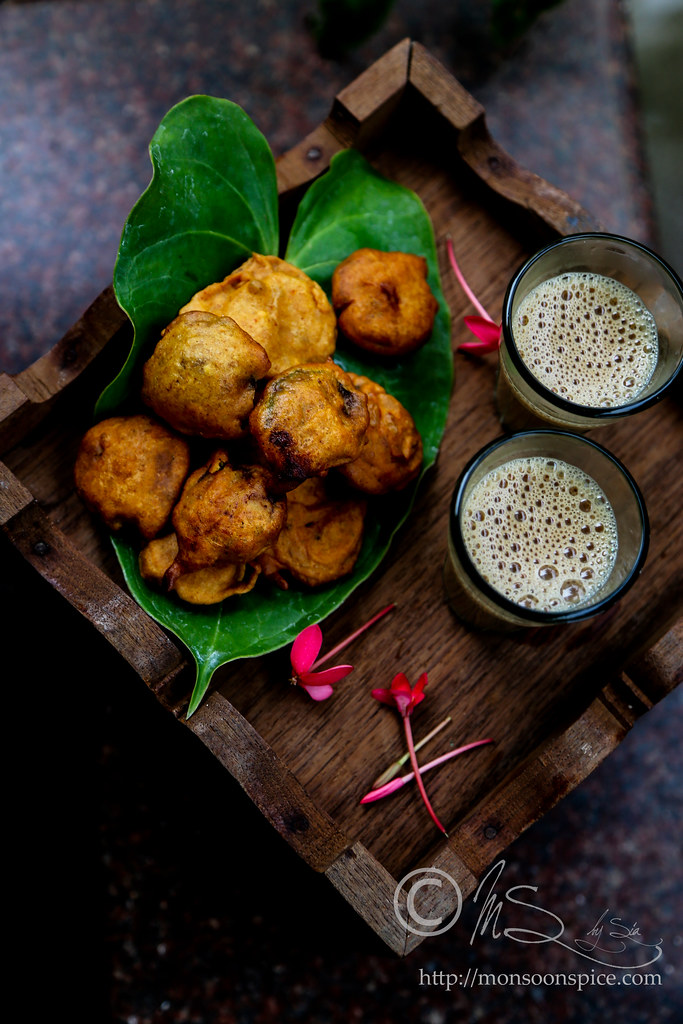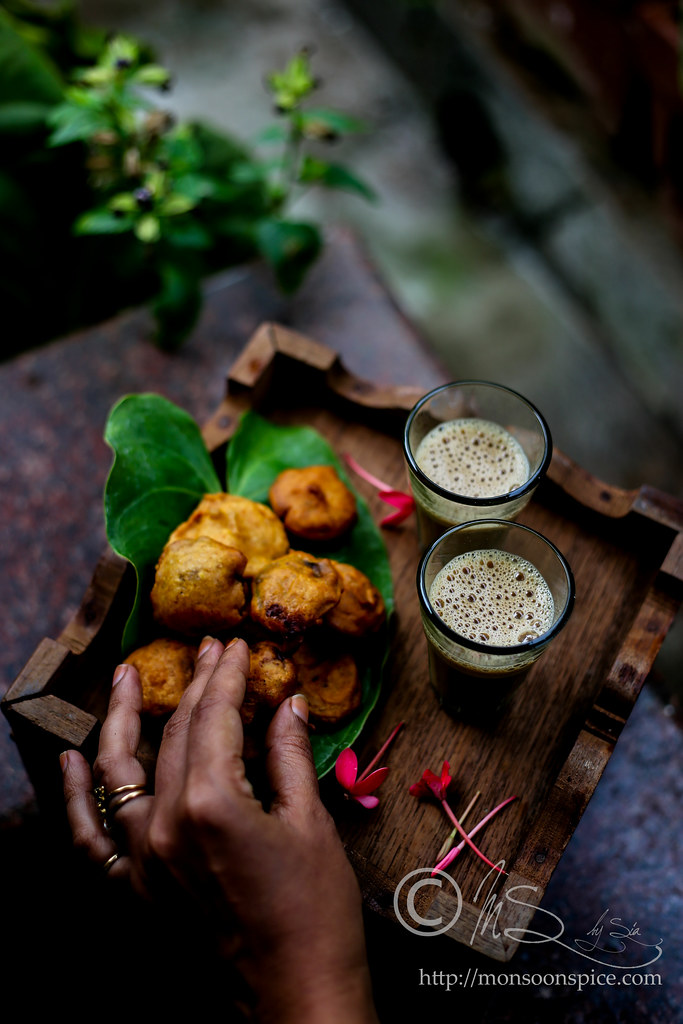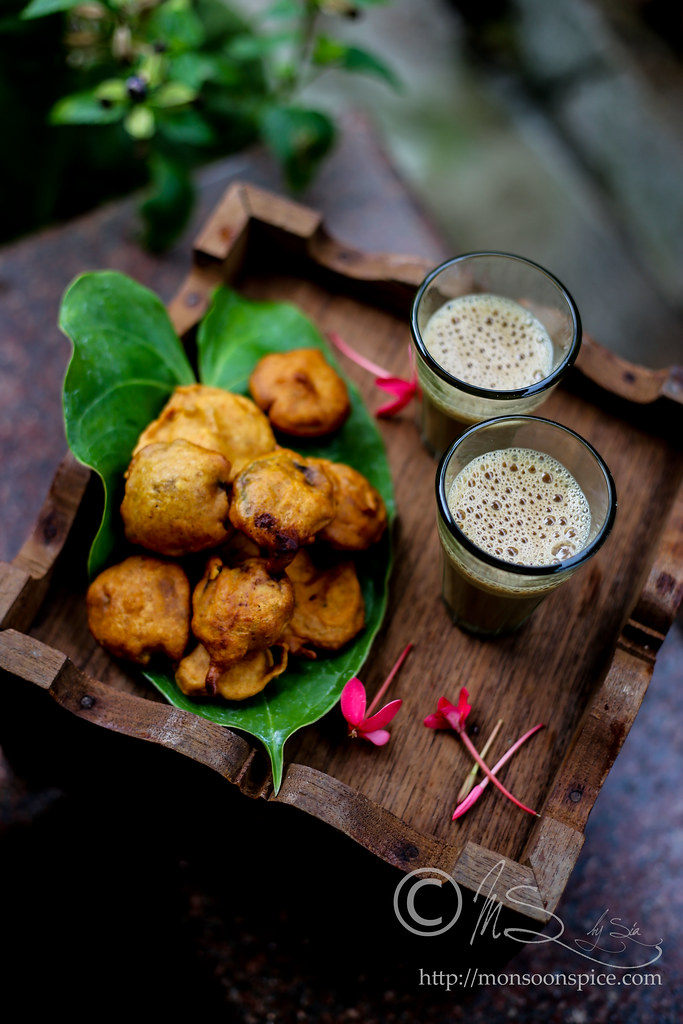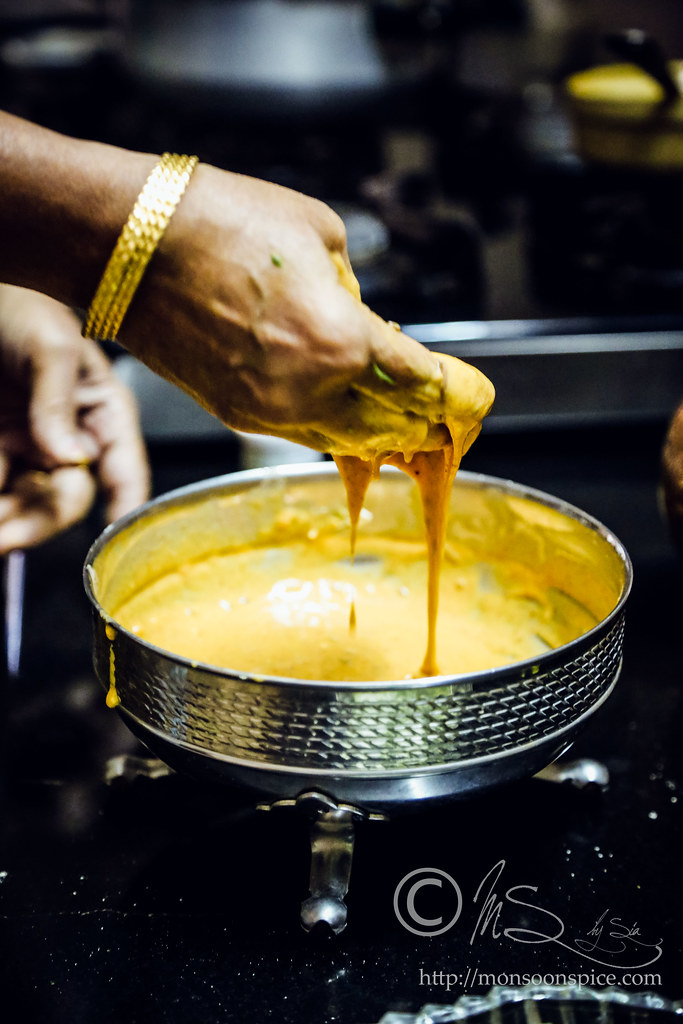
Showing newest posts with label Snacks. Show older posts

Tuesday, 16 September 2008

Banana Blossom Patrode: Try Something New and Delicious!

Photobucket
Banana Blossom Patrode

Mangaloreans love two things, one coconut and another curry leaves. Between these two there is another vegetable/fruit which is indispensable to us and it's plantain or banana. Most of the houses in South Canara, even with small garden, will have one coconut tree and a banana tree along with wildly grown Curry plant swinging to cool evening breeze. I grew up with three banana plants in the backyard and hundreds of them in our estate. So it is no surprise that I have tasted almost everything cooked from its stem, fruit and even its flower/blossom using banana leaves as organic and bio-degradable plates.

I have had tasted many recipes using Banana Blossoms ranging from simple stir-fries to delicious Chutneys cooked by my Amma, aunts and Ajji. Our recent summer trip to India I was first time introduced one very novel dish by my mother in law and that dish is Banana Blossom Patrode. Last year during casual chat with my MIL she mentioned about making Patrode/Patra using Banana Blossom and like any foodie I was totally intrigued and couldn’t wait to try it. In spite of being really busy with the last minute wedding preparation of my BIL’s, my Atte managed to cook this for me. And to my surprise it turned out to be one of the very best foods I have ever tasted. I have been craving for this Patrode ever since we came back from India but never got around to make this as Banana Blossom is not easily available at my neck of woods and I was not very sure if I will be able to manage chop them in a right way and cook without any problem.

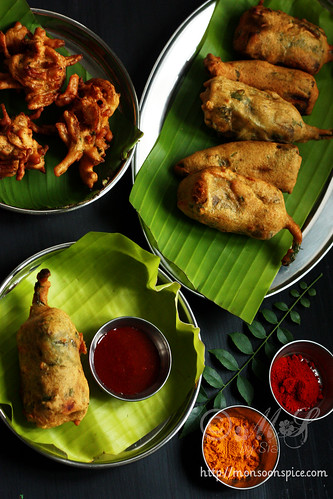
During our recent trip to down under (nope, not Aussie ;) I couldn’t resist from buying two banana blossoms in hope of making patrode. And boy, did I manage to cook it beautifully or what!!! Traditionally Patrode is made using Taro/Colacasia Leaves by spreading spicy paste on their surface, rolling and then cooked to perfection using a steamer. Same spicy batter is used here but banana blossom is used in place of taro leaves and no rolling is involved. This was the first time I have ever used Banana Blossom in cooking without any help from my mother or MIL and I was really proud with the end result. Except for laborious cleaning and chopping of banana blossom, this is really a very simple recipe and can be cooked very quickly. To top it all, it can be simply stored in a freezer for months together. Banana Blossom Patrode is spicy with mild note of sweet and tanginess from dry red chillies, tamarind, coconut and jaggery used; a taste which is hard to resist and even harder to forget. Without further delay let me give you step by step instructions on how to make Banana Blossom Patrode and please make sure that you go through the instructions carefully before cooking it. I am sening it to this week's Weekend Herb Blogging guest hosted by Zorra & initiated by dear Kalyn.

Photobucket
Banana Blossom & Florets

Photobucket Print This Recipe
Banana Blossom Patrode (Steam cooked & Pan fried Spicy Rice Cakes made using Banana Blossoms)
Prep Time: 15-20 mins
Cooing Time: 20-30 mins
Serves: 4-6
Recipe Source: MIL
Ingredients:
1 Banana Blossom
1 large Onion, finely chopped
2-3 tbsp Oil, preferably Coconut Oil
1 tsp Turmeric Powder
10-12 Curry Leaves, finely chopped

Grind to thick Batter (Dosa batter consistency):
2 cups Rice, washed and soaked overnight for about 8-10 hrs
½ packed cup Coconut, fresh/frozen/dried
1 tbsp Coriander Seeds
½ -¾ tbsp Jeera/Cumin Seeds
Medium lime sized Tamarind Pulp (Adjust acc to taste)
6-8 Dry Red Chillies (Adjust acc to taste)
1 inch cube Jaggery
Salt to taste
Photobucket
Banana Blossom Patrode- Before Steaming

Method:
Drain water from rice and grind it to smooth batter by adding water and all the ingredients listed above. Make sure that you have little thick batter than that of dosa batter consistency. Adjust tamarind, chillies and jaggery according to your preference.
Now comes the little tricky bit of chopping the banana flower. First apply 1 tbsp of coconut oil to your palm and rub well. Applying oil to your palms help in preventing the sticky sap oozing from banana blossom to your hand which leaves nasty black colour for few days. Remove the outer tougher covering and discard, around 2-4 outer tough skins. In my case I had to remove two outer skins. Don’t discard the florets. Now chop this banana flower and florets into very fine pieces.
Usually these chopped pieces are soaked in very sour butter milk to prevent from discolouring. In spite of doing so it discolours to some extent. So you can simply skip this step as we will be mixing them in the prepared batter.
Add 2-3 tbsp of Coconut oil and mix them well. This way you can easily separate layers which otherwise would be sticking to one another.
Now add this chopped banana flower, finely chopped onion, turmeric and chopped curry leaves to the ground batter and mix well.
Here comes the important step of steaming. You can either use usual Idli stand or flat bottomed vessel and steam cook them in a streamer or pressure cooker without putting its weight. Or another best way is to wrap it in banana leaves and steam cook it, same way as Genasale. I have used Tatte-Idli Stand. Grease the plates with oil and pour the batter with ladle into each plate. Place each plate back in the stand and steam cook in pressure cook or Idli steamer or Steamer for about 20-30 minutes till cooked properly.
Let it cool for 5 minutes before opening the lid. Remove cooked Patrode from plates and cut them into desired shapes. You can serve it with Ghee/Coconut oil or proceed to next step.
Heat tawa/griddle and place cut Patrode pieces on it. Add a tsp of Oil/Ghee for each piece and cook on both the sides for about 2 minutes till nice brown spots starts to appear on the surface.
Serve it immediately with or without any chutney or plain tomato ketchup and enjoy. It tastes best when roasted with Ghee/Coconut Oil.

Photobucket
Banana Blossom Patrode- After Steam cooked and Pan fried


Notes:
Banana Blossom or Banana Heart grows on the end of long stem holding cluster of Bananas and this deep cherry red blossom is id considered as one of the delicacy in southern Indian states, both when cooked or eaten raw. Banana blossom has layers of tightly packed reddish flaps which wrap around rows of creamy florets with black stigma. Usually this black, hard stigma and transparent covering on every floret is removed as they are difficult to cook. I skipped this step as the steaming process helps in cooking them thoroughly. You can go ahead and remove them or just leave them as they are.
Try to stick to the amount of Tamarind and Jaggery used as they helps in mellowing the bitter taste of Banana Blossoms and spicy red chillies. If using old tamarind, reduce the quantity by ¾ th of the original quantity.
To steam cook, add about water depending on the size of pressure cooker you use. In my case I had to add about 2½ cups of water (about 1½-2 inches). Place the Idli stand and cover the lid without putting its weight and steam cook for about 20-30 mins.
The left over Patrode pieces can be stored in zip lock bag once they are completely cooled and can be frozen for about 1-2 months in freezer. When needed heat then in microwave (don’t thaw) and then roast them on tawa with ghee/oil and serve.

Continue Reading...


Wednesday, 30 July 2008

Chocolate-Almond Biscotti: Daring Baker...At Last

Photobucket
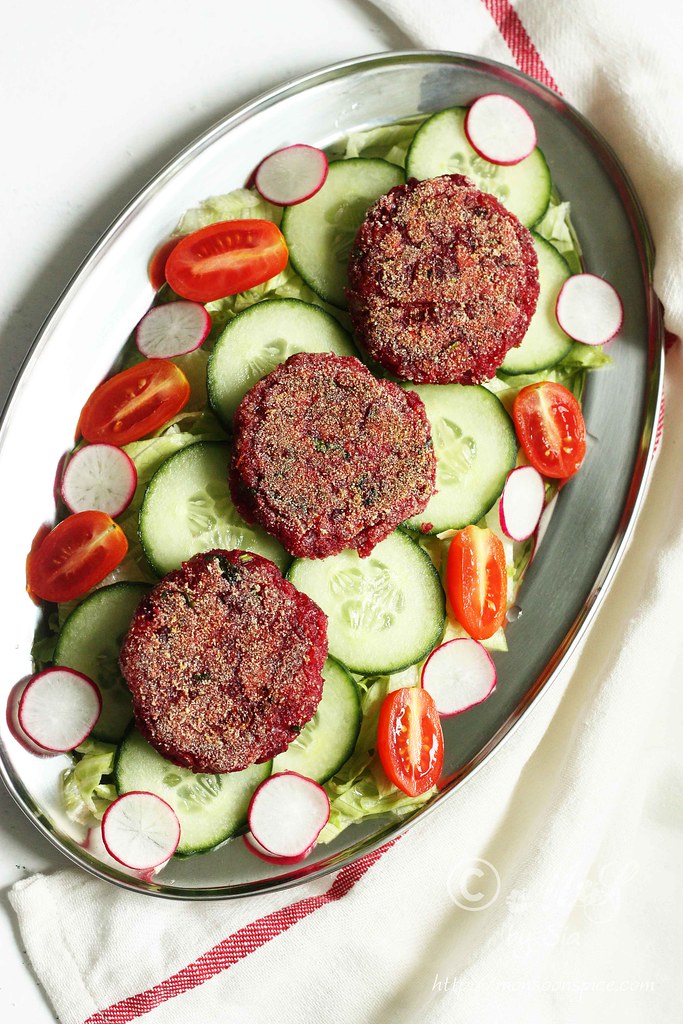
Chocolate-Almond Biscotti

Please don’t get confused with the title. I haven’t turned out to be a wonderful bakers like the ones in Daring Bakers overnight and I have no plans of joining that group for many more days (read years;) But still I am pleased to say that I did a daring thing during weekend and I actually baked!!!

The idea of baking used to scare the hell out of me! I always felt the oven staring at me icily (mmm… of course it feels cold when its ‘never’ used right;) as I walked back and forth past it. I did try my level best to ignore its threatening look. It demanded me not to use it as my extended kitchen cabinets to store few more vessels and Dabbas. It coughed and twisted its nose when we popped frozen pizzas and chips into it and turned itself into one agonising aunty when I used it to ‘ferment’ Dosa and Idli batter. It almost went into strike when I, err, used it to heat my kitchen when our central boiler conked off. Gosh, isn’t it easy and quicker to walk to a nearest bakery, buy and gorge that bread or baked goodies than actually measure that cup of self raising flour!!! Well, ahem, I do think so or rather used to think so that now I actually have baked and found some pleasure in it.

I always felt that I am not a person with enough patience when it came to baking. First, I never managed to follow the instructions to the word as I like changing and modifying ingredients to suit my taste and preference. Unfortunately it’s a big no-no in baking. You see the rebellious cook in me wouldn’t budge an inch and transform herself into a baking fairy. Well, you better follow the recipe step-by-step, cup-by-cup, spoon-by-spoon if you really don’t want to end up baking soggy cake, flat muffin or hard to bite cookies.

Next, I couldn’t simply stop myself from opening the oven door to take a quick peek to check if my cake is baking well or not. It took me sometime to realise it is another big no-no in baking world. Well, with my ancient gas burner with dark oven I have no option of actually seeing from outside if it’s baking well or not. And my hubby dear is not to ready to stick a bulb inside our oven which is plugged from out. Men, what more can you expect!!!

Other thing I had to keep in my mind is not to try to be too creative, especially when you are a newbie. Last time I used condensed milk in place of milk and egg thinking it will work beautifully and ended up one sad looking cake which stuck to my mouth top and was damn difficult to swallow. And no prizes for guessing that it ended up in waste bin. Well, I have come to terms with the bakers that there is a damn good reason as why milk and egg is used in baking.

Armed with all these tips from my previous failed attempts at baking, I decided to follow step-by-step instructions and used proper cups and spoons to measure each and every ingredient. The result is this wicked looking Chocolate & Almond Biscotti baked following the recipe posted at The Joy of Baking. This website has wonderful collection of baked goodies which are simple to follow and you actually end up baking something that look like the one photo posted there. I have already tried few recipes from this site and none of them have failed to impress me. I would highly suggest this site for any foodie, especially amateur like myself, who wants to try their hand at baking.
The Italians use the term biscotti to refer to any type of cookie. In North America, biscotti is used to describe a long, dry, hard twice-baked cookie with a curved top and flat bottom designed for dunking into wine or coffee. The name biscotti is derived from 'bis' meaning twice in Italian and 'cotto' meaning baked or cooked.
(Source: The Joy of Baking)
I chose Chocolate-Almond Biscotti to try first as it has two of my favourite ingredients, chocolate and almonds. There are two things I tweaked a bit. One I didn’t de-skin the almonds as I didn’t have patience to do so. I simply roasted them with skins and chopped them. Next I used half-half of chocolate chips and dark chocolate as I had these chocolate chips which I was reaching its expiry date. Initially, I was hesitant to make changes to the original recipe but went ahead with these modifications and it worked quite well ;) The end result was simply amazing and we have a big canister of these wonderfully ‘twice baked’ biscotti sitting proudly on our kitchen counter.
Photobucket Print This Recipe
Chocolate-Almond Biscotti
Prep Time: 20-30 mins
Baking Time: 60-90 mins (depends on Oven type)
Makes: 16-18 Biscotti
Recipe Source: The Joy of Baking

Ingredients:
¾ cups (110 gms) blanched whole Almonds, toasted and chopped coarsely
4 ounces (110 gms) Semi-sweet or Bitter Chocolate, chopped in ½ inch pieces (I used semi-sweet Chocolate Chips and Dark Bitter Chocolate in equal quantity)
1¾ cups (245 gms) All Purpose Flour
2/3 cup (135 gms) Granulated White Sugar
2 large Eggs
1 tsp Vanilla Extract
¾ tsp Baking Powder
1/8 tsp Salt

Photobucket
Chocolate & Almonds

Method:

Preheat oven to 350 degrees F (180 degrees C). Line a baking sheet with parchment paper and set it aside.
Meanwhile, toast almonds for 8-10 minutes or until lightly browned and fragrant. Let them cool and then chop coarsely. Set aside.
In bowl of your electric mixer (or with a hand mixer), beat the sugar and eggs on high speed until thick, pale, and fluffy (about 5 minutes. With my hand mixer it took little longer). Make sure that when you slowly raise the beaters the batter will fall back into the bowl in slow ribbons. At this point beat in the vanilla extract so that it is blended well.
In a separate bowl, whisk together the flour, baking powder and salt. Add these dry ingredients to the egg mixture and beat until they are well combined. Next, gently fold in the chopped almonds and chocolate.
Transfer the dough to your parchment lined baking sheet and form into a log, about 12 inches (30 cm) long and 3½ inches (9 cm) wide. Dip your fingers in a cold water if you find it too sticky and difficult to manage.
Bake for 25-30 minutes, or until firm to the touch.
Once it’s baked, remove from oven and let cool on a wire rack for about 10 minutes. Transfer log to a cutting board and using a serrated knife, cut log into slices of 3/4 inch (2 cm) thickness on the diagonal.
Place these biscotti, cut side down, on the baking sheet. Bake 10 - 15 minutes, turn slices over, and bake another 10 - 15 minutes or until golden brown.
Remove from oven and let cool. Store in an airtight container. Serve them with hot cup of coffee and enjoy.

Photobucket
Chocolate-Almond Biscotti


Final Call for WBB-Summer Feast (Just one more day to go)

Friends,
If you have already posted an entry for WBB-Summer Feast and yet to mail me, please make sure you do it by tomorrow. This is a final call for all you lovely bloggers to participate in WBB-Summer Feast.

For this edition of WBB, your challenge is to cook anything with summer fruits and vegetables. Yes, the theme is WBB-Summer Feast. Go to your town/city’s Farmer’s Market and pick fresh season’s produce and make your favourite breakfast or brunch and join in the Summer Feast.

Deadline: 31st July, 2008

Please go through the guidelines and include all the required information in your post and mail when sending me your entry. Don't forget to add Your Name, Your Blog Name, Name of the Dish you cooked, Perm Link of the entry along with the gorgeous Photo of final dish.

Click Here or on the logo to find out more information on this event.


Reminder for JFI-Soya:
I invite you all to celebrate Jihva for Ingredients with this month’s theme JFI-Soya. Choice of Soya products, the recipe, ingredients, method etc is entirely left to you. I would greatly appreciate if you can send me any Vegan or Vegetarian recipes but I leave it to your choice. Soya foods include tofu, tempeh, textured vegetable protein (chunks, mince etc), miso, soya sauces, soya oil and margarine, and soya dairy alternatives.

Deadline: 31st August, 2008

Please go through the guidelines and include all the required information in your post and mail when sending me your entry. Don't forget to add Your Name, Your Blog Name, Name of the Dish, and Perm Link of the entry along with the gorgeous Photo of final dish.

Click Here or on the logo to find out more information on this event.

Continue Reading...


Friday, 25 July 2008

Is That My Green Thumb: Dabeli

Photobucket
Dabeli

Grow Your Own a.k.a. GYO is a twice-a-month blogging event that celebrates the foods we grow ourselves and the dishes we make using our homegrown products is a brainchild of Andrea who blogs at Andrea’s Recipes. This fortnight it is being guest hosted by dynamic Jugalbandi’s Jai and Bee.

Here comes the problem. Well, it’s another food blog event and the rules are quite straightforward. You might ask me what exactly the problem is. For the last couple of weeks every blogger is showing off their gardening talents. Well, after all its summer and everyone seems to be growing something or the other in their vegetable patch resembling football stadium or snooker table and some even managed to grow in their small sized balconies and containers. I went through all these blogger’s posts with dozens of photographs of their summer bounty and admired their skills.

Then the realization hit me hard!!! All we had grown in a small patch of our backyard is few flowering plants and mind you they were not from seeds we had sown!! We just bought few plants from weekend farmer’s market and just planted them. Now its not that we are lazy (Ok, little bit). The reasons for not growing our own summer vegetable and fruits bounty are many. First and most important of all is the unpredictable weather. Just when we had cleaned our vegetable patch from all those wild weeds (my goodness, they have very strong and had deep roots), slugs and snails (they are so yuck!), it started to rain cats and dogs. After 2-3 weeks of these heavy summer rains the vegetable patch was filled with new bounty of weeds and snails and we didn’t fancy cooking those Dandelions in soups and stews and being a vegetarians eating those snails were unimaginable ;) So again we cleared our veggie patch and again it started to rain!!! We ended up planting few plants of Geranium, roses, lavenders. Second reason, our work schedule. Leaving to work at 7 in the morning and coming back at 7 in the evening doesn’t give much time to spend time in gardening during weekdays. Next reason is the visits to our vegetable patch by unwanted guests. You see some way or the other many cats in our neighborhood feel that it’s their birth right to come and empty their stomachs in our vegetable patch. We have 6 different cats coming and leaving behind their smelly trails. Sometimes we do wonder how roasted and grilled cats taste, just like Manisha. (Ok, I am kidding big time;)

Photobucket

With all these problems, we did manage to grow few herbs in pots. Some mint leaves are growing wildly and we are making good use of it in summer drinks. We have two curry plants donated by our close friends. And we have successfully grown a big pot of coriander leaves. I have been using them in most of the curries as garnishes. And Bee did say coriander used as garnishes can make it to the event. Thank you Bee, my coriander garnish is what I am sending you for GYO. This time its Dabeli garnished with fresh corianders from our garden makes its grand entrance for Jugalbandi’s GYO event.


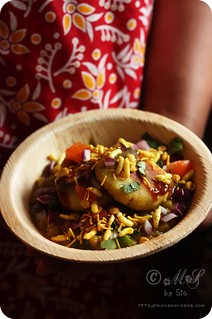
Dabeli or Katchi Dabeli or Double Roti is a street food mostly originated in Kutchi/Gujarat and very popular street food sold in Mumbai/Bombay. In my engineering days I survived eating these Dabeli for my lunch and sometimes for dinner from our campus Bakery. It is also known as Kutchi Dabeli or Double Roti and uses a special spice blend called Dabeli Masala. When I hosted MBP-Street Food, I had many Dabeli entries and I couldn’t wait to try my favorite street food. When I received Raghavan Iyer’s 660 Curries book for my birthday, I was rejoiced to see detailed recipe for Dabeli with its spice blend.
In Raghavan’s own words,
"Maharashtrian’s are very creative when it comes to combining multiple sources of carbohydrates in the same dish. This curry-in-a-bun is love at first bite-topped with luscious-red, juicy-tart pomegranate seeds. It’s really a cinch to make as a do-ahead dish. Just lay everything out in a bowls assembly-line style, in the same order as they go into the bun, and folks can help themselves by making their own. Those ho-hum taco parties will make a run for the border."
I made Dabeli Masala by strictly following Raghavan’s recipe and then assembled the Dabeli according to our taste. So without any delay, I made these wonderful street food and relived my college days:) Straight this goes to Jugalbandi’s for their GYO.

Photobucket
Kutchi Dabeli

Photobucket Print This Recipe
Dabeli (Spiced Potato & Pomegranate Sandwiches)
Prep Time: 10 mins
Cooking Time: 20 mins
Makes: 4-6
Recipe Source: 660 Curries
Ingredients:
For Dabeli Masala:
1 tsp Whole Clove (about 4-5)
½ tsp Fennel Seeds
½ tsp Black Peppers
½ tsp Coriander Seeds
4 dried Red Chilies (Thai or Cayenne), stems removed (I used Byadagi Chilies)
4 blades of Mace or ¼ tsp Ground Mace (I omitted it as I didn’t have any)
2-3 Whole Star Anie
1-2 Dried Bay Leaves
Seeds from 1-2 Black Cardamom Pods
½ tsp Ground Ginger (You will get them in any Asian stores)
Pinch of Turmeric Powder

For the Filling:
3 large Potatoes (Russet or Yukon Gold), peeled, boiled and mashed
1 small Onion, finely chopped (Optional)
1 tbsp Dabeli Masala
1 tsp Sugar Powder
½ tbsp Oil
Salt to taste

For the Sauces:
Recipe calls for just Sweet & Sour Date-Tamarind Chutney and Green Mint-Coriander Chutny but I also used Spicy Red Chutney.

For Sweet Tamarind-Date Chutney:
1 lemon sized Tamarind Pulp, soaked in water
6-8 Dates, pitted
½ tsp Red Chilli Powder
4-6 tbsp Jaggary (adjust acc to taste)
Salt to taste

For Green Mint Chutney:
1 packed cup Mint Leaves
½ packed cup Coriander Leaves
4-6 Green Chillies (adjust acc to taste)
1 tsp Jeera/Cumin Seeds
¼ tsp Tamarind Paste
Salt to taste

For Spicy Red Chutney:
10 Dry Red Chillies
2-3 Garlic flakes
1 small Tomato (Optional, it helps in grinding the chilies to smooth paste)
½ tsp Tamarind Paste
1 tsp Jeera/Cumin Seeds
Salt to taste

For Assembling the Sandwiches:
4-6 Ladi Pav/Burger Buns
Butter for Spreading
Seeds from 1 small Pomegranate
½ cup Spicy Roasted Peanuts (I used plain ones)
1 small Red Onion, finely chopped
½ cup Sev (Gram flour noodles, deep fried. You will find them in any Asian stores)
1-2 tbsp Coriander Leaves, finely chopped

Photobucket
Spices for Dabeli Masala

Method:
For Dabeli Masala:
The above ingredients make about 2 tbsp of Dabeli Masala. Place all the ingredients in a spice blender or coffee grinder and grind to fine powder. Store it in an air tight container till needed. I will last for 2 months.

For Potato Filling:
Combine mashed potatoes, dabeli masala, salt and sugar and mix well.
Heat oil in a pan and add finely chopped onion if using (adding onion is optional but I remember having it in the dabeli potato filling back in my campus bakery). Sauté it on medium heat till onions turn golden, about 2-3 mins.
Mix in spiced potato and cook, stirring occasionally, until the potatoes are warmed and the spices are cooked, 5-6 mins. Keep this potato mixture aside.

For Sweet Tamarind-Date Chutney:
Grind all ingredients listed to very smooth paste adding very little water at time. This paste should be little thick not runny.

For Green Mint Chutney:
Grind all the ingredients listed to smooth paste adding very little water at time. Adjust the number of green chilies according to taste. I personally like little hot. Make sure that the chutney is not very watery.

For Spicy Red Chutney:
Grind all the ingredients to very smooth paste adding very little water at time. If you find it difficult to grind, add small tomato (tip learnt from my favorite Chaatwalah).

To Assemble Dabeli:
Heat a griddle or skillet over a medium heat. Cut the ladi-pav or sandwich bun in centre and apply little butter on cut side. Place this bun, buttered side down, on a skillet and cook until they are browned, 1-2 mins. Remove the bunds from griddle and keep aside.
To make the sandwich, first spread a tsp each of date-tamarind sauce, mint-coriander chutney and spicy red chutney. You can adjust these chutneys depending on your taste.
Next, place 1/6th of Spiced Potato. You can make a medium lime sized potato balls and pat it a bit and place it on the bun.
Sprinkle a tbsp of juicy pomegranate seeds, followed by a tbsp of roasted peanuts, ½ tbsp finely chopped red onion and a tbsp of Sev.
Garnish with finely chopped coriander leaves on top and then cover it with the other half of bun and serve them.

Photobucket
Dabeli


Reminder: WBB-Summer Feast

For this edition of WBB, your challenge is to cook anything with summer fruits and vegetables. Yes, the theme is WBB-Summer Feast. Go to your town/city’s Farmer’s Market and pick fresh season’s produce and make your favourite breakfast or brunch and join in the Summer Feast.

Deadline: 31st July, 2008

Please go through the guidelines and include all the required information in your post and mail when sending me your entry. Don't forget to add Your Name, Your Blog Name, Name of the Dish you cooked, Perm Link of the entry along with the gorgeous Photo of final dish.

Click Here or on the logo to find out more information on this event.

Continue Reading...


Friday, 27 June 2008

Healing Herbs: Kothimbir Vadi

Photobucket
Kothimbir Vadi

"We are what we eat. We don't doubt that fruits and vegetables, seeds and nuts contain a range of vitamins, minerals and cancer, yet the nutrient content and medicinal properties of herbs are often overlooked.”
- UK's leading organic herb grower Jekka McVicar

Do we really underestimate the healing power of herbs? I doubt. As far as Indian cooking is concerned herbs play vital role in any regional cooking. Ayurveda, an ancient Indian medicinal form, emphasises on the healing power of herbs and spices. Since generations many families in India have been following knowingly or unknowingly the concept of cooking with medicinal herbs and spices. While growing up I have seen my mother using herbs in many avatars. She starts her day with herb infused teas and ends by taking fresh herbs and spices for its medicinal use. In between, the herbs are used in recipes not just as garnishes but good handfuls for enhancing flavours and also for their healing power.

One such herb which I use quite often is fresh Coriander which imparts a bold sage and tangy citrus effect to many dishes in ethnic kitchens. It is almost impossible to see food in Indian restaurants and home without it. It makes its presence felt in a form of dried aromatic seeds or ground powder or in its vibrant green leafy form. It is said that Coriander was named after the bedbug, because it emits the same unpleasant odour as its namesake. What?? Unpleasant odour??? I strongly disagree as the heady aroma of roasted coriander seeds and chopped fresh coriander leaves is one pure pleasure for all your senses. May be that’s the reason I end up adding little extra handful of coriander leaves and extra pinch of coriander powder in almost all the dishes I cook. After all it is a wonder herb for acid indigestion or upset stomach.

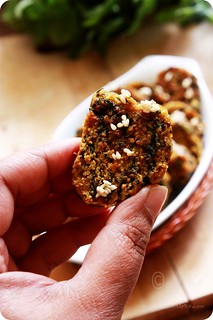
While browsing through Nupur’s One Hot Stove for T&T, I came across this recipe of Kothimbir Vadi. One look at them and I had serious cravings for this delicious vadis. And another point that got my full attention was the fact that Coriander is the main lead in this recipe instead of playing a cameo role as a garnish. This recipe is a best example as how simple herb can be used as main ingredient and yet will not end-up tasting herb-y (I know it’s not even a word, but couldn’t think of anything else ;). Other main equipment needed for this recipe is a steamer. I used pressure cooker without the “weight” and fried them in little oil till they turned golden and crisp. And boy! What a tasty vadis they turned out to be. Aromatic, crisp from outside and soft from inside, they were devoured in no time at all. We had them as an evening snack with cup of coffee and also as a side dish with Sabudana Kichidi the very next day. Thank you Nupur, for introducing us to another wonderful Marathi dish. Off this delightful crisp vadis goes to dear Kayln who is hosting this week’s WHB a.k.a. Weekend Herb Blogging.

Photobucket
Kothimbir Vadi


Kothimbir Vadi (Steam Cooked & Fried Savoury Coriander Cakes)
Prep Time: 5-10 mins
Cooking Time: 30 mins
Serves: 4-6
Recipe Source: One Hot Stove

Ingredients:
2 packed cups Coriander Leaves, finely chopped (I also used their stems)
1 cup Gram Flour/Besan
¼ cup Mixed Flours (I used Whole Wheat Flour + Millet Flour)
1 tbsp Rice Flour
4-5 Green Chillies, finely chopped (adjust acc to taste)
1 tsp Ginger-Garlic Paste
1 tbsp White Sesame Seeds (Nupur used 1 tsp)
1 tsp Poppy Seeds
½ Lime Juice (Nupur used 2 tsp, I am little partial to tangy taste)
1 tsp Turmeric Powder
1 tsp Garam Masala
1 tsp Sugar
¼ tsp Hing/Asafoetida
¼ tsp Baking Soda
Salt to taste
Oil for frying
Method:
Mix all the ingredients in a bowl except the oil. Add little water at a time to get a thick batter. Make sure that you remove any lumps former. The batter I made was that of any Pakoda/Bhajji batter consistency.
Grease a flat bottomed vessel with oil and pour batter into it. Steam it using a traditional steamer or pressure cooker without its weight for around 20-30 mints over a medium heat. The skewer inserted in the middle should come clean when it’s cooked properly.
Let it cool properly before you un-mould it. Cut it into desired shapes. I cut them into wedges. Now you can either serve it as it is or continue with next step.
Heat about ½ cm of oil in a pan and arrange these slices. Cook on both sides till they turn golden brown and crisp.
Serve these Kothimbir Vadis as snacks with any chutney or sauce of your choice or as side dish with Rice and Dal and enjoy.

Photobucket
Kothimbir Vadi


Reminder: MBP-Street Food
MBP-Street Food ends on 30th of June, 2008. Start patrolling the blogs and cook your favourite Street Food that your tummy begs and heart desires and spread link love.

Deadline: 30th June, 2008

Please go through the guidelines and include all the required information in your post and mail when sending me your entry. Don't forget to add Your Name, Your Blog Name, Name of the Dish you cooked, Perm Link of the entry, Perm Link of original recipe along with the gorgeous Photo of final dish.

Click Here or on the logo to find out more information on this event.

Reminder: WBB-Summer Feast

For this edition of WBB, your challenge is to cook anything with summer fruits and vegetables. Yes, the theme is WBB-Summer Feast. Go to your town/city’s Farmer’s Market and pick fresh season’s produce and make your favourite breakfast or brunch and join in the Summer Feast.

Deadline: 31st July, 2008

Please go through the guidelines and include all the required information in your post and mail when sending me your entry. Don't forget to add Your Name, Your Blog Name, Name of the Dish you cooked, Perm Link of the entry, Perm Link of original recipe along with the gorgeous Photo of final dish.

Click Here or on the logo to find out more information on this event.

Continue Reading...


Friday, 15 February 2008

With Love: Khandvi

Photobucket
Microwave Khandvi

We meet hundreds and thousands of people all around the globe but there are only few who leave their foot prints in our heart. One such person is Trupti of The Spice Who Loved Me. We both started our food blogs together and I can’t remember who was the first one to leave a note in our blogs. With in few days we were exchanging mails and chatting for hours on internet. Her love and passion for Gujarati food was evident when ever she posted a recipe in her blog and it was her simple recipes with detailed descriptions which attracted hundreds of amateur cooks like me to try and create wonderful Gujarati fair. It was always her blog which helped me to cook and impress my Gujju friends. She is a very special friend of mine whom I am missing a lot while writing this post. Although she no more blogs due to some personal reasons, I wish her all the luck and happiness. Dear T, this is to you and our friendship which I treasure.

Khandvi is Gujarati delicacy made using Gram Flour/Chickpea Powder and flavoured with tempering of pungent mustard, spicy green chillies, sweet coconut grates and aromatic coriander leaves. Although I had tasted Khandvi made by my PG owner, I never ventured into making it at home thinking it’s far from my reach to get those seductive spirals. Then one day while browsing for recipes I came across this Microwave Khandvi and I could no more resist the temptation. The ingredients listed and the method sounded simple enough to give it a go. I gathered all the courage I could muster and prayed before venturing into making it. It was fun watching thin batter turn thick paste when cooked in microwave without wasting my elbow grease and then spread them thinly on my glass chopping board (I thanked my Amma at that moment for teaching me Dosa making skill;). The best part was to cut them into thin stripes and roll them without much fuss!!! Yes, I did it and I feel like I am on top of the world (Oh, all you Khandvi experts can stop making faces and rolling their eyes :P). Here I proudly present fluffy, soft, melt in mouth and sinfully delicious Microwave Khandvi which goes to RCI-Gujarat hosted by lovely Mythili of Vindu.

Microwave Khandvi
Prep Time: 10 mins
Cooking Time: 15-20 mins
Makes: About 20 pieces

Ingredients:
For Batter:
1 cup Besan/Gram Flour
3 cups Sour Butter Milk/1 cup Sour Yogurt+2 cups Water
1-2 Green Chillies, ground to paste
½ inch Ginger, ground to paste
A big pinch of Hing/Asafoetida
A big pinch of Turmeric Powder
Salt to taste


For Tempering:
1 tsp Mustard Seeds
2-3 Green Chillies, finely chopped
1 tbsp Fresh Coconut grates
1-2 tbsp Coriander Leaves, finely chopped
1 tbsp Oil
Photobucket
Khandvi - Work-in-Progress

Method:
Take gram flour, turmeric powder, chilli and ginger paste, hing and salt to taste in a microwave safe bowl and mix well. Add butter milk to the mixture and mix well with a egg beater or spatula taking care that no lumps is formed. The batter should be thin and flowing without any lumps.
Place the bowl in a microwave and cook at high speed for 5 mins. Remove the bowl and mix the contents well.
Mean while, keep ready 2-3 steel plates or glass chopping board as I have used and a spatula to spread the batter. Don’t grease them with oil.
Place again in a microwave and cook uncovered for another 5 mins. Mix well and check if you can spread them thinly on the back of steel plates or glass chopping board. If the mixture is still runny, place it again in microwave and cook for another 2-4 mins.
Spread the thick batter quickly on the back of steel plates or glass chopping bowl. Spread it as thinly as possible.
Let it cool for 2-3 minutes. Then slice them with knife into 2 inch long stripes and roll each stripe neatly. Place each rolls in a serving dish.
For tempering, heat oil in a skillet and add mustard seeds to it. When mustard starts to pop and splutter, add chopped green chillies and sauté it for few seconds.
Spread them evenly over rolled Khandvi. Serve them immediately garnished with coconut grates and chopped coriander leaves and enjoy.

Photobucket
Microwave Khandvi


Note:
Few things worth remembering when making Khandvi are
While preparing the batter make it lump free as it will help you to evenly spread.
Keep at least 3 steel plates or smooth surfaced utensils ready before you spread the batter as it is important to spread the batter before it cools down and it is difficult to spread cooled batter thinly and evenly.
Other Popular Gujarathi Recipes in Monsoon Spice

Continue Reading...


Monday, 21 January 2008

Corn-y Affair: Sweet Corn Sundal

Photobucket
Sweet Corn Sundal

The sky is ablaze with glorious colours- fiery red, searing orange yet the outer edge of the blazing sky had begun to cool with the indigo of the night. The golden globe of sun was slowly descending in the backdrop of red-orange water and one could see all the colours of rainbow reflecting off the sea as the sun and water becomes one. You see the birds heading back to their nest and hear the roaring sound of tides hitting the shore. A light, cool breeze sweeps across, wiping all the stress and worries. You take a deep breath inhaling the smell of sea, sand and Bhutta….

Yes, ‘Bhutta’ or ‘Makkaai’ in Hindi is the roasted corn on cob. When the first rain indicated the onset of Monsoons in India, I would eagerly look forward for delicious treat. The sight of corn vendor or Bhuttawalah with his wooden cart stocked high with fresh corn and a small coal stove would make my taste buds tingle and eyes twinkle. Parked on road side, beaches, cricket play grounds, school/collage gates, this corner, that corner, every nook and corner would become the center of frenzied activity as the Bhuttawalah’s lured the passers-by with the delicious roasted aroma of Bhutta being roasted on open charcoal stove. The smell of the fresh roasted corns is so enticing that people are drawn to the cart to pick and choose the Bhutta.

The process of eating these Bhutta may sound very simple and straight forward but to actually experience the real taste of Bhutta the process starts right from selecting the right corn; the one which is neither too hard nor too tender. The hard ones with yellow colours give your teeth a tough time to chew and the tender one with creamy colour leaves you unsatisfied and wanting for more. The trick to get the right one is to open the husks and poke few of the kernels by digging your sharp nails to see how fresh and right the corn is.

Once the right corn is selected, the Bhuttawalah puts the corn on iron coal stove and keeps turning the corn to roast it evenly. Within few minutes of perfect technique of roasting as he fans the coal to keep them astir, you have your aromatic, roasted corn on the cob ready. The best is yet to come… that is the zesty end to the Bhutta story. With freshly cut piece of lime dipped into a mixture of hot red chilli powder and salt, the Bhuttawalah artfully massages the length of cob, leaving trails of hot, sweet and sour flavour all over the kernels. If you are like someone like me who likes to test her spice scale then you are in for treat. With another coat of fiery green chilli chutney deftly applied on them you will be testing your spice scale to its limit. Can’t handle too much of spice? No worries. Bhuttawalah is too happy to apply silky butter which will melt at the very touch of hot Bhutta. As the butter dissolves chilli, lime, salt and chilli chutney creating perfect harmony of flavours, the pleasure of biting into Bhutta and savouring the taste is something which one needs to experience to understand.

PhotobucketBhuttawalah roasting Bhutta on Charcoal
Photo Courtesy: Arun Shanbhag (Thanks Arun:)

“....pray what more can a reasonable man desire, in peaceful times, in ordinary noons, than a sufficient number of ears of green sweet-corn boiled, with the addition of salt?”
-Henry David Thoreau, 'Walden'

I do agree with you Mr. Thoreau. With non-stop rain pouring without any break, all I could think of is biting into sweet, spicy, tangy and hot Bhutta. It being Sunday evening and all the supermarkets closed I had to settle for canned Sweet Corn!!! I chose to make Sundal which is usually made using Black or White Chickpeas/Kabuli Channa and is given as Prasadam in most of South Indian Temples. Cooked black/white channa is tempered with mustard and urad dal and garnished with fresh coconut flakes is my favourite Prasadam in Temple which always makes me wanting for more. To this basic recipe of Sundal I used canned sweet corns which quite surprisingly tasted great. This crisp sweet corn is sautéed lightly with crunchy onion and sweet tomatoes with a touch of green chilli and a splash of lime juice to give it a zest. It was a quick and great snack to munch on while we watched rain dancing around us. I am sending this to lovely Mansi of Fun and Food who is hosting fun event Game Night Party as its a perfect dish to prepare within ten mins and enjoy with your friends.

Sweet Corn Sundal
Prep Time: 5 mins
Cooking Time: 5 mins
Serves: 2

Ingredients:
2 cups Sweet Corn (We used canned)
1 small Red Onion, finely chopped
1 small Tomato, finely chopped
1 Green Chilli, finely chopped
1-2 tbsp Lime Juice
1 tbsp Coriander Leaves, finely chopped
Salt to taste

For Tempering:
½ tsp Mustard Seeds
1 dry Red Chilli, halved
1 tsp Oil
Few Curry Leaves (Optional, but recommended)
Photobucket
Sweet Corn Sundal

Method:
Heat oil in a pan and add mustard seeds, red dry chilli and curry leaves.
When mustard starts to pop and splutter add finely chopped red onion, green chilli and sauté it for 30 seconds.
Now add finely chopped tomato, sweet corn, salt to taste and sauté it for 1-2 mins over medium flame.
Turn off the gas, add lime juice and chopped coriander leaves and mix well. Serve hot and enjoy.


Notes:
Add grated fresh coconut and raw mango to get different flavour.
Replace sweet corn to cooked black or white kabuli channa.
Omit onion when preparing it for Neivedyam.

Continue Reading...


Wednesday, 28 March 2007

Stuffed Chillies

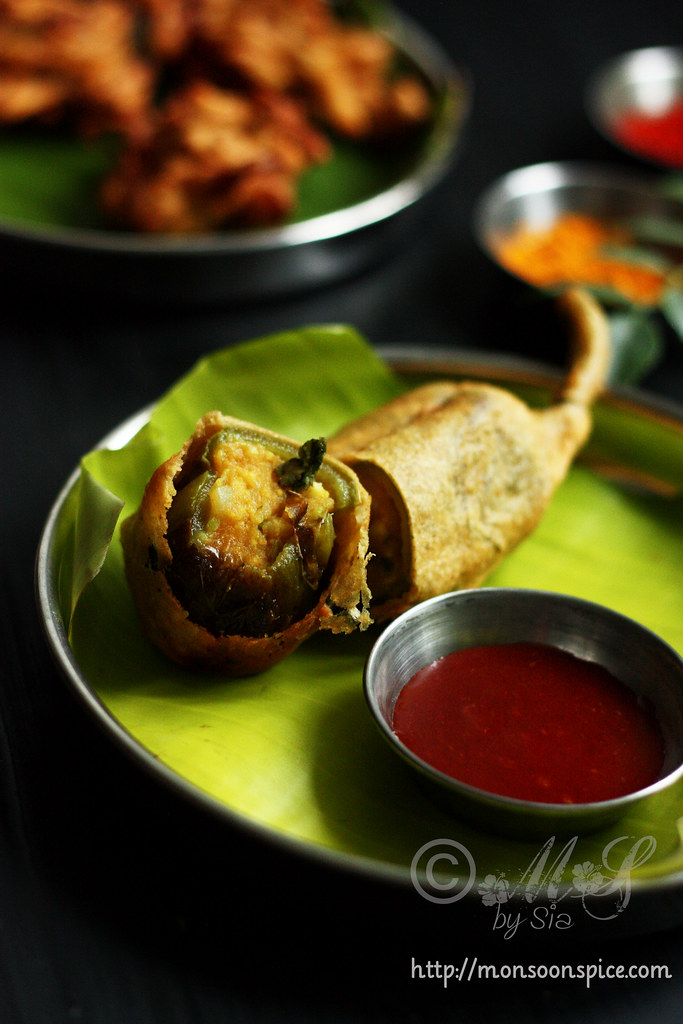
Err… Yeah!!! Yet another “Stuffed” recipe from me. I am stuffing my tummy with stuffed stuffs. I can’t understand my recent obsession with stuffing any vegetables on sight. After trying stuffing Baingan, Bhendi, Tomatoes, Mushrooms, I did the ultimate stuffing. {~Applause~} Here comes my Stuffed Chillies. I cross my heart and promise, no more stuffed stuffs for another month;)
Well, looking at my increasing waistline my hubby at last openly asked me to stay away from stuffing my tummy. Alas… Till now I some how managed to act innocent to all subtle hints I was getting from him. Do you have any idea that you foodies are partially responsible for my increasing waistline? First you lure me with nice description, then tempt me with mouth watering pictures and brainwash me with your sweet guidelines as how easy and quick it is to make.

Stuffed Chillies

Well, I am here to take revenge!!! Revenge on every food blogger buddies for making me gain few extra pounds with in a month’s time. My revenge is not sweet. It’s scorchingly hot and sinfully delicious. {~Devilish Grin~} When you try one you will crave for more. The more, the merrier;)

Stuffed Chillies


Stuffed Chillies
Prep Time: 10 mins
Cooking Time: 15-25 mins
Serves: 3-4
Ingredients:
4-6 Jalapenos or any medium thick skinned Chillies
2 Potatoes
1 cup Gram flour/Besan
1 tbsp Rice Flour
A pinch of Cooking Soda (optional)
1-2 tsp Red Chilli Powder
½ tsp Turmeric Powder
1 tsp Jeera/Cumin Powder
1 tsp Amchur/Dry Mango Powder
Salt to Taste
Oil for Deep Frying

Stuffed Chillies

Method:
Slit the chilli along one side using small knife.
Remove the seeds and white part inside the chilli. If you prefer spicy ones then leave the seeds as they are.
Peel the potatoes and chop them into large chunks. Cook them in salted water and mash them thoroughly.
Make small balls of mashed potatoes and stuff them tightly inside the chilli and keep them aside.
Make thick batter of gram flour, rice flour, cooking soda, chilli powder, turmeric powder, cumin powder, amchur and salt using enough water. Make sure that there are no lumps left in the batter.
You can mix about a tbsp of hot oil into the batter which will help to reduce the amount of oil absorbed during deep frying.
Dip stuffed chillies in batter and coat all the sides.
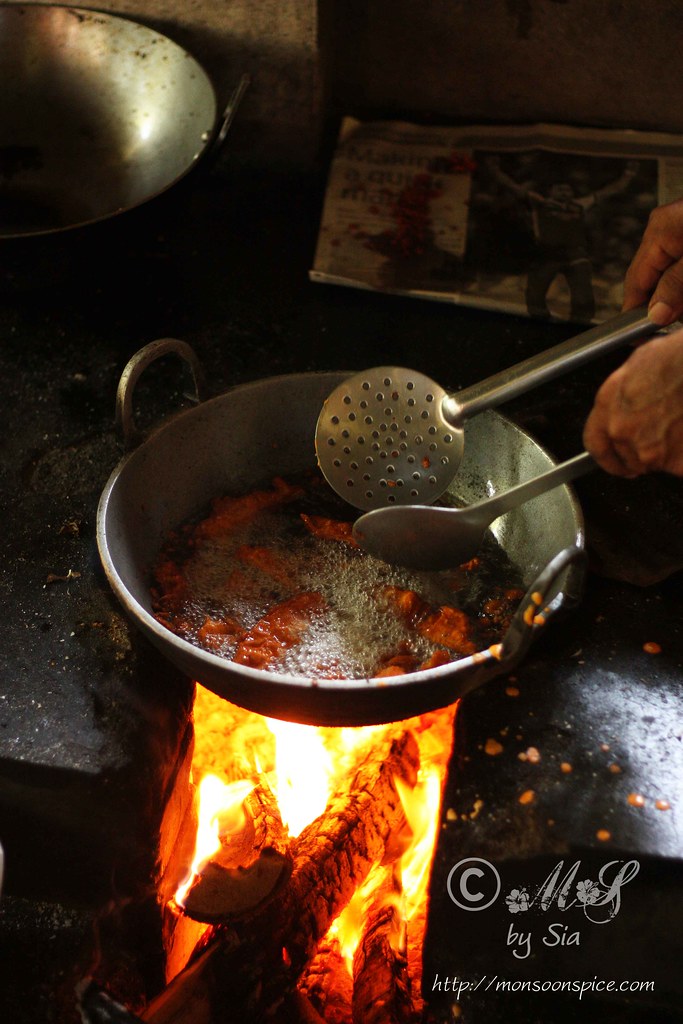
Deep fry them in heated oil till they turn crisp and golden brown in colour.
Serve sizzling hot with tomato ketchup or any chutney or dips of your choice.

Stuffed Chillies


Variations:
You can add garam masala or any other spices like chilli powder, turmeric powder, amchur, jeera powder etc to mashed potatoes for making it spicier.
Add grated cheese or paneer to mashed potatoes for extra richness.
Check for some more delicious stuffed chillies here, here and here.

Stuffed Chillies


Did You Know?
Chillis are loaded with vitamin A, a potent antioxidant and boost to the immune system. As the pods mature and darken, high quantities of vitamin C are gradually replaced with beta carotene and the capsaicin levels are at their highest. Due to these capsaicin levels, some believe that eating chillis may have an extra thermic affect, temporarily speeding up the metabolic rate, hence burning off calories at a faster rate. Whatever, you certainly do sweat and actually cool down in hot climates as sweat evaporates. Your nose runs, your head clears ... you can breathe! And with that extra flow of saliva, the gastric juices also flow. The alkaloids from the capsaicin stimulate the action of stomach and intestine improving the whole digestion process!
(Source: www.chillisgalore.co.uk)


Stuffed Chillies


Continue Reading...


Monday, 5 March 2007

Jeegujje Podi/Breadfruit Pakodas & A Protest Against YAHOO

Breadfruit one of the common vegetable found in every household. When it comes to Mangalore cuisine, Breadfruit is the best substitute for Potatoes. It has got gummy, rubbery finish when raw and has got this melt in mouth texture when cooked. I remember the days when I and my sister used to climb this huge breadfruit tree in the backyard and spend most of our time swinging from its branch. Oh!!! We were naughty monkeys ;) For me, Breadfruit tree is one of the handsome trees, with its branches spread out evenly with gorgeous green foliage. Their leaves have this beautiful glossy green colour.
There are many recipes for cooking breadfruit. My favourite are sambar, majjige huli, palya and podi/pakodas. Here is a simple recipe of making Jigujje Podi/Breadfruit Pakodas.

Jeegujje Podi


Jeegujje Podi(Breadfruit Fritters)
Prep Time: 10 mins
Cooking Time: 10-15 mins
Serves: 2-3
Ingredients:
¼ Breadfruit
½ cup Gram Flour
1 tbsp Rice Flour
½ tsp Cumin Seeds
1 tsp Red Chilli Powder
A pinch of Asafoetida/Hing
Salt to taste

Jeegujje Podi

Method:
Peel the bread fruit and remove the fibrous part in centre.
Slice them into ½ cm thickness.
Keep them immersed in water till required.
In a mean while, add all other ingredients and make thick paste using water.
Remove the slices from water and dry them using paper towel.
Coat each slice with paste evenly and deep fry them in oil at medium flame till they turn golden yellow.
Remove from oil and place them on paper towel to remove excess oil.
Serve them hot with tomato ketchup with a hot cup of coffee and enjoy.

Jeegujje Podi


Note:
Note that frying breadfruit requires more time than usual pakodas.
Use Asafoetida/Hing while cooking breadfruit as they tend to be very starchy.


Jeegujje Podi


Some Interesting Facts about Breadfruit:
The breadfruit is:
Low in Saturated Fat, Cholesterol and Sodium
High in Vitamin C, Dietary Fiber and Potassium
The nutritional value of breadfruit makes it ideal for:
Maintaining optimum health
It is also OK to include breadfruit in your diet for:
Weight loss
Weight gain
(Source: http://www.great-workout.com)


Jeegujje Podi

YAHOO: Enough of Ctrl-C, Ctrl-V

A protest against Yahoo! India plagiarizing contents from bloggers.
I just want to say: Shame on you Yahoo!
Read more here & here & here & here... We stand united for our rights.


(Icon credits - Sandeepa of Bong Mom's cook )


Continue Reading...


Monday, 5 February 2007

Akki Pundi (Rice Dumplings)

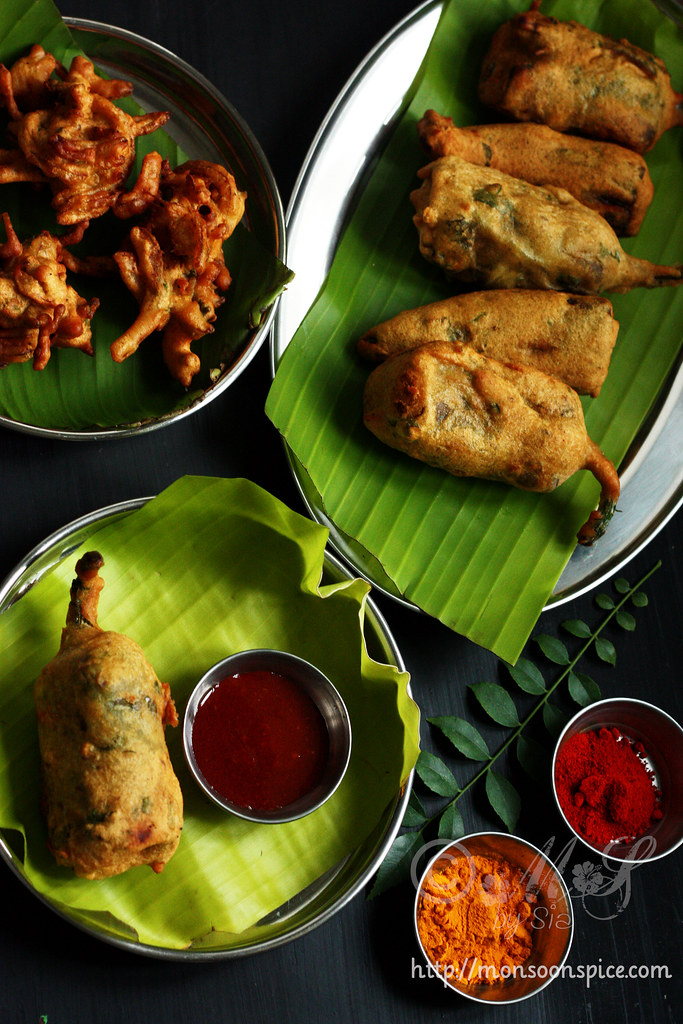
In today’s menu I am going to present authentic, traditional Mangalorean recipe of Akki Pundi (Rice Dumplings). This was the first time I tried making this and boy! They were so simple and easy to cook. There is no frying, rolling and no sweating or swearing ;) Everything went so smoothly and I really-really managed to produce perfect Pundis. Thanks to my MIL who gave me simple yet best recipe to make perfect Akki Pundis. I served them with delicious bowl of onion-potato Sambar, Rave (pronounced as ra-way) which is made from jaggary and onion pakodas (oh!!! It’s difficult to stay away from fried food :) This time I made Onion Pakoda’s using Asha’s recipe and boy, they were yummylicious :) Thank you Ashakka for yummy recipe. And these pakodas are my entry for Coffee’s MBP.

Akki Pundi served with Potato-Onion Sambar and Onion Pakodas


There are different ways of making Akki Pundi’s and this is my MIL’s version. I will post my Amma's version sometime later.


Akki Pundi and Onion Pakoda


Ingredients:
2 cups Rice
Salt to taste


Akki Pundi ready for steam cooking


Method:
Wash rice and spread it on clean cloth to dry.
Once all the water is dried up, grind the rice without adding water coarsely. Make sure that you don’t grind it to smooth powdery texture. I usually grind the rice grains to khus-khus sized granules.
In a mean while, pour 3 glasses of water and salt to taste in thick bottomed vessel and bring it to boil.
As soon as the water is hot enough add ground rice and keep mixing the mixture making sure that they don’t stick to the bottom of the pan.
Cook this mixture over a medium flame, stirring continuously till solid enough to be rolled into balls. (It took me around 8-10 minutes)
Make small lemon-sized balls by wetting your hands in cold water.
Arrange them in a steamer and steam cook for about 15 minutes in medium heat.
Let it cool down a bit before you serve them.
Serve them with any Sambar, Kurma, Honey or Chutneys.


Akki Pundi served with Potato-Onion Sambar and Onion Pakodas


Tips:
Once you mix the hot water and rice flour you can shift the mixture into microwave bowl and cook it in microwave for about 10 minutes. Make sure that you mix the mixture once in every 3 minutes so that it’s mixed evenly.
You can also cook the Pundi’s in microwave for 8-10 minutes using Microwave Idli Maker.
To make spicy Pundi’s, season mustard, urad dal, broken red chillies and curry leaves. Add this seasoning to the water along with rice in the beginning and then proceed with the next steps.
You can also add ½ cup of freshly gated coconut to the mixture.

Akki Pundi served with Potato-Onion Sambar and Onion Pakodas


Continue Reading...