Showing posts with label Mango. Show all posts

Tuesday

Simplicity in Cooking: Raw Mango Kodhel

New posts of Monsoon spice are not showing up at Sailu’s Taste of India. Please click on the RSS image or Click Here to subscribe and get notification on any new posts posted on Monsoon Spice. Or you can get e-mail notifications by entering your e-mail on the top right hand sidebar.

Simplicity in cooking is something I am learning these days. It’s not necessary for you to add all the spices and more ingredients to cook delicious food. There were times when I couldn’t think of cooking without adding onions, tomatoes and garlic with minimum half a dozen of spices to jazz it up. With time I feel more confident in choosing just few spices that is right for the main vegetables. In other words I don’t panic and hop around when I have to use just few ingredients to cook something exceptionally delicious. These days I am seeing different me when it comes to cooking. I have stopped harassing the vegetables with extra handful of herbs and suffocating them with overdose of spices. I see dramatic change in my style of cooking. It’s like seeing mirror image of my mother who always cooks exceptionally great food with just few ingredients. Well, I may never be able to reach her standard of cooking but I am on my way of becoming at least one decent cook.

Such simplicity in cooking is very common when it comes to Udupi-Mangalorean cuisine. Everyday food is cooked with very few ingredients and lots of love and coconut. Coconut is the heart of this region’s cuisine and you will find most of the recipes using it in one form or other. Don’t be surprised to see people getting little carried away when it comes to Coconut be it coconut oil, gratings, desiccated coconut, coconut milk and even coconut water. Coconut not only dazzles any dish it touches but also gives it very distinct flavour by easily complimenting any vegetables, herbs and spices it is blended with.

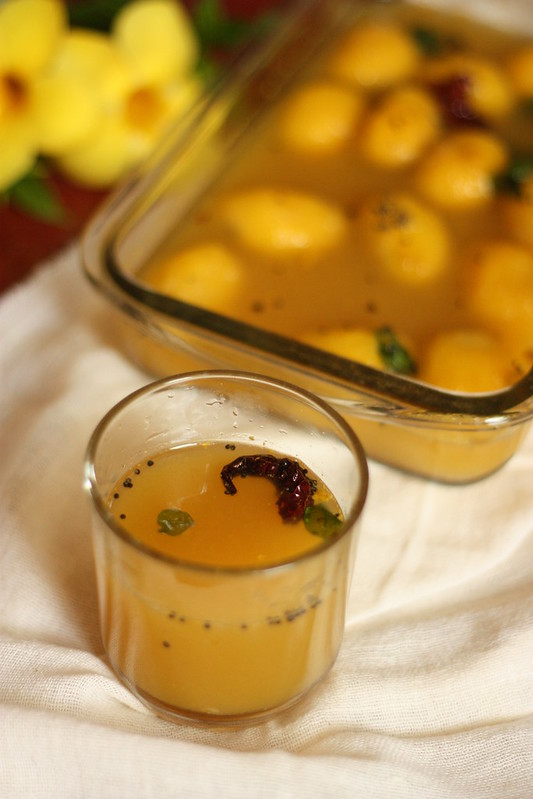
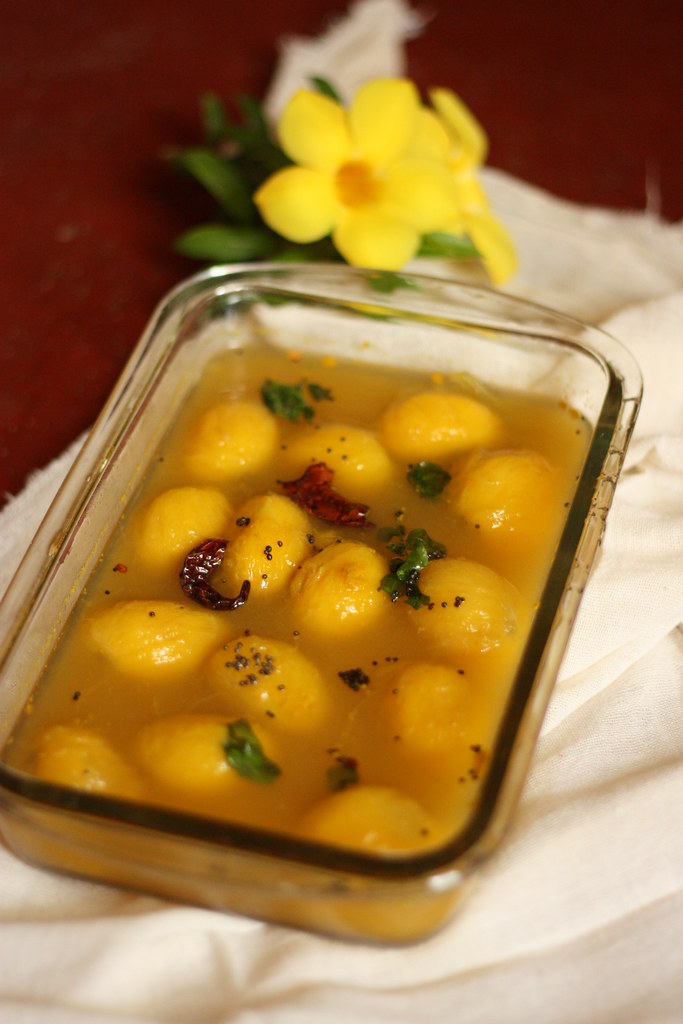
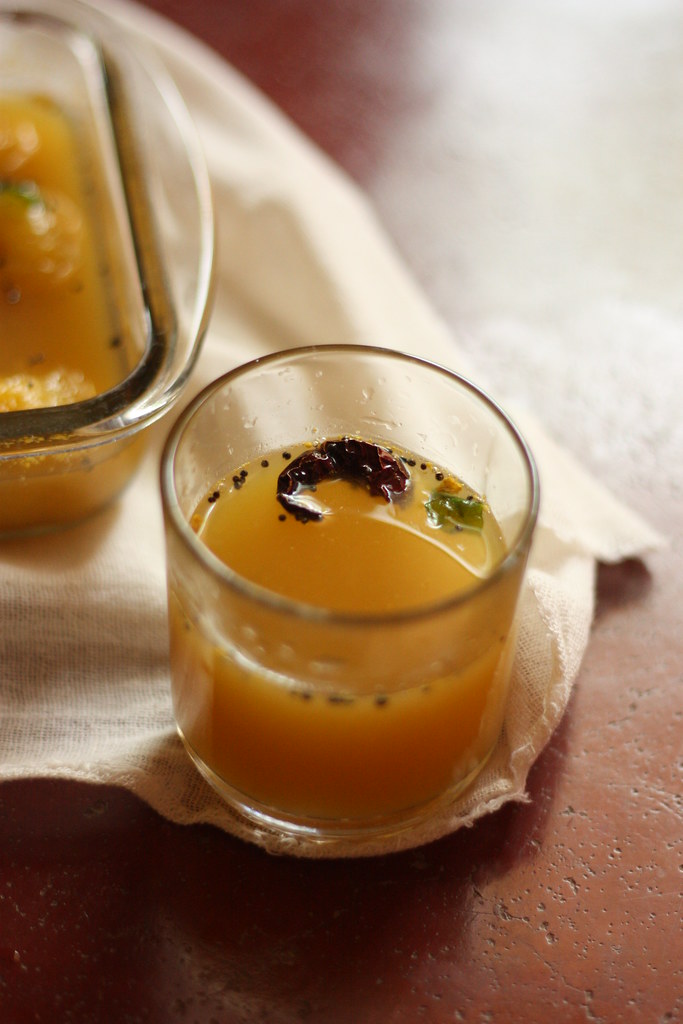
One such recipe is Kodhel or Kodheal, a coconut based curry from Mangalore. Recipe is quite simple and straightforward, vegetables cooked with a ground paste of fresh coconut and few handfuls of spices. Sounds simple isn’t it? But the taste is unforgettable. Every time I make Kodhel it tastes different when used with different vegetables. From humble vegetables to royal fruits, the choice of main ingredient is many. This time I made summer special and my all time favourite Raw Mango Kodhel using Totapuri Mango which is a best choice for this recipe. Don’t fret if you don’t find Totapuri mangoes. Instead go for those mangoes which have mild sweet note with sourness. The rich and vibrant golden red colour of the gravy comes from special type of dry red chillies called Byadagi Menasu/Chilli which comes from Byadagi region in North Karnataka and is a must for Managlorean cuisine. This Raw Mango Kodhel where sweet and sour Totapuri mangoes are cooked in lightly spiced coconut gravy is delight to every foodie’s senses. And off this goes to Suganya who is guest hosting this month’s AFAM-Coconut. Oh yes, Coconut is really a fruit and like many of you I too learnt it recently.

Photobucket
Mango Kodhel


Raw Mango Kodhel (Raw Mangoes cooked in Mangalorean Coconut Gravy)
Prep Time: 5 mins

Cooking Time: 15-20 mins

Serves: 3-4


Ingredients:
1 large Totapuri Mango, cut into 1 inch cubes (no need to peel its skin)
1-1½ inch cube of Jaggery
Salt to taste

For Ground Paste:
¾ cup grated Coconut, fresh/frozen
4-5 Dry Red Chillies (I used Byadagi, adjust acc to taste)
1 tbsp Coriander Seeds
1 tsp Jeera/Cumin Seeds
½ tbsp Urad Dal
Big pinch of Methi/Fenugreek Seeds
1 small marble size Tamarind (adjust acc to taste, if mangoes are quite sour them omit it)

For Tempering:
1 tbsp Oil (preferably Coconut oil)
1 tsp Black Mustard Seeds
1 dry Red Chilli, halved
A big pinch of Hing/Asafoetida
Few Curry Leaves


Photobucket
Ingredients(clockwise): Raw Mango, Jaggery, Tamarind, Roasted Spices & Coconut

Method:
Cook cubed mango pieces in 3-3½ cups of water adding jaggery and salt to taste for between 7-10 mins on a medium flame. Make sure that the mangoes are just cooked and its peel change to dirty green colour.
Mean while, dry roast coriander seeds, cumin seeds, dry red chillies, urad dal and methi seeds for about 1 min in a medium flame till they turn light brown in colour and gives out nice aroma. Grind these roasted spices with coconut, tamarind pulp and just enough water to very smooth paste.
Add this ground paste to mango pieces and mix well. Add little water if needed to get required consitancy of base gravy. Cook this mixture for another 5-7 minutes and bring it to gentle boil.
Heat oil in a tadka pan and add mustard, dry red chillies, hing and curry leaves. Transfer this tempering to the curry when mustard starts to pop and splutter. Mix well and cover and keep it aside covered for about 10 mins for all the flavours to blend well. Serve this delicious Raw Mango Kodhel with Rosematta or Basmati Rice or with Dosa and Idli and enjoy.

Photobucket
Raw Mango Kodhel


Notes:
While cooking mangoes make sure that you don’t over cook them as it is important for mangoes to retain their shape and not become mushy.
Don’t cook for too long once you add ground mixture of coconut.
This Kodhel tastes great the next day when all the flavours are blended well.

Other mango recipes blogged so far

Thanks to dear Skribles of Food with a Pinch of Love (for Nice Matters & Good Chant Blog) and lovely Happy Cook of My Kitchen Treasures (for Arte y Pico) for passing me these awards. I am honored and feel cherished girls :)


PhotobucketPhotobucketPhotobucket


Reminder:
MBP-Street Food ends on 24th of June, 2008. Start patrolling the blogs and cook your favourite Street Food that your tummy begs and heart desires and spread link love.

Deadline: 24th June, 2008

Please go through the guidelines and include all the required information in your post and mail when sending me your entry. Don't forget to add Your Name, Your Blog Name, Name of the Dish you cooked, Perm Link of the entry, Perm Link of original recipe along with the gorgeous Photo of final dish.

Click Here or on the logo to find out more information on this event.

Thursday

Mango Memories: Spicy Mango Chuteny/Pickle

Mangoes here, mangoes there, and mangoes every where!
There they are swinging along on a laden tree;
Here they are tightly packed in a wooden cartoon.
There they are neatly sliced and piled on a plate,
Here they are pickled and brined to perfection.
It’s a season of Mango Mania.
- By Yours Truly Sia Wordsworth ;)

It is and it will always be mangoes that rule my world and my childhood memories. Forget all exotic fruits- pineapple, peach, kiwi, plum, berries; nothing can ever come quite close to magnificent Mangifera Indica in flavour, taste or aroma. It’s a same story every year. Just one look at them and I start reminiscing about the Mango Season, the season of the king of fruits, back home in India.

Come summer and it meant only one thing for me and my sister, long vacation at Paternal Granny’s home. The memories of those sunny, glorious summer days of endless fun, pranks and digging our teeth into succulent mangoes warm my heart even today. Granny’s house was just like many other beautiful tiled-terraced houses (or more like mansion) in my native Mangalore. Surrounded by acres of greenery, the white house with red tiles stood tall and proud with wide porches running around the house. Polished to perfection red oxide floors would gleam with intricately carved round rosewood pillars supporting the roofs. The trees around the big house served as the compound walls and the beautiful water stream flowing right next to the house was its gate. Magnificent jackfruit, tamarind, coconut trees competed against each other for the title in the backyard.

Amidst them was this garden from heaven, Mango Orchard. No idea as since how long it’s been there. It was just like my great grand father knew that his numerous great grand children, like hungry flocks of birds, would come and attack the mangoes while they were still green, tender and sour. Just one look at those luscious gold and emerald coloured fruits hanging from green leafy trees was enough to get us all excited. Every summer it was the same story as if we were looking at the mangoes for the first time. There’s always something special about mangoes. It is like seeing the gold rush, precious to every kid and even grown up. Always trying to suppress the innate urge to monkey around but failing miserably, all we kids were seen hanging from the mango trees while the grownups snored through the hot summer afternoons. While older kids, especially the boys, climbed the higher branches we smaller kids would be seen hanging from the lower branches of the trees. And the ones who were scared of height were seen standing on the ground holding a big bath towel spread wide to collect the mangoes picked and thrown by the ones on the trees. Biting deep into raw sour mangoes and dipping those pieces into the spiced ground mixture of salt, pepper and red chillies wrapped in an old newspaper sheet was pure heaven. If that was not enough, each and every meal served during mango season had one or more mango dish to tingle our taste buds. Tender Mangoes ground with Sweet Coconut Chutney, Tender Mango Pickle, Mango Dal, Mango Burfee, Mango Palya, Mango Mosaru Gojju, Mango Rasayana, Mango Rice, Mango Lassi are few of them which were served with dollop of love everyday. While listening to stories of Devas (God) and Asuras (Demons) from Ajji, the intoxicating perfumes of the mango flowers wafting from backyard would sooth our senses and lulled us into deep sleep. Blissful childhood days and glorious mangoes!!!

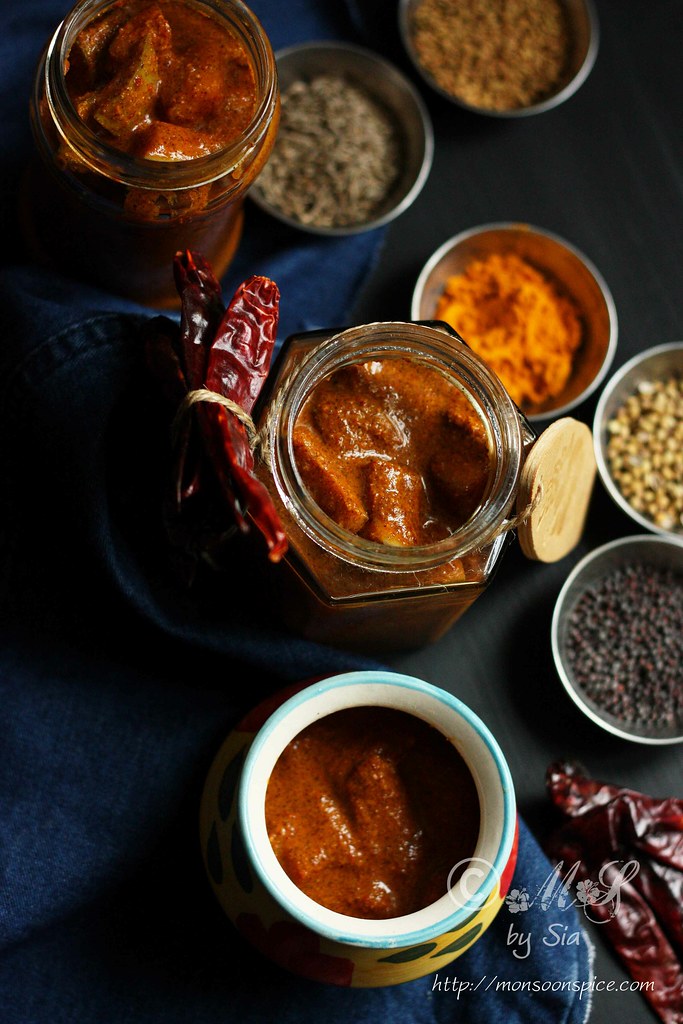
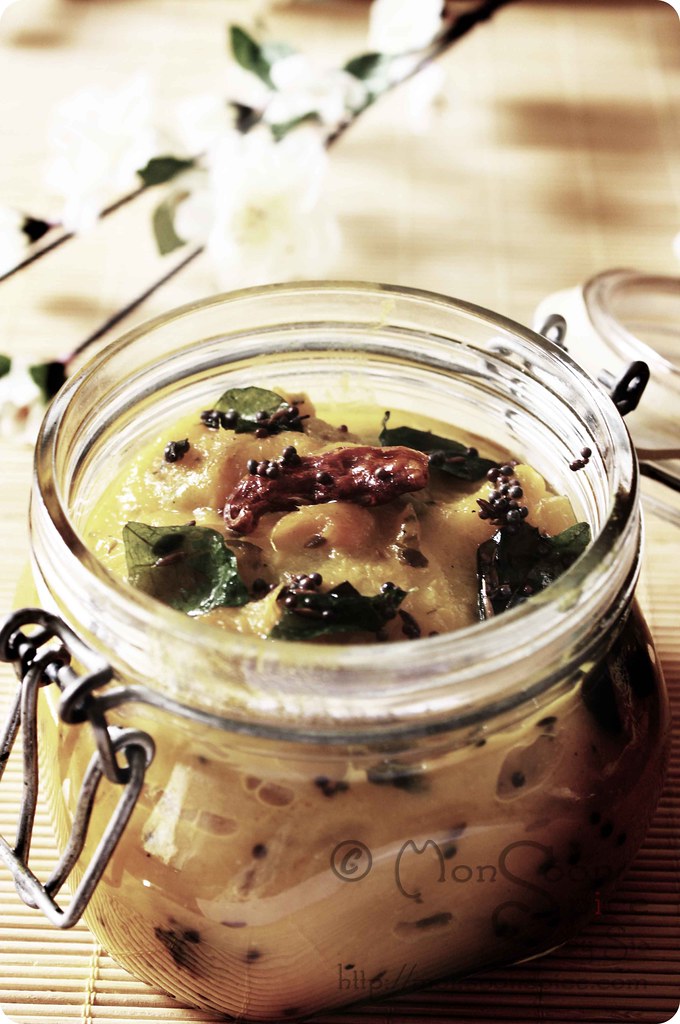
This year during our short trip to India we did manage to gulp down few mangoes and recreate our childhood memories with little nephew and niece and half a dozen other kids from neighbourhood. And if you are wondering did I really climb the mango tree with them, then I am not going to disappoint you guys. Yes, I did climb the mango tree with my sister and brother just two days before my sister got married and managed to get scolding from our neighbour who happened to be the owner of that gorgeous mango tree. Well, something just can’t be changed! With all these I did manage to eat all delicious food cooked by my MIL (can’t believe I am one of those lucky people who have this generous, sweet soul as MIL). Out of few recipes I managed to learn from her during busy schedule was this delicious Spicy Mango Chutney or Instant Mango Pickle. Slightly sweet and sour Tothapuri Mango is grated and mixed with salt to remove excess juice and then ground with few spices to make this very fresh, aromatic and spicy pickle/chutney. If you don’t get Tothapuri Mangoes then you can easily substitute it with any other sour raw mango of your choice. I am dedicating this mango post to my gorgeous sister who was not only my trusted companion in stealing mangoes from our neighbours but also is celebrating her birthday today. S, this is for you my dearest. And straight away it goes to dear Arundathi who is guest hosting this month’s WBB-Mango Madness started by Nandita. While we are still talking of Mango Mania, don't forget to share your Mango memories with us.

Photobucket
Spicy Mango Chuteny/Instant Mango Pickle


Spicy Mango Chuteny/Instant Mango Pickle (Sour Mango ground with selected aromatic Spices)
Prep Time: 10 mins
Cooking Time: 3-5 mins
Makes: 1-1½ Cup
Recipe Source: My MIL

Ingredients:
1 medium Raw Mango, peeled and grated (Approx. 1 packed cup)
5-8 Dry Red Chilli, broken (I used Byadagi, adjust acc to taste)
½ tsp Methi/Fenugreek Seeds
1-1½ tbsp Black Mustard Seeds
1-1½ tbsp Sea Salt
¼ tsp Hing/Asafoetida

Photobucket
Ingredients for Spicy Mango Chuteny/Instant Mango Pickle

Method:
Mix sea salt with grated mangoes and keep it aside covered for about ½ and hour to hour time. The juice from mango will be released.
Squeeze the juice from grated mango and reserve it for later. Keep aside squeezed mango gratings.
Dry roast dry red chillies, fenugreek seeds, mustard seeds and hing in a pan on medium to low flame for about 2-3 minutes till fenugreek seeds turns light brown in colour and you get nice roasted aroma from spices.
Cool the spices and grind them coarsely with grated mango. Add reserved squeezed mango juice as and when required. This Pickle/Chutney should be quite thick in consistency and make sure that you don’t grind them to smooth paste.
Store them in a sterilised jar in refrigerator. It can be used up to a month’s time. Serve them with Dosa, Idli, toast or Curd Rice and enjoy.

Photobucket
Spicy Mango Chuteny/Instant Mango Pickle


Notes:
You can also add 1 tsp roasted Cumin Seeds/Jeera for little different flavour.
Make sure that you don’t grind it to smooth paste. It should be ground coarsely so that you can enjoy small chunks of spices and mango.
Tothapuri mangoes work best for this recipe. But if you don’t get them at your place then you can easily substitute it with any other sour, raw mango of your choice.

Wednesday

Akki Shavige with Rasayana & Menthe Chutney

She was sleeping soundly, smiling in her sleep while she dreamt of chasing colourful butterflies in garden. When the persistent sun shone brightly on her face, little girl with pigtails sighed and snuggled back under the covers, blissfully embracing slumber. The mild caress of heavenly aroma coming from kitchen nudged her gently to open her heavy eyelids. Dragging her feet on cool marble floor with her favourite doll tucked under one arm and blinking her eyes to the golden glow of sunshine streaming from high ventilator and windows, she blissfully inhaled the wonderful aroma of ground coffee beans and spices. The sight of her mother with long hair tied in a loose knot adorned with pearls of water, standing in kitchen stirred the feeling of love and happiness. She ran and hugged her mother inhaling the heady perfume of her herbal soap and shampoo. Mother gently lifted her daughter planting kisses on her daughter’s blushed chubby cheeks and placed her away from heat, close to window where she could see the world waking up to the glorious sunshine. As her mother churned delicious food in lightening speed, little girl watched her dad entering the kitchen with special device to make one of her favourite food. As her dad and mom smiled at each other knowingly, little girl sat on the floor cross legged with a twinkle in her eyes as she watched her dad rotate the noodles presser which turned the steaming rice dough into thin, stringy white noodles. She smiled brightly at her parents looking over the food, simple home food, food that made her happy and content.
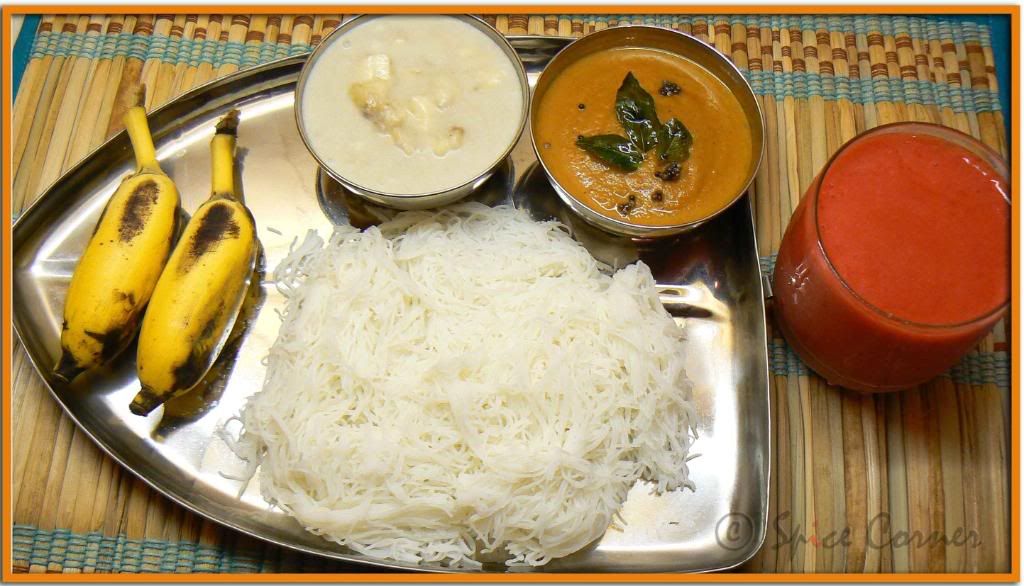
Yes, I am talking about my favourite breakfast item, Rice Semige/Shavige. Also known as Sevai or Santhakai in Tamil and Idiappam or Noolappam in Malayalam, Shavige is made from rice and coconut in my native Mangalore and it is usually served with sweetened coconut milk and spicy chutney or sambar. This was the only time when my mother would allow my dad to help her in kitchen as it required an extra pair of helping hand to make these stringy rice noodles. While my mom inserted the steaming balls of rice dough in the Sevai container and rotated the plate kept under the container collecting Shavige, dad would quickly rotate the sturdy handle in clock-wise direction. This Shavige Presser although might look like something out of medieval torture device to some people is a must device in every house-hold in Mangalore. Back in my Ajji’s house she had wooden Shavige Presser which looks quite different to what we have now. Instead of rotating the handle, the wooden one would press down the dough like hand water pumps in rural India. Unlike my Ajji and Amma, I use simple Chakkli Presser to make Shavige. Chakkli presser works fine for two growling tummies and moreover it’s quite easy to clean. But I must add that rotating Shavige Presser is equlivalent to working out those muscles in gym, so will not get enough of arm exercise when using Chakkli press ;)


Akki Shavige with Menthe/Methi Chutney and Baale Hannu Rasayana is my contribution to this month’s RCI-Karnataka hosted by our blog queen Asha of Foodie’s Hope and also to this month’s JFI-Banana hosted by lovely Mandira of Ahaar.

Photo Sharing and Video Hosting at Photobucket
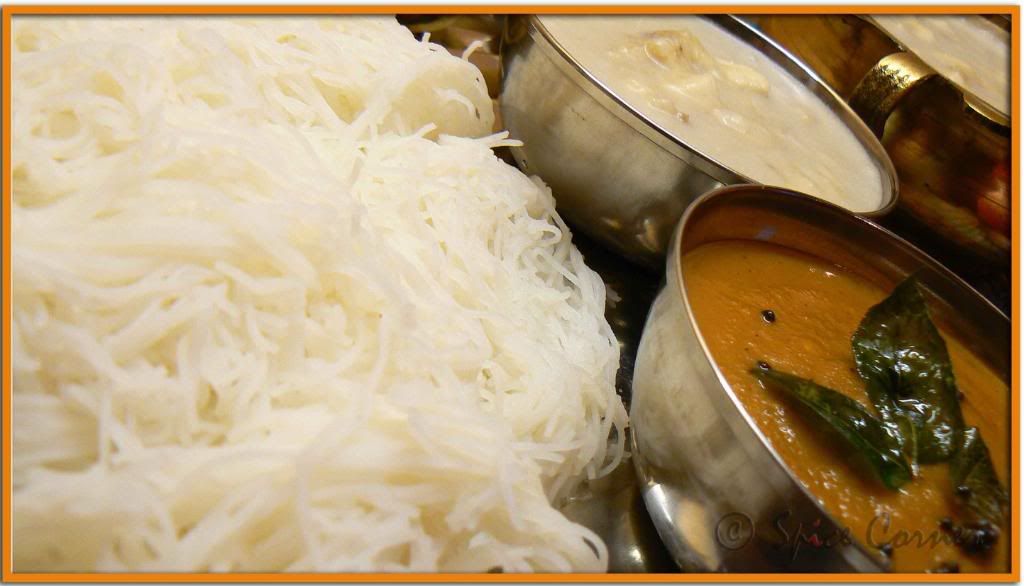
Akki Shavige with Rasayana & Menthe Chutney


Akki Shavige
Prep Time: 30 mins (excluding soaking time)
Cooking Time: 20 mins
Serves: 2-3

Ingredients:
1 cup Rice
1 cup Fresh/Frozen Coconut
2 tbsp Oil, preferably Coconut Oil
Salt to taste

Photo Sharing and Video Hosting at Photobucket
Akki Shavige

Method:
Wash and soak rice in 2 cups of water for 4-5 hours or overnight.
Drain and grind this rice with grated coconut and salt to taste adding little water at a time to very smooth paste. Note that there shouldn’t be any lumps and the paste should be silky smooth. Usually my Ajji and Amma make very thin batter of buttermilk consistency but I grind it to Dosa batter consistency which works fine for me.
Apply coconut oil to heavy bottomed kadai/wok covering it well. Pour the batter in this wok and keep mixing this batter in medium flame till all the water evaporates and it turns to a thick lump of dough.
Switch off the gas and start making big lemon sized balls by applying little cold water to stop it from sticking to your hand.
Steam cook these rice balls in a steamer or pressure cooker without putting its weight for about 10 minutes.
Place two steaming rice balls in Shavige presser or Chakkli maker and press the noodles. Place these noodles in a banana leaf or wet cloth and let it cool. This noodle needs to be cooled down to hold their shape. Serve these noodles with Chutney, sweetened Coconut Milk or Sambar. You can also make Tamarind or Lemon Rice Noodles with the leftovers.
Check Shilpa or Aayi's Recipes and Manjula of Dalitoy's recipes for Shavige where they use Shavige Press here and here. And also check here for Viji of Vcuisine's recipe for Vella, Lemon and Ulundhu Sevai using Chakkli Press.

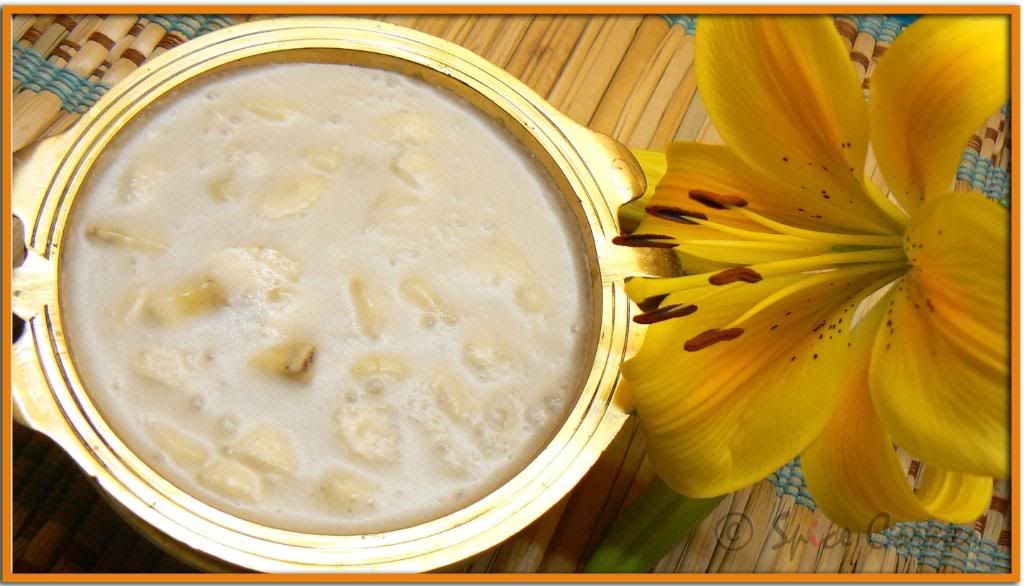
My Ajji and Amma usually served Akki Shavige with Sweetened Coconut Milk or Rasayana and Menthe Chutney. Rasayana (Rasa means Juice/essence/flavour/taste in Sanskrit) is basically a sweetened coconut milk mixed with chopped Bananas or Mangoes depending on seasonal availability of fruits. Freshly extracted Coconut milk is flavoured with Jaggery and pinch of Cardamom and made wholesome by adding chopped bananas or mangoes.


Rasayana(Sweetened Coconut Milk):
Prep Time: 20-25 mins
Cooking Time: -
Serves: 2-3

Ingredients:
1 cup Bananas, quartered and sliced
1½ cup freshly extracted Coconut Milk (big no-no to Canned Coconut milk)
1-2 tbsp grated Jaggery, adjust according to taste
2 Green Cardamoms, skins removed and seeds crushed
1 tsp roasted Sesame Seeds (Optional)
Small pinch of Salt

Photo Sharing and Video Hosting at Photobucket
Rasayana

Method:
Dissolve grated Jaggery in coconut milk and mix all the ingredients.
Serve cold with Akki Shavige or drink as it is.


Variation:
You can use ripe sweet mango in place of bananas.
Replace coconut milk with milk and add 2-3 tbsp of banana or mango puree to give it thick base.


Photo Sharing and Video Hosting at Photobucket
Akki Shavige with Rasayana & Menthe Chutney

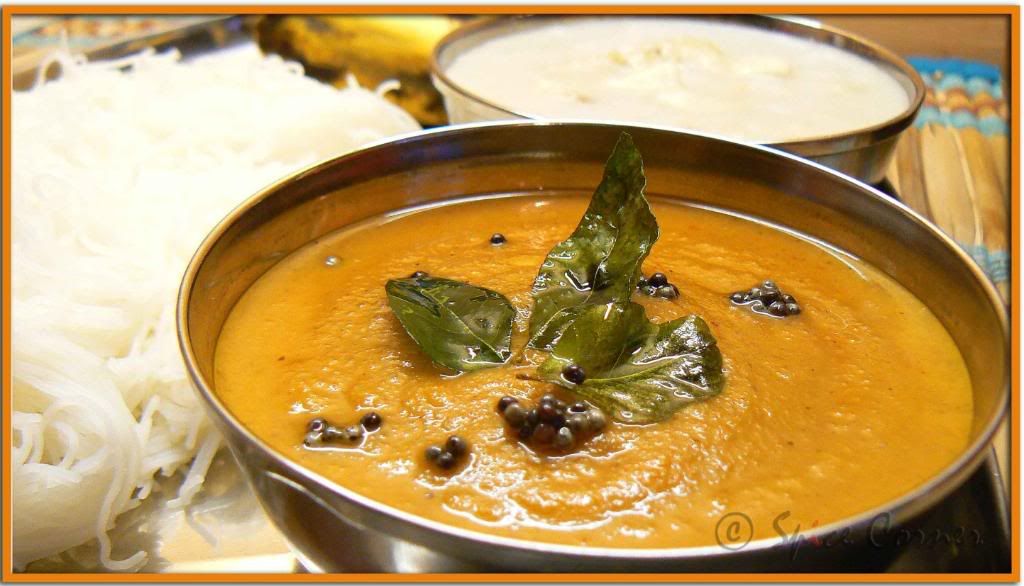
Methi/Fenugreek seeds are one of the most importance spices in Mangalorean cuisine. My Ajji would soak few methi seeds in buttermilk and make us drink after heavy meals as methi is good for digestion. Read more about benefits of Methi here and here. Menthe Chutney is one dish which is full of different flavours. Bitter methi is ground with creamy coconut and spicy chilli and then cooked with dash of jaggery to give it little sweet flavour.


Menthe Chuteny (Methi Seeds Chuteny):
Prep Time: 10 mins
Cooking Time: 10-15 mins
Serves: 2-3

Ingredients:
1 tsp Methi/Fenugreek Seeds
1 cup grated Fresh/Frozen Coconut
3-4 Dry Red Chillies
1-2 tbsp Jaggery, adjust acc to taste
1 tsp Oil
1 tsp Mustard Seeds
Few Curry Leaves
Pinch of Hing/Asafoetida
Salt to taste

Photo Sharing and Video Hosting at Photobucket
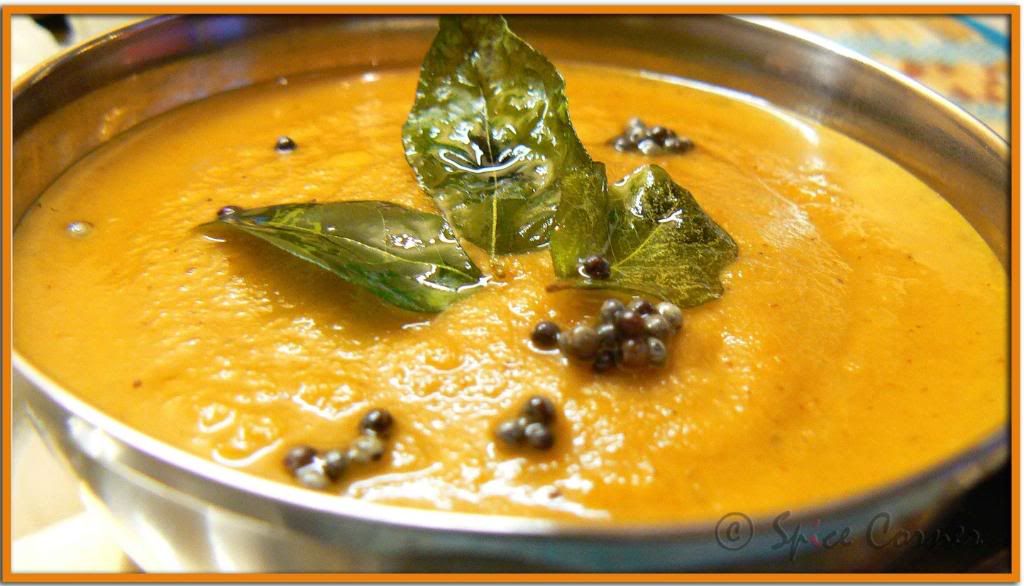
Menthe Chutney

Method:
Dry roast methi and broken red chillies in a pan for around 1 minute till you get nice aroma of roasted methi.
Grind sautéed spices with coconut adding little water at a time to smooth paste.
Heat oil in a pan and add mustard, hing and curry leaves.
Once mustard starts to pop and sputter, add ground paste, jaggery, salt to taste and ½ cup of water.
Cook it on a low flame for 10-15 minutes stirring in between. Serve hot with steamed rice or akki shavige.

Friday

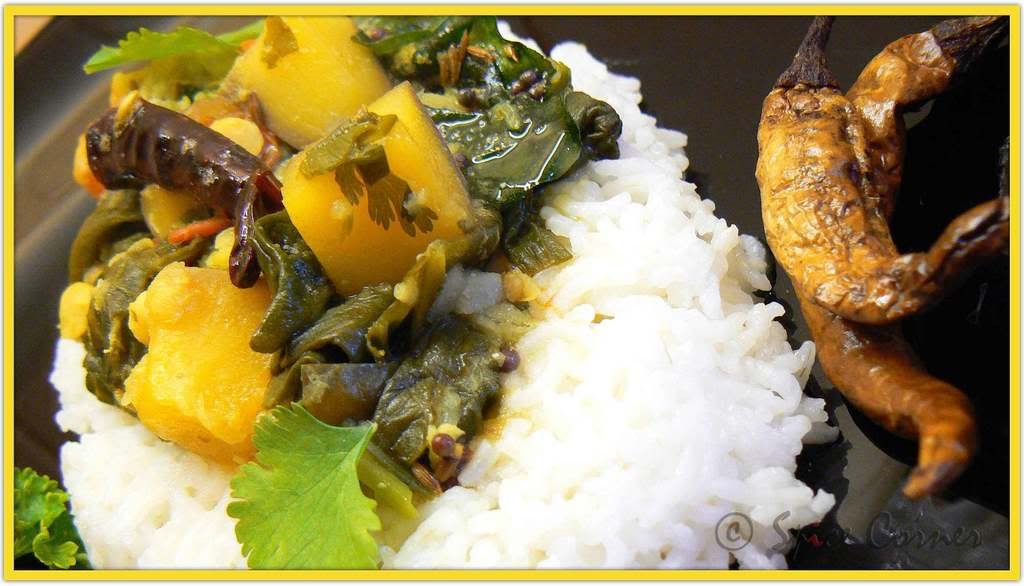
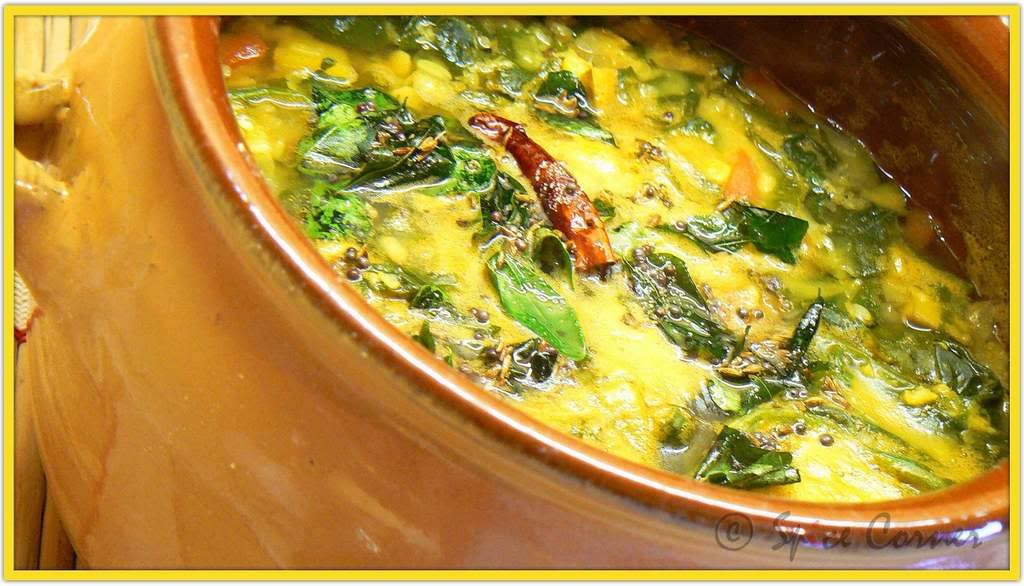
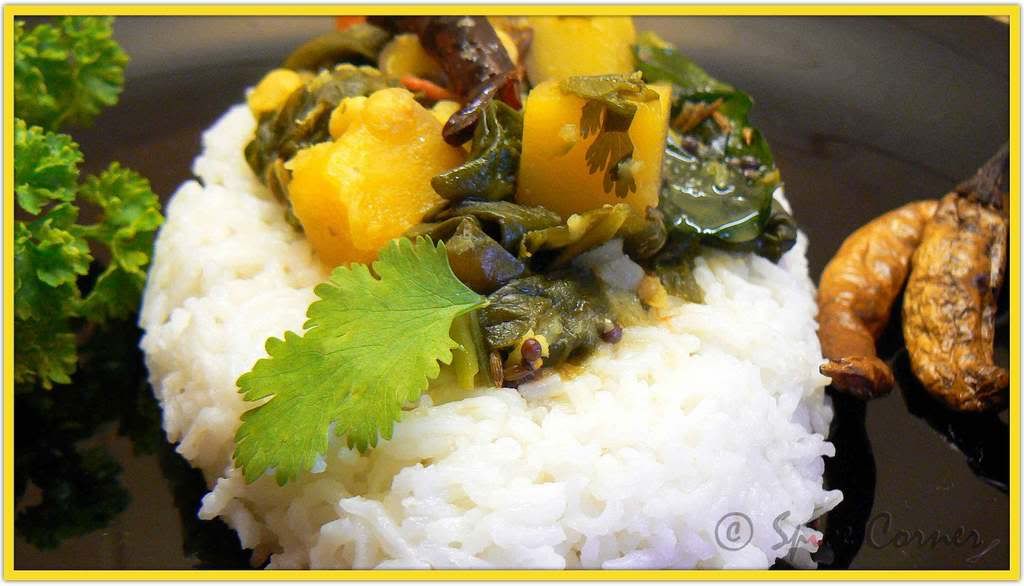
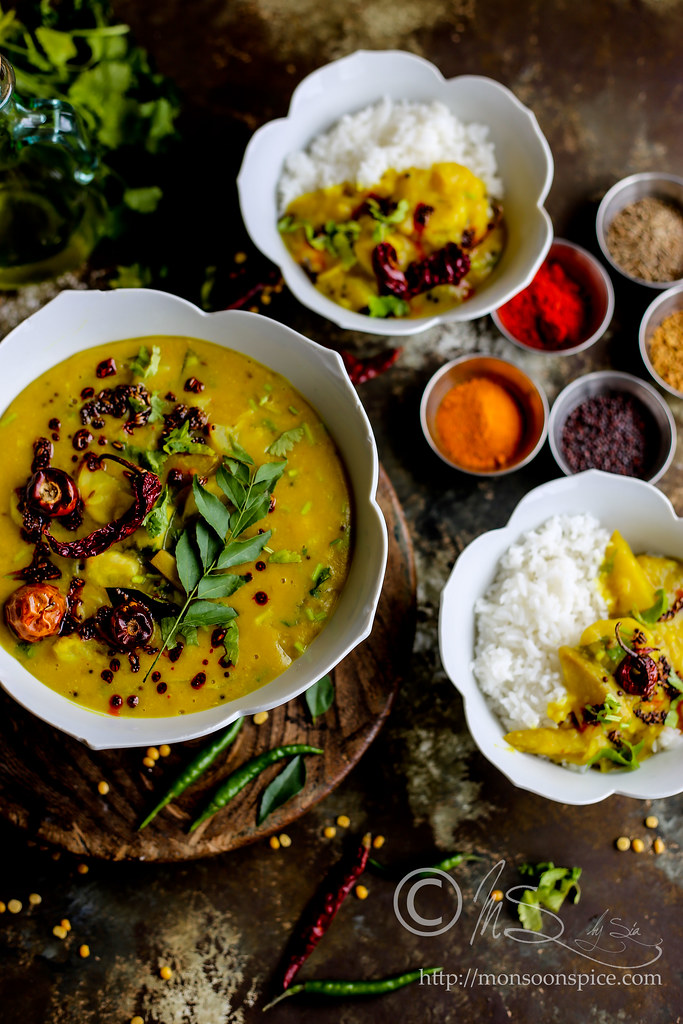
Raw Mango & Spinach Dal

Luscious, succulent mango fruit!
How do we guard you from the brute?

King of fruits, without dispute

To you we all humbly salute!


Ripe, and unripe in forms many,

Enjoyed universally by all and any!

Ah., delicious and sweet as sugar cane,

Protecting you can be wildly insane!


Your name derives from the word "mAngaai"

You are linked to the legend of Surya Bai!

Food of the gods! How you enchant!

O’ tangy Drupe! Wishes you grant!


Akin to Maya - you are the fruit of gold,

That sages in Arunachala have extolled;

Witness to battle and thunder storm

You let Soorapadman take your form!


O’ earthy, ripe "Sappattai" delight,

Envy of the "Alphonso" this starry night!
Gazing at onlookers from the compound wall,

How gracefully you sway amidst trees tall!


Then, in the quiet afternoon Chennai sun,

When the siesta of ladies has just begun,

Fearless street urchin and vagabond alike

Gear up towards you to aim and strike.


Alas! Shouting to protect is of no avail,

For the wily ones on the prowl prevail;

As adroitly they grab and you will snatch
Pray,
can any match a more princely catch?


A well directed stone at you they throw

Following victory cries of "kokku"* ru kO!

Ah.. heavenly "kokku" sweet as cane,

Yes, protecting you is indeed in vain!


Mango mania… I just need to take a quick peek at food blogs and my heart goes mmmm….Mango. This is the magic of the “food of the Gods”. Ask any Indian child to share his/her childhood memories and mangoes will be golden part of his/her childhood. I remember the mango orchard in my grandma’s home, where hundreds of mango trees laden with beautiful shades of green and gold would lure me and turn me into mischievous brat. My mango memories match the vibrant golden colour of mangoes. We cousins a bunch of monkeys, loved eating mangoes the way monkeys eat them:) Raw or ripe, just bite and suck the whole mango and enjoy that sweet, sticky juice squirting all over our chin, arms and cloths. Pure bliss… Although eating mangoes from our orchard was fun, aiming a slingshot at our neighbour’s tree felt more appropriate ;) When confronted by our elders, we would innocently deny the fact that we stole mangoes from our neighbour’s tree. Staying in Pardes I can imagine the fruit markets in India with the bewildering array of mangoes, heaped lustily on straw baskets or placed in hay to ripen evenly from cool green to hot yellow. Most of my childhood memory strings are attached to the king of fruits and hence there is no question of I am getting tired of mangoes, be it rambling or eating. We Indians have been talking excitedly about the fruit for 3000, yes 3000 years, where as the western world has savoured it for only 300 years!!! More reasons to celebrate the mango season.
One particular dish I always liked was Amma’s Raw Mango and Spinach Dal. Everyday boring dal would dazzle with the addition of sour and tangy mangoes. The combination of mixed dals with power packed spinach and mango is a marriage made in heaven. Just few pieces of mangoes not only enhances the flavour but gives the much needed anti-oxidant supply to the body. Sweet, spicy and tangy dal will be ready to serve in no time.

Photo Sharing and Video Hosting at Photobucket
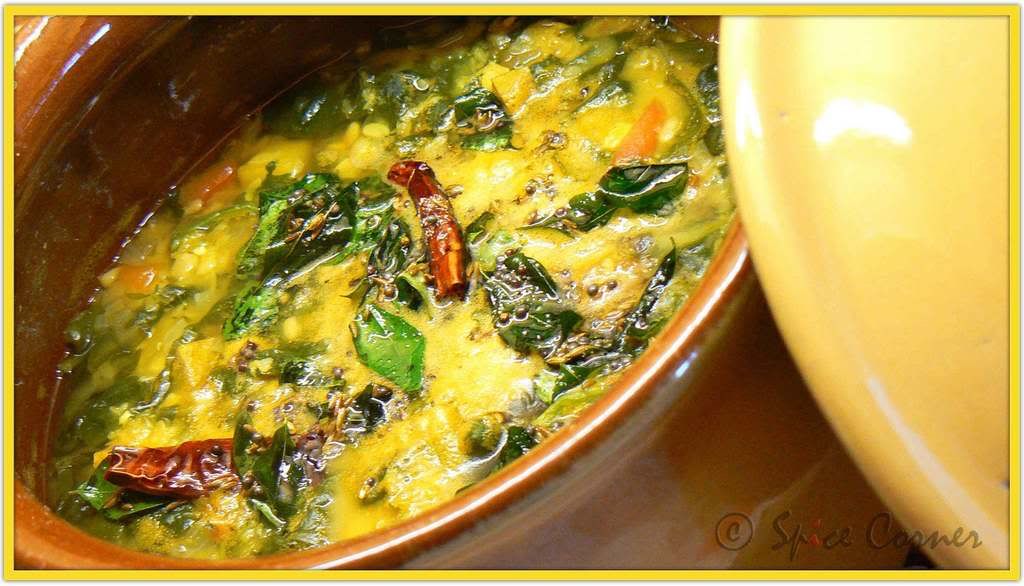
Raw Mango & Spinach Dal


Raw Mango & Spinach Dal
Prep Time: 10 mins
Cooking Time: 25-30 mins
Serves: 4-5
Ingredients:
1 cup Raw Mango, diced into 1 cm cubes
2 cups Spinach, finely chopped
1 large Tomato, finely chopped
1 small Onion, finely chopped
½ cup Masoor Dal/Red Lentils
½ cup Split Moong Dal
½ cup Split Channa Dal
½ tsp Turmeric Powder
½ inch Ginger, crushed
½ tbsp Jaggary
3-4 Green Chillies, slit
½ tsp Jeera/Cumin Seeds
½ tsp Coriander Powder
2-3 tbsp Coriander Leaves, finely chopped
1-2 tbsp Fresh Lime/Lemon Juice (optional, use them if the mangoes are not sour)
1 tbsp Oil/Ghee
Salt to taste

For Tempering:
1 tsp Jeera/Cumin Seeds
1 tsp Mustard seeds
1-2 Dry Red Chilli
Few Curry Leaves
¼ tsp Hing/Asafoetida
½ tbsp Ghee/Oil

Photo Sharing and Video Hosting at Photobucket
Raw Mango & Spinach Dal

Method:
Wash all three dals in water and add about 2½ cups of water.
Cook these dals in a pressure cooker with turmeric powder and few drop of oil for about 10 minutes or one whistle.
Cool the cooker before opening the lid.
Heat oil in a heavy bottomed pan and add chopped onion.
Sauté the onion till it turns transparent for about 2 minutes and add slit chilli, crushed ginger, cumin and coriander powder.
Sauté it in a medium flame for a minute till nice aroma comes and then add finely chopped tomatoes, cooked dal, spinach and about 2 cups of water. Adjust the amount of water based on the consistency of dal.
Cook this on a medium flame for 5 minutes until the spinach leaves are half cooked.
Now add diced mangoes, jaggary and salt to taste and cover and cook for another 5-10 minutes till the mangoes become tender and all flavours blend well.
Just before switching off the gas, add chopped coriander leaves and lime/lemon juice. Omit lime/lemon juice if the mangoes are sour.
In a tadka pan, heat oil and add jeera, mustard, red chilli, hing and curry leaves.
When mustard starts to pop and splutter transfer this to dal and mix well.
Serve this hot and delicious mango-spinach dal with Chapatti or with Jeera Rice or with plain rice and papad.

Photo Sharing and Video Hosting at Photobucket
Raw Mango & Spinach Dal


Did You Know?
The name mango comes from Tamil. From man-kay or man-gay, it changed to manga.
The people who gave it the name manga or mango were the Portuguese. They first came to India, across the oceans, about 500 years ago. As they settled down in parts of India, they discovered the mango.
It was Portuguese who started experimenting with new varieties of mango -- the famous Alphonso or Mulgoa that we cherish today, is the result of their hard work.
Down the ages, several qualities have got attached to the mango. It is seen as a symbol of good luck and in many parts of west and south India, mango leaves are put up at the front door.
It is a belief that the mango tree has the power to make wishes come true.
The mango tree is also associated with the god of love "Manmatha'; its blossoms are considered to be the god's arrows.
It is said that the Buddha created a white mango tree which was later worshipped by his followers.
(Source:www.pitara.com)


Photo Sharing and Video Hosting at Photobucket
Raw Mango & Spinach Dal

PS: This is one funny Indian rap I recieved as forward. Click on the play button, play the song and enjoy!!! And no, I am not the composer!!! ;) Have a gr8 weekend:)


Monday

Thalipeeth with Okra Raita and Aamras

Purani jeans aur guitar
Mohalle ki vo chhat
Aur mere yaar
Vo raaton ko jaagna
Subah ghar jaan
Kood ke deewar
Vo cigaretee peena
Gali mein jaake
Wo karna daanton ko
Ghadi ghadi saaf

Pahunchna college hamesha late
Vo kehna sir ka
"Get out from the class!"
Vo bahar jaake hamsha kehna
Yahan ka system
Hi hai kharaab
Vo jaake canteen mein
Table bajaake
Vo gaane gaana
Yaaron ke saath

Bas yaadein yaadein
Yaadein reh jaati hain
Kuchh chhoti chhoti
Baatein reh jaati hain
Bas yaadein…

Remember this song of Ali Haider? This song has been our college anthem;) and it always takes me down the memory lane. College canteen, mimicking our lecturers, bunking the classes, late night parties, birthday bums, ragging, internals, last minute study, lab sessions, hostel warden, hostel food, Sunday telephone calls from home, long Q in STD booths (when mobile phones were very rare and looked like TV remotes;), another long Q for Sunday special breakfasts, new year parties, tapri/dhaba food… Oh yes… How I miss my college and hostel days! Hostels, my home away from home where I made very good friends, and the memories of ragging my juniors, fighting with warden, jumping from compound walls after curfew hours, chewing bullet proof chapaties, drinking watery coffee, Friday night’s beauty session with all colored face packs, Saturday night’s eating out at Kamat’s or Sagar’s, visits to Café Coffee Day, counting the days to go home(for me from the day I returned from home;), stuffing last inch of our bags from Maggi noodles to hair pin, attacking the supply of home food from friend’s bag, reading M&B in zero watt bulb, bunking first session of the day coz of late night reading, listening to music till wee hours of morning, heating water with candle light to make Maggi noodles, birthday parties, pajama parties, Sunday laundry sessions… Yes… I can go on and on with my memories of hostel days.
When it comes to hostel days, hostel food is integral part of every hostilities memory. It is not a joke to cook and feed hundreds of hungry tummies every day; morning, noon and night. With usual bullet proof chapaties, sticky dal, watery milk, hot as hell subjis, oily curries, it was like breath of fresh air when we get invitation for home cooked meals from our localite friends. No wonder I used to feel home cooked meals are like oasis in hot desert ;) One of my friend’s mother was an excellent cook and her specialty was Marathi Cuisine. I still remember all delicious chat-pata chats, spicy Kaap (Pakoda), aromatic Bhaaji’s (Vegetable dish) with simple Koshimbir (Salads) and Poli’s she used to churn in her small kitchen and serve. There were the days when aunt would send us big stack of delicious Bhakries which we homesick souls would dip in sweet and creamy Shreekhand or Spicy Thalipeeth with Yogurt and Spicy Pickles. And how can I forget all those Puran Poli, Basundi, Gul Polies which we would gulp during Ganesha Chaturthi.
When lovely Nupur of One Hot Stove announced RCI-Maharastrian Cuisine for this month’s of RCI which is the brainchild of Lakshmi of Veggie Cuisine, I knew what I wanted to contribute. It’s been ages since I had Thalipeeth and decided to serve it with Okra Raita and Aamras.
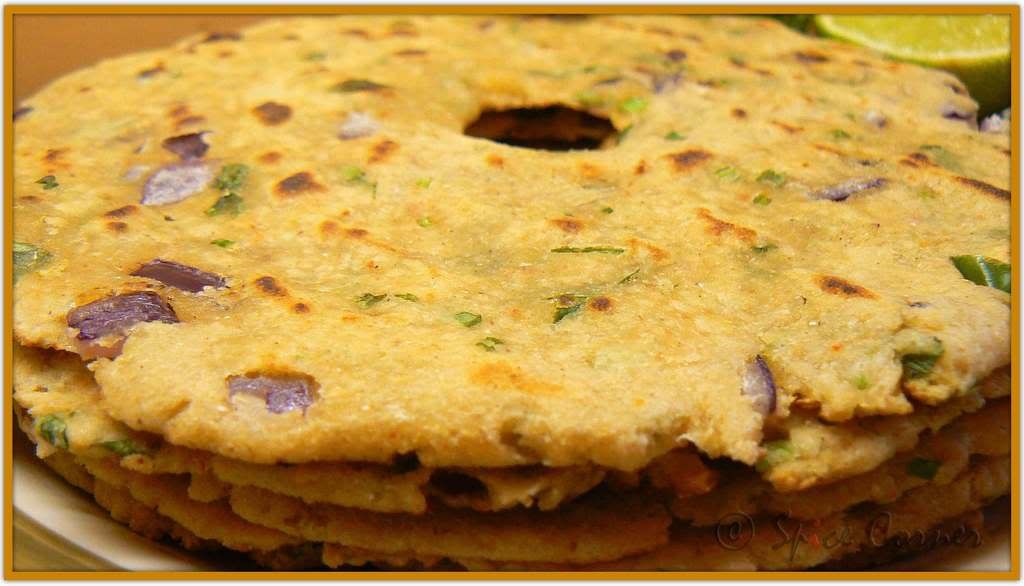
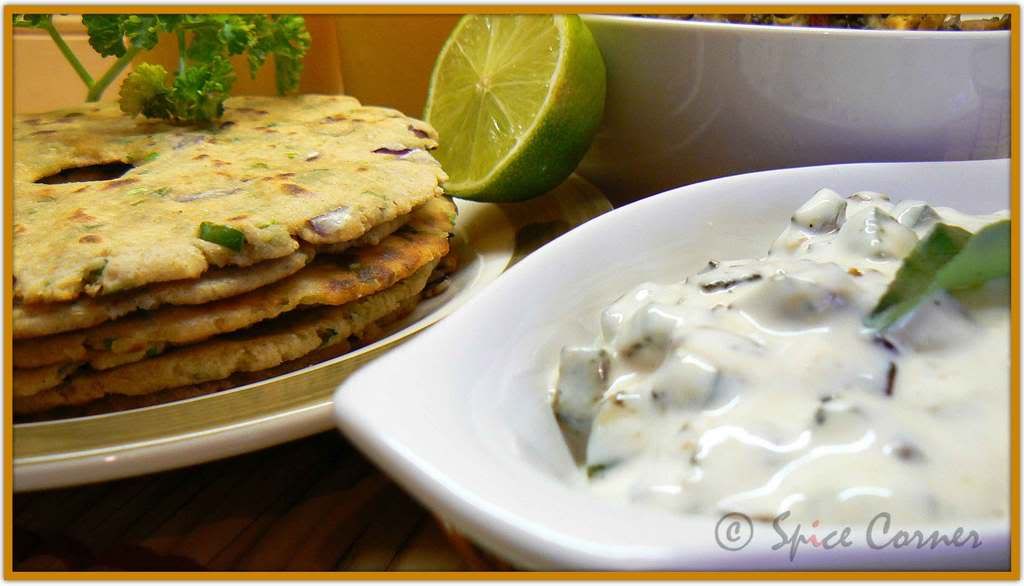
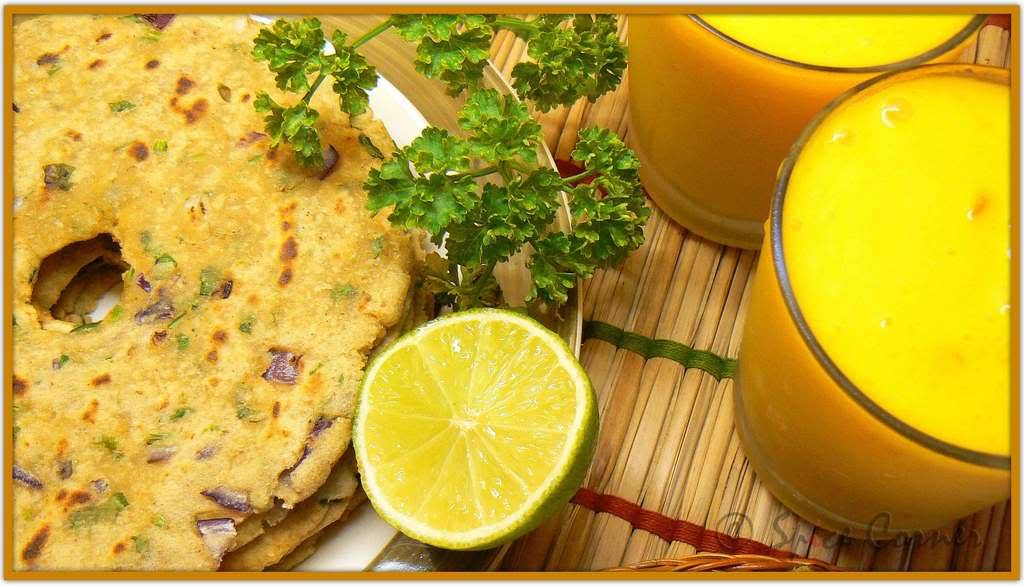
Thalipeeth is a multi-grain mildly spiced pancake which is not only tasty but also healthy and nutritious. I remember aunty using Bhajani, flour mixture of different grains which are slightly roasted and ground. After unsuccessful hunt for bhajani, I made thalipeeth using the flours in my pantry. Adjust all the ingredients according to your taste and preference. The recipe below makes 6 thalipeeth.
If you are a lover of Maharashtrian Cuisine like me and want to try some of the best Marathi food then look no further. Our this month's hostess for RCI, Nupur of One Hot Stove has her blog dedicated to authentic A-Z Maharashtrian Cuisine and here for Nupur's recipe for Thalipeeth. Her Bombay Pav Bhaji is something which I love the most.
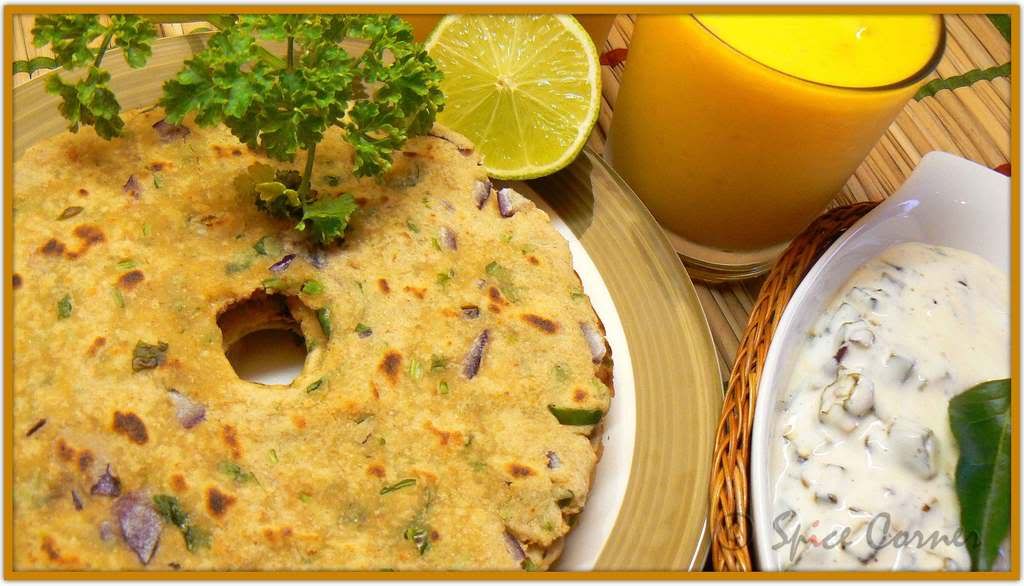
Photo Sharing and Video Hosting at Photobucket
Thalipeeth with Okra Raita and Aamras


Thalipeeth
Prep Time: 15-20 mins
Cooking Time: 10-15 mins
Serves: 2-3
Ingredients:
1½ cups Jowar Flour
½ cup Wheat Flour
2 tbsp Rice Flour
2 tbsp Gram Flour
1 tbsp Semolina
1 medium Onion, chopped very finely
1-2 Green Chillies, chopped finely
3-4 tbsp Coriander Leaves, finely chopped
½ tsp Jeera/Cumin Powder
½ tsp Coriander Powder
½ tsp Red Chilli Powder
¼ tsp Turmeric Powder
Salt to taste
Oil/Ghee for frying

Photo Sharing and Video Hosting at Photobucket
Thalipeeth

Method:
Mix all the ingredients except oil/ghee and knead it into stiff dough using water. The dough should be of chapatti consistency. While kneading the dough, rub some oil or ghee to your palms to keep from sticking.
Keep this dough aside for 10-15 minutes covered with wet kitchen towel.
Again knead the dough and make golf ball sized balls.
Take a clean plastic sheet or banana leaf and grease its one side with some oil or ghee.
Flatten one ball in the palm of your hand and place it in the center of the sheet. Pat the ball with palm and the fingers. If the dough is too sticky, dip fingers in water to make the patting easier. Keep flattening in circular motion to make a round flat disc but make it sure that the thalipeeth has even thickness.
make one small hole in the center with finger which will help to cook the thalipeeth evenly.
Heat the griddle or non-stick tava and gently remove thalipeeth from plastic sheet and place it on tava.
Apply little oil or ghee at the edges, in the center hole and on top of the thalipeeth and cook on both the sides until it turns crisp and light brown in colour.
Serve hot thalipeeth with yogurt or raita with pickle and sweet Aamras.
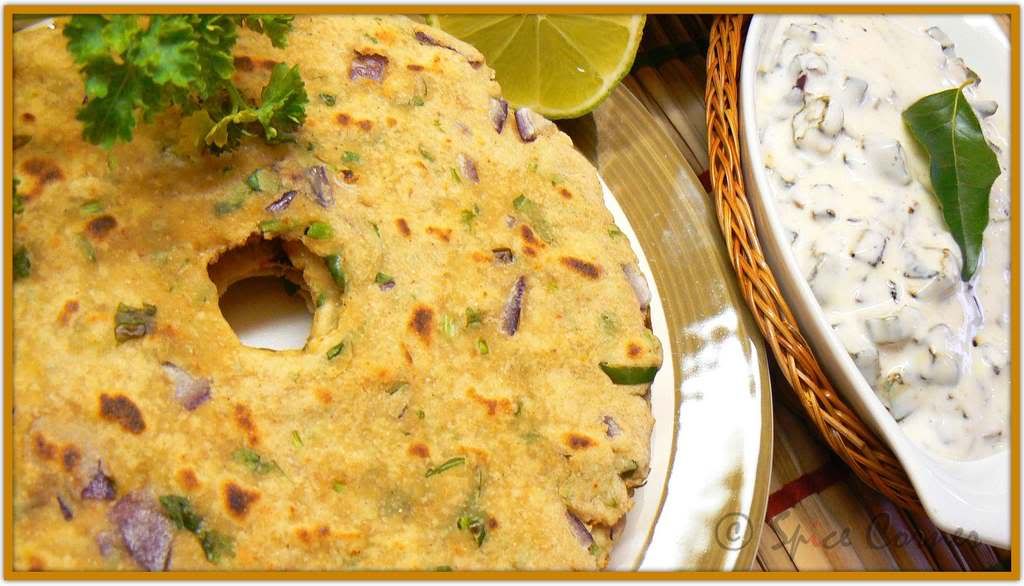
Photo Sharing and Video Hosting at Photobucket
Thalipeeth with Okra Raita


Bhindi/Okra Raita
Prep Time: 10 mins
Cooking Time: 5-10 mins
Serves: 2-3
Ingredients:
6-7 Okra/Bhindi, cut into thin slices
1 small Red Onion
2 cups Yogurt
½ tsp Green Chilli, finely chopped
A Pinch of Jeera/Cumin Powder
1 tsp Oil
Salt to Taste

Method:
Heat oil in a pan and add finely chopped onion. Sauté it till they turn translucent.
Now add okra and green chilli and sauté it in high flame till it becomes crisp and brown.
Beat the yogurt and mix sauted okra and onion and cumin powder and salt to taste and mix well.
Chill the raita for at least half an hour before serving.
If desired you can add little bit of chat masala. But I like the sweet taste of fried Okra with tanginess of yogurt.

Photo Sharing and Video Hosting at Photobucket
Thalipeeth with Okra Raita


Aamras
Prep Time: 5-10 mins
Cooking Time: -
Serves: 2-3
Ingredients:
3 Ripe Mangoes(I used Alphanso)
1 tbsp Sugar(acc to taste)
1 cup chilled Milk
A pinch of Cardamom Powder
Ice Cubes

Method:
Peel the mangoes and take out the pulp. Discard the skin and seeds.
Blend this pulp with milk, sugar and ice cubes.
Add cardamom powder and chill it before serving and enjoy.

Photo Sharing and Video Hosting at Photobucket
Thalipeeth with Aamras


Did You Know?
The saying 'Anna he poornabrahma' aptly summarises what Maharashtrians feel about the food they cook. They consider 'anna', or food, equal to 'Brahma', or the creator of the universe. Food is God, to be worshipped. Little wonder that Maharashtrian cuisine not only fills the stomach, but also fills the soul - with content!
The cuisine of Maharashtra has its own distinctive flavors and tastes. It can be divided into two major sections–the coastal and the interior.
A major portion of Maharashtra, which lies on the coast of the Arabian Sea, is loosely called the Konkan and boasts of its own Konkani cuisine, which is a homogeneous combination of Malvani, Gaud Saraswat Brahmin, and Goan cuisines. Besides the coastal cuisine, the interior of Maharashtra—the Vidarbha area, has its own distinctive cuisine known as the Varadi cuisine.
The people are known for the aesthetic presentation of food, which adds extra allure to the feasts. For instance, in formal meals, it is a practice to sing sacred verses to dedicate the meal to God. The guests sit on floor rugs or red wooden seats and eat from silver or metal thalis and bowls placed on a raised 'chowrang', or a short decorative table. Rangolis or auspicious patterns of coloured powder are drawn around the thali or the chowrang. To avoid mixing flavours, each guest is given a bowl of saffron scented water to dip the fingers in before starting on the next course. There is a specific order of serving of savouries and sweets, curries and rice or rotis, and a person who does not know this is not considered to be well trained in the art of hospitality. Agarbattis spread fragrance everywhere and the host believes the satisfaction of his guests to be his true joy.
(Source: wiki and www.maharashtraweb.com)
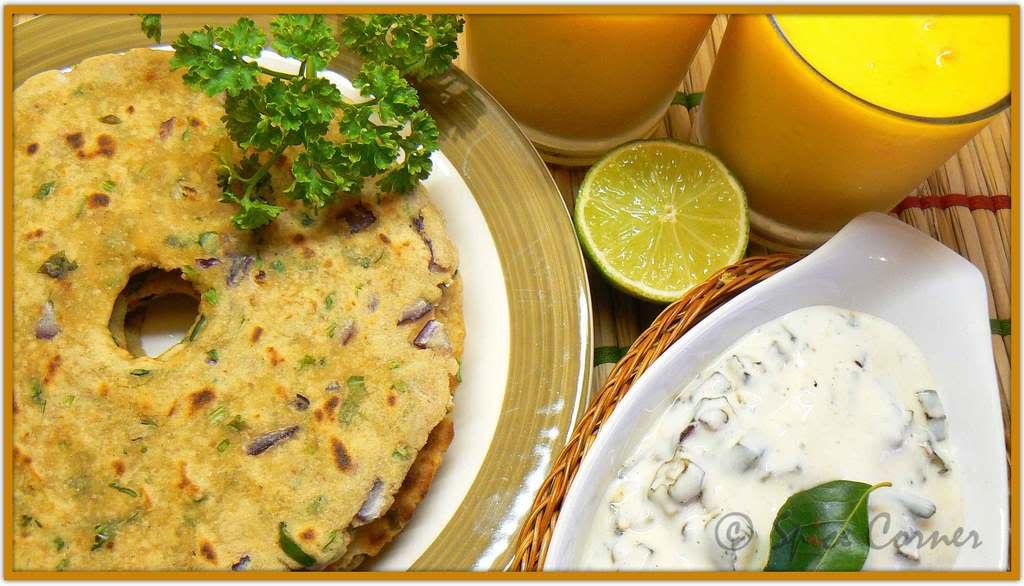

Photo Sharing and Video Hosting at Photobucket
Thalipeeth with Okra Raita and Aamras
Jackfruit Idli with Mango Chuteny

Jackfruit… There is something about jackfruit which fascinates me all the time. The huge spiky hard exterior which contains sweet golden yellow sheaths has always been one of my favorite fruits. I remember the days when my sister, brother and myself would always find some reason to stay away from volunteering to pare and seed the jackfruit. Once the sticky glue was removed and the golden flesh is separated, we kids would happily go and sit cross legged on the floor next to the big cane basket which would be filled with sweet jackfruits and happily eat one after the other. Amma would sit there peeling sheaths of fruit and tell us her childhood memories where she with her sisters and brothers and some dozens of cousins would gather and have fun while peeling jackfruit from its sticky sheaths and burn the jackfruit seeds in open fire. Although I am lucky to have many cousins, it is no where close to what my parents have. I can very well imagine the fun my parents had while growing up with their siblings and cousins in a large joint family.
My amma used to prepare many dishes using both raw and ripe jackfruits. Apart from kodhel(coconut based sambar from Mangalore), Melara(buttermilk based) and playa(stir fried vegetables) the raw jackfruit is used in preparing pakodas and also they were preserved in salt water to make Rotti, Playa and Sambar and also a crunchy munchy called Undla Kalu. the ripe jackfruit is used to make Kottige(steam cooked rice cake using banana leaves), Payasa, Berati (Jackfruit Jam) and Papads. The seeds of the jackfruits were used in Palya and Laddu.
First when I heard about this months Jhiva ingredient I wanted to make traditional, authentic Mangalorean dish called Kottige/Kadubu which is very similar to Genasale, steam cooked rice cake with coconut and jaggery. I couldn’t find any banana leaves here and was not feeling very adventurous to use aluminum foil in place of them. So ended up making Jackfruit Idli. I used same ingredients used to make Jackfruit Kottige and steam cooked them in Idli stand. Served these sweet idilies with sour and spicy Raw Mango Chutney. Here is my entry for this month’s JFI-Jackfruit which is hosted by daring and darling couple Jai and Bee of Jugalbandi fame. I am contributing the recipe of Mango chuteny for this month's AFAM-Mango which is hosted by lovely Deepa of Recipes 'n More. Thank you Ashakka for reminding me:)


jackfruit idli13
Jackfruit Idli with Mango Chuteny


Jackfruit/Halasina Hannu Idli
Prep Time: 15-20 mins (excluding soaking time)
Cooking Time: 20-25 mins
Serves: 4-5
Ingredients:
2 cups Rice
2 cups Jackfruit, cut into small pieces
½ cup grated Coconut
½-¾ cup Jaggery (Acc to taste)
¼ tsp Cardamom Powder (Optional)
¼ tsp Cooking Soda
½ tsp Salt

jackfruit idli4

Jackfruit Idli with Mango Chuteny

Method:
Soak rice in water for 1-2 hours or overnight.
Grind the rice with freshly grated coconut, salt, cooking soda and jaggery to smooth paste. The paste should be of dosa batter consistency.
To this add chopped jackfruit and cardamom powder and mix well.
Now either you can steam cook using banana leaves or using Idli stand. If you are using banana leaves follow the steps showed for Genasale.
If you are using idli stand, grease the idli plate with oil/ghee and pour a ladle full of batter and steam cook them in pressure cooker for 10-15 minutes.
Let it cool for few minutes before serving the idlis with spicy mango chutney and ghee.

jackfruit idli1

A closer look at Jackfruit Idli

Best side dish for these Jackfruit Idli is spicy and tangy Raw Mango Chutney. It's a marriage made in heaven. Here is the recipe for making Mango Chuteny.


Mango Chutney
Prep Time: 5-10 mins
Cooking Time: -
Serves: 3-4
Ingredients:
1 small Raw Mango
1 tsp Mustard Seeds, lightly roasted
2-3 Green Chillies
½ inch Ginger
1 cup Grated Coconut
Salt to taste

jackfruit idli15

Mango Chuteny

Method:
Peel the mango discarding its pit and cut it into chunks.
Combine all the ingredients and grind it to smooth paste.
You can add more chillies if you prefer very spicy chutney to go with sweet Jackfruit Idli.

jackfruit idli12

Jackfruit Idli with Mango Chuteny


Did You Know?

The jackfruit is believed indigenous to the rain forests of the Western Ghats of India.
Male and female flowers are borne in separate flower-heads.
Jackfruit is the largest tree-borne fruit in the world, reaching 80 pounds in weight and up to 36 inches long and 20 inches in diameter.
There may be 100 or up to 500 seeds in a single fruit, which are viable for no more than three or four days.
There are two main varieties. In one, the fruits have small, fibrous, soft, mushy, but very sweet carpels with a texture somewhat akin to a raw oysters. The other variety is crisp and almost crunchy though not quite as sweet. This form is the more important commercially and is more palatable to western tastes.
(Source:www.crfg.org)

jackfruit idli9

Jackfruit Idli with Mango Chuteny

See the picture here which I got from Kamat’s Potpouri where the members of joint family are seen cleaning the jackfruit.

6070

Uppu Mavina Kai/Mangoes in Brine

I looooooooove mangoes… Sweet, sour, mild, pickled, raw, ripe, salted, juicy, aromatic, succulent, heavenly perfumed… I can safely call it my first love, because my love affair with them started even before I knew what actually love is all about. Even decades later, the these heavenly mangoes still has their magnetic hold on me. It is more than a mere fruit to me. It represents my blissful childhood days of endless summer days. The memories of those sunny, glorious summer vacations are still fresh in my mind. Fond memories of eating sour raw mangoes with salt and chilli powder and of biting into a lush, golden mango and get that sweet, sticky juice squirting all over my chin and cloths without worrying about anything. Ah!!! It feels like just yesterday, climbing mango trees with my sister and cousins and aiming a slingshot at our neighbour’s tree. I still can’t understand how this tantalising, magical fruit turned me from Miss Goody Girl into mischievous brat. These are some moments of my life which will always remain fresh and will always bring smile.

Uppu Mavina Kai Palya

Mangoes are seasonal. So like many Indians I too like to hoard them so that we can enjoy this fruit throughout the year (no wonder mango is our national fruit). I don’t have to worry about pickling them as I usually get my cartons of spicy, sour, sweet pickles from Amma, MIL and my aunts(Did I tell you that I have got over 20 varieties of pickles in my pantry;) But I did one good thing of storing them in salt water. There are two wonderful recipes of mangoes in brine. These are my all time favourite recipes of mango in brine. I usually make them when ever I walk down the memory lane which just happened to be yesterday when my sister was busy making me go green with envy by mentioning how mango season is in full bloom in India and how she is taking full advantage of it. So without taking much of your time let me directly come to business :)


Uppu Mavina Kai Mosaru Gojju


Uppu Mavina Kai/Mangoes in Brine
Prep Time: 5-10 mins
Cooking Time: -
Serves: -

Ingredients:
1 large Mango
¼ cup Salt
1 cup Water
A glass bottle

Uppu Mavina Kai/Mangoes in Brine

Method:
Add salt to boiled water and keep it aside to cool completely.
Cut mangoes into little big pieces and place them in an air tight glass bottle.
It is recommended to use glass bottles instead of plastic container as it has high salt content.
Now pour the salted water into the jar till all mango pieces are covered and close the lid tightly.
Keep this jar in cool, dark place for at least 1 week before using them.
This way you can store them for at least 6 months.

Uppu Mavina Kai/Mangoes in Brine


Sweet Uppu Mavina Kai Mosaru Gojju
Prep Time: 5-10 mins
Cooking Time: 1-2 mins (tempering)
Serves: 2-3
Ingredients:
1 cup Uppu Mavina Kai/Green Mangoes in Brine
½ cup Jaggery
1 ½ cup Sweet Yougurt
¼ cup Red Onion, finely chopped
1 Green Chilli, finely chopped (Optional)
1 tsp Mustard
1 Dry Red Chilli
Few Curry Leaves
1 tbsp Oil

Uppu Mavina Kai Mosaru Gojju

Method:
Remove excess water and chop mangoes into small pieces.
Mix them well with curds, jaggery, chopped red onion and green chillies. You can add more jaggery if you like it sweet.
Season it with mustard, red chilli and curry leaves.
Chill them before serving with rice and chapatti.

Uppu Mavina Kai Mosaru Gojju


Uppu Mavina Kai Palya
Prep Time: 5 mins
Cooking Time: 5-10 mins
Serves: 2-3
Ingredients:
1 cup Uppu Mavina Kai/Green Mangoes in Brine, cut into bite size pieces
½ cup Jaggery
1 Green Chilli, finely chopped (Optional)
½ tsp Turmeric Powder
1 tsp Mustard
2 tsp Urad Dal
1 Dry Red Chilli
Few Curry Leaves
1 tbsp Oil

Uppu Mavina Kai Palya

Method:
Take oil in a pan and add urad dal, mustard and red chillies.
Sauté them till urad dal turns golden yellow and mustard starts spluttering.
To this add chopped green chillies, turmeric powder and curry leaves and sauté them for few seconds.
At this point you can also add a tbsp of chopped onions if desired.
Now add mangoes in brine and mix well.
Cook this in medium flame fro 2 minutes.
Add jaggery powder and cook in medium flame for another 2 minutes till a syrupy base is formed.
Remove from fire and serve hot as a side dish with rice or dosas.

Uppu Mavina Kai Palya


Note:
Gojju and palya are sweet side dishes. Add red chilli powder if you like them hot and spicy. But it tastes best sweet and sour.
Note that you don’t need to add any salt to these dishes as they usually have high salt content. So it is better to check them for the saltiness before cooking. If they are very salty then immerse them in big pot of water before cooking for few minutes to remove excess saltiness.
Also take a look at lovely Linda's Mangoes in Brine Dal Recipe.

Uppu Mavina Kai Palya


Did You Know?

Mango is known as aam in Hindi and amra in Sanskrit. Amra is first mentioned in the Shatapatha Brahmana, which dates back to 1000 BC.
According to Varadrajan, author of The History of Tamil Literature, the eye of a woman is compared to a tender mango cut in half, with the stone being the pupil of the eye.
Alexander the Great was a big fan of Indian mangoes and The Mughal Emperor Babur called it "O Fairest Fruit of Hindustan." His grandson Akbar planted 100,000 mango trees in Dharbanga.
The British, too, were enamored with the mango and created special cutlery to eat it in a "civil manner."
Mangoes are effective against sunstroke and are used in a variety of drinks to lower body temperatures and quench thirst in the hot summer months.
Rich in Vitamin C, mangoes are used throughout the year in the Indian diet, with the pickled green mangoes helping to ward off colds.
Even the powdered seed is used as a cure for dysentery and the twigs of the mango tree are handy as toothbrushes.
(Source: www.littleindia.com)

Thursday

Mango Rice with Cucumber-Mint Raita

Mango… I can say without any hitch or hesitation that mango is my favourite fruit. It’s not just because of its colour and taste. It is one fruit which is connected to my happy childhood memories. My childhood days I have spent almost every summer vacation in my grandma’s home. Every year me and my sister and our cousins would eagerly wait for our holidays and keep our bags ready before our exams. Right next day after our exams our uncle would come and take us to grandma’s place. We all cousins would gather there and play day in and day out. When our elders use to take siesta in hot afternoon we would go to our mango groves and collect basketful of mangoes for my grandma who would cook delicious items using them. The choices are numerous: Pickles, Mambla (made using mango pulp and sun dried), Gojju, Sasame, Papadam, Sambar, Rasam, Raita etc. It’s a never ending list of delicious mango delicacies.

Mango Rice with Cucumber-Mint Raita


Today I am posting the recipe of Mango rice which has been my favourite rice items from mom’s kitchen. My mother usually makes this during Ugadi which is a new year in Hindu calendar. This sweet and tangy rice is very simple to make and takes very little time. You can prepare it using left over rice too. Serve it with any Pickle and Raita or just plain Yogurt of your choice.

Mango Rice with Cucumber-Mint Raita

Ingredients:
2 cups Rice
1 large half ripe Mango, grated
2 medium Onions, finely chopped
2-3 Green Chillies, finely chopped
1 tbsp Mint Leaves, finely chopped
1 inch ginger, finely chopped
3 tbsp Coriander Leaves, finely chopped
3 tbsp Lemon Juice (Adjust acc to taste)
1 tsp Turmeric Powder
1 tsp sugar (Optional)
1 tbsp Channa Dal
1 tbsp Urad Dal
1 tbsp Mustard
1 Dry Red Chilly
Few Curry Leaves
Pinch of Hing/Asafoetida
Salt to taste
2+1 tbsp Ghee

Mango Rice with Cucumber-Mint Raita

Method:
Soak rice in water for half an hour, wash and drain water and keep it aside.
In a pressure cooker heat 2 tbsp of ghee and add washed rice to it.
Mix the rice till every grain is covered with ghee.
Add salt and enough water (4 cups) and close the lid and pressure cook till it’s done.
In a mean while, heat 1 tbsp of ghee in a pan and add channa dal, urad dal, red chilly, mustard, hing and curry leaves.
When mustard starts sputtering, add onion, green chilli and ginger and cook till onions turn translucent.
Add grated mango, mint leaves, coriander leaves, sugar, turmeric powder and sauté it in medium flame for 1-2 minutes.
Turn off the gas and add lemon juice and mix it well with cooked rice. If you are using raw mango then add lemon juice according to taste.
Serve hot with raita and pickle of your choice.

Mango Rice with Cucumber-Mint Raita

I served tangy mango rice with sweet cucumber-mint raita. This is one of my favourite raitas which can be prepared within five minutes. Nothing can beat the refreshing taste of cucumber-mint raita.


Cucumber-Mint Raita

Ingredients:
1 Cucumber
1 tsp Mint Paste
2 cups Yogurt
Salt to taste

Mango Rice with Cucumber-Mint Raita

Method:
Grate the cucumber and mix it with yogurt, mint paste and salt to taste.
If you like it spicy, add finely chopped green chillies or season it with mustard, urad dal and red chilly.
Chill it before serving.