Showing posts with label Tindora/Ivy Gourd. Show all posts

11 January, 2018

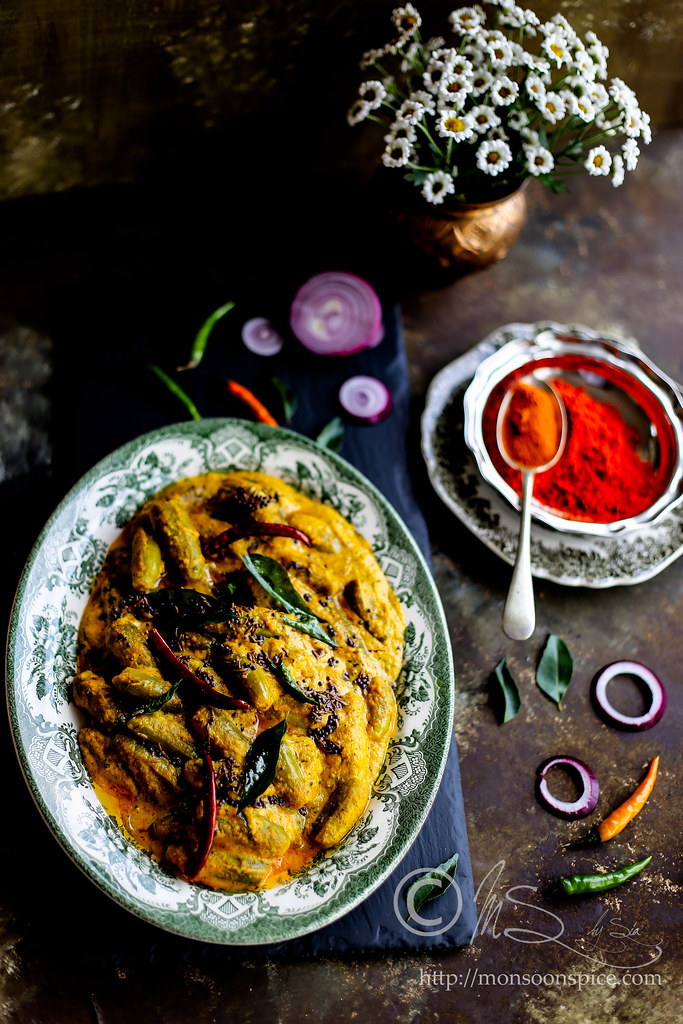
Vegan Tindora Masala Curry | Ivy Gourd in Peanut and Coconut Curry

Learn how to make Vegan Tindora Masala Curry ~ Ivy gourds cooked in a thick and creamy peanut, sesame seeds and dry coconut gravy


Time and time again I am on a self-created mission of learning, developing and sharing recipes which you will never find in any Indian restaurants. These recipes are lovingly created, tweaked and then perfected after many trials and errors by the home cooks and are passed on from one generation to the next with in a family. They are fiercely guarded like some precious treasures and most often, never shared with someone outside their family! So if ever by any chance someone outside the family asks for the recipe, you can be rest assured that only a part of these treasured family recipes will be shared…And oh, half-heartedly! When someone says, “Oh, it’s quite simple you know. You need a handful of this and a spoonful of that. Grind them all and cook with the vegetable!”, you can be sure that the finished dish will never come close to the one you fell in love with. Consider yourself lucky to have had a privilege to taste such family heirlooms and be mindful of their uneasiness to share their family’s secret recipe.
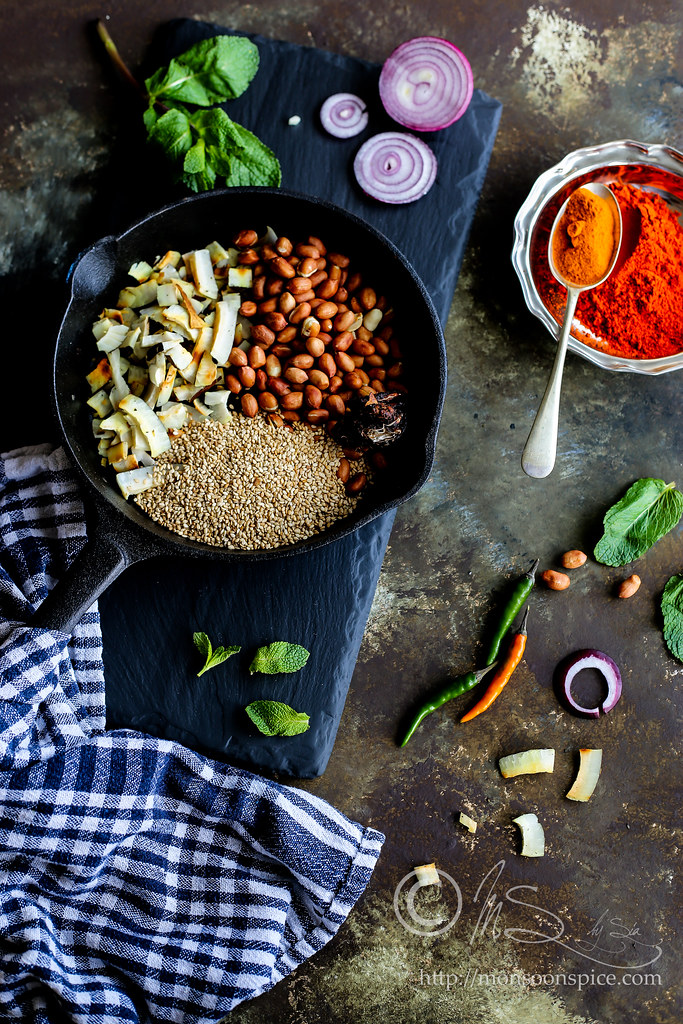

Ingredients for the gravy
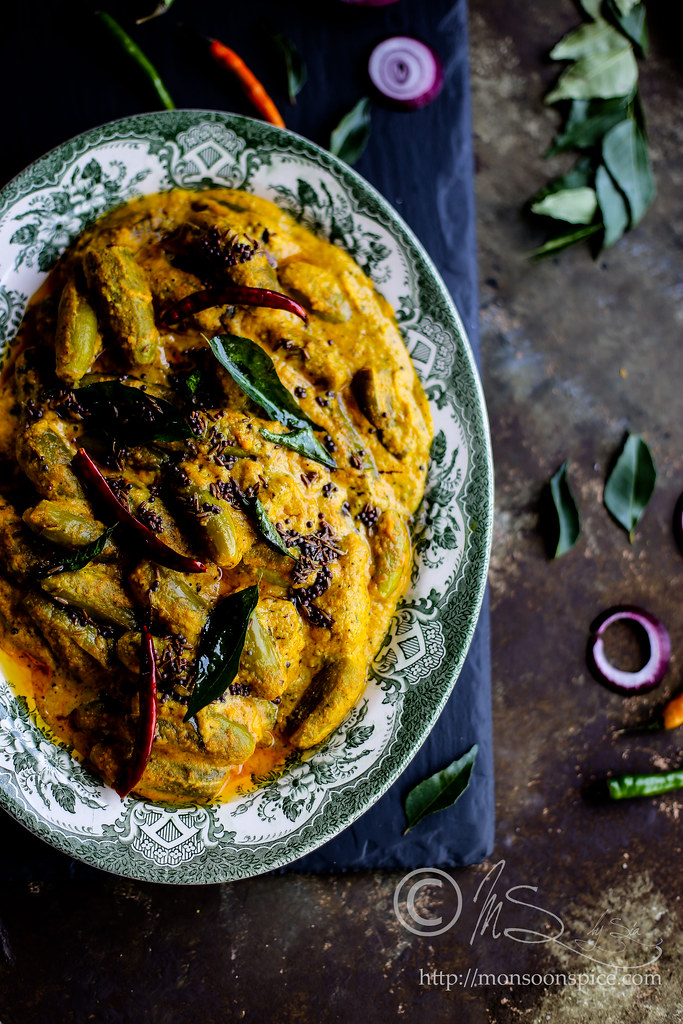


A decade ago, I was invited for a lunch by a friend of mine. Students who live in a hostel will know what it means to be invited for a home cooked meals when one has to eat bullet proof roti dipped in watered down red chilli paste with 2-3 chunks of sorry looking vegetables that was passed as a ‘curry’! My friends family were originally from a southern Indian state of Andhra Pradesh (now divided into two states of Andhra Pradesh and Telangana) which was known for their amazing regional food and fiery hot pickles which enslaves your taste buds the moment it touches the tongue. On that particular day, my friends mother had lovingly cooked a festive thali and one dish that made a big impact on my taste memory was the Vegan Tindora Masala Curry where ivy gourds were cooked in a creamy peanut and coconut gravy.

08 March, 2012

Tondekayi Palya (Tindla Palya) Recipe ~ A Pictorial


Tondekayi Palya/Tindla Palya/Stir Fried Ivy Gourds ~ It starts from here

I have been feeling extremely homesick today and was leafing through the photos I took when I visited home in December. I found few food related photos and thought you, my dear reader friends, might find them interesting. So here is the pictorial of one of my favourite recipes, Tondekayi Palya or Tindla Palya or Tindora Subji, which is a simple stir fry of Ivy Gourds, cooked using few basic spices and then generously garnished with fresh grated coconut. I randomly clicked few photos while our family cook prepared them at my in-law’s farm house. This delicious Tondekayi Palya or simple Tindora/Ivy Gourd Stir Fry was cooked by our family cook using very old and traditional fire wood cooking technique. The smoke coming from wood adds smoky flavour to this simple stir fry. I will not be posting the recipe as it has already been posted some 3½ plus years back. So if you are interested to cooking this simple Tondekayi Palya or Tindla Palya, please click here for the recipe.

18 October, 2011

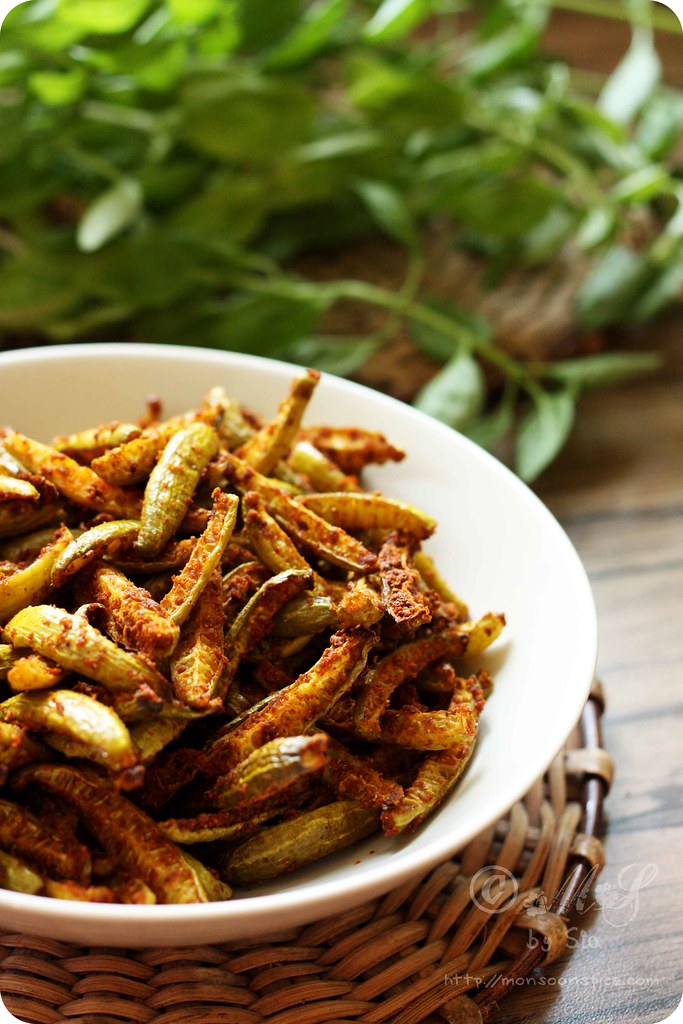
Tindora/Ivy Gourd Roast | Roasted Tindora/Ivy Gourd Recipe (How to make Spicy & Crispy Tindora/Ivy Gourd Roast)


Spicy and Crispy Tindora/Ivy Gourd Roast
My love for Tindora or Ivy Gourd grows more with each passing day. Not only I am a great fan of its crunchy texture and taste, I have many fond memories of my childhood days spent with my sister under the shade of its beautiful green vines where we shared our joys, sorrow and many secrets. I had lost the count for number of times I had spent reading my favourite childhood comic books under the shade of it’s think vines and lazily picking some very tender, small Ivy gourds and eating them lying on the blanket. Whenever I cook with these little green gems, I fondly remember the times we spent lying under the shades of these vines beautifully spread across guava tree in my parents’ vegetable garden. Isn’t it interesting how simple and everyday fruits and vegetables can create such fond and happy memories!

05 October, 2011

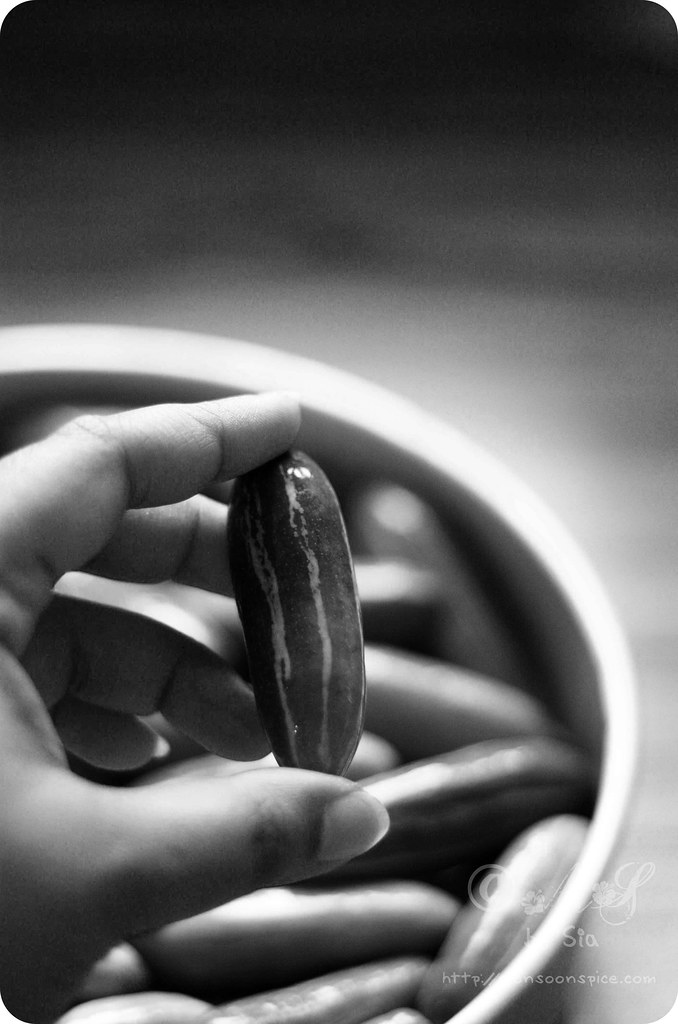
Black & White Wednesday: Of Fond Memories & Ivy Gourds


Tindora or Ivy Gourd or Tondekayi is not just a vegetable for me. It is more than that. I share very close friendship with this little green gem as most of my happy childhood days were spent right under the shade of its beautiful vines, reading my favourite books with my little sister. We shared our joys, sorrow, and secrets sitting right under the shades of vines and eating very tender Ivy gourds. Whenever I cook with these little emeralds, I fondly remember all the lovely days spent with my sister and the beautiful time we had! Isn’t it interesting how simple and everyday fruits and vegetables can create such fond and happy memories!

28 August, 2008

Dondakaya Vepudu: What's in a Name?

Photobucket

Dondakaya Vepudu
What’s in a name?
A rose by any other name would smell as sweet…
~ William Shakespeare
But TonDekai and BenDekai taste different and even smell different…


For those who don’t know what I am blabbering about, TonDekai and BenDekai are the names for Tindora/Ivy Gourd and Okra/Ladies finger respectively in Kannada. Growing up back in India, I always got confused between these two vegetables. Whenever my Amma asked me to buy TonDekai from vegetable shop, I ended up getting BenDekai and vice versa. Reason? Confusion in names, between single Kannada letters!!! For a girl who always won prizes in memory games, these two vegetable names were source of frustration and irritation. I would go to nearby shop and stare endlessly at these two vegetables trying to recall which one did Amma asked me to buy. Is it BenDekai or TonDekai? TonDekai or BenDekai??? B or T? T or B? TB, TB, TB, Tuberculosis???
If rose is a rose is a rose is rose,
Then TonDekai is a TonDekai is a Tondekai is a TonDekai
And BenDekai is a BenDekai is a BenDekai is a BenDekai
~ With due respect to Gertrude Stein
At last I decided to do something about it. I decided to call Ivy Gourd as Man’s toes. Well, if Okra could be named as ladies finger for its appearance then Ivy Gourd very much looked like Man’s toes to me. Hence then onwards I asked Amma if she was planning to cook ladies finger or man’s toes for dinner! Sounds funny but was not that amusing for guests who were shocked when I told them they will be served man’s toes curry with Roti for lunch ;) Well, at last I was forced to remember their name as my parents were not very keen to develop the reputation of cooking and serving man’s toes for their unassuming friends.


Growing up I always loved Ivy gourd, even when I was one rebellious teen. There was the time when my dad grew TonDekai in backyard. This tropical vine would give beautiful white flowers which grew into crunchy green fruits with thousands of small seeds in them. Eating young raw ivy gourd was one of my favourite pass times and I continued to religiously eat them till one day my Ajji told me it’s not good for memory cells. I am still not sure if there is any truth behind it or it was one of the tricks of my granny for to keep me away from eating all tender ivy gourds before they could be used in cooking. If you haven’t tasted this very young ivy gourd then I suggest you to do so when you get a chance. It is crunchy and totally delicious. Well, I wouldn’t suggest the same for mature ones.


My favourite way to cook Ivy gourd is stir fried with cashews, simple stir fry and Mangalorean Huli-Menasina Kodhel. Amma also makes simple Tindora Rice which I will post sometime soon. Recently I was looking for some new recipes to cook with Ivy Gourd and I stumbled upon Sailu’s blog where she has posted a simple recipe of Tindora stir fry with Peanuts called Dondakaya Vepudu. There I also saw a list of common names in different languages by which ivy gourds are known. TinDora, TenDli, TonDekai, Ivy Gourd, DonDakayi, Kovaikai, etc … I have come across all these names for Tindora but did you know it is also called as Gentleman’s toes? Now my name of Man’s Toes for TonDekai doesn’t sound too alien ;) coming back to the recipe, this is a popular Andhra style stir-fry from her Amma where the sliced Tindora is cooked with a tempering of fresh curry leaves and mustard seeds and then mixed with aromatic powder of roasted peanuts, dry red chillies and cumin seeds. One look at her photographs of the final dish I was all set to create this magic in my kitchen. I almost followed her recipe but tweaked little extra ingredients in tadka/tempering, along with roasted peanuts, which we normally use in Kannadiga Palya or stir-fries to add extra crunch. With in no time this delicious stir fry was ready to be devoured with steaming bowl of white rice and simple Tadka Dal. Next day I served it with fresh Chapatti and small bowl of Yogurt and the plate was licked clean. Thank you Sailu, for posting this delicious recipe which has become our family favourite and will again be cooked shortly.

Photobucket
Dondakaya Vepudu

Photobucket Print This Recipe
Dondakaya Vepudu (Ivy Gourd stir fried with roasted spices and peanuts)
Prep Time: 10 mins
Cooking Time: 15-20 mins
Serves: 3-4
Recipe Source: Sailu’s Food
Ingredients:
20-25 Ivy Gourds, ends trimmed, slit vertically length wise into two pieces and again sliced into thin long strips
¼ tsp Turmeric Powder
1-2 tbsp Roasted Peanuts, for garnishing
Salt to taste

To be Roasted & Coarsely Powdered:
Few drops of Oil
1 tsp Jeera/Cumin Seeds
2-3 Dry Red Chillies, stalk removed and deseeded if needed (Adjust acc to taste)
1½-2 tbsp roasted Peanuts

For Tadka/Tempering:
1 tsp Mustard Seeds
1 tsp Urad Dal/Split Black Lentils (Optional)
½ tbsp Channa Dal/Split Bengal Gram (Optional)
1-2 Dry Red Chillies
Few Curry Leaves
A big pinch of Hing/Asafoetida (Optional but recommended)
1 tbsp Oil
Method:
Heat few drops of oil in a pan and add cumin seeds. When they start to sizzle and turn light brown, add red chillies and sauté it for another 10-15 seconds on medium flame. Turn off the heat and let the spices cool. Add these roasted spices with roasted peanuts and grind into coarse powder. Keep it aside till needed.
Heat oil in a same pan and add mustard seeds to it. When it starts to pop and splutter, add channa dal, urad dal, broken red chilli and sauté till dals turns light golden brown. Mix in hing and curry leaves and stir till nice aroma comes out, about 10-15 seconds on medium flame.
Add the sliced ivy gourds and mix well. Mix in turmeric powder and salt to taste. Sauté it continuously on medium heat for about 4-5 mins, making sure it doesn’t stick to the bottom of the pan. Reduce the heat to low and cover and cook for another 5-7 mins, stirring in between. Make sure that you don’t over cook the gourds as it should retain its crunch.
Mix in ground powder and combine well. Cook on reduced heat for another 2-3 mins till all the flavours blend well.
Garnish with roasted peanuts and serve hot with steaming bowl of rice/chapatti, dal/rasam/sambar and enjoy.

Photobucket
Dondakaya Vepudu


Reminder for JFI-Soya:
I invite you all to celebrate Jihva for Ingredients with this month’s theme JFI-Soya. Choice of Soya products, the recipe, ingredients, method etc is entirely left to you. I would greatly appreciate if you can send me any Vegan or Vegetarian recipes but I leave it to your choice. Soya foods include tofu, tempeh, textured vegetable protein (chunks, mince etc), miso, soya sauces, soya oil and margarine, and soya dairy alternatives.

Deadline: 31st August, 2008

Please go through the guidelines and include all the required information in your post and also in your e-mail while sending your entry. Don't forget to add Your Name, Your Blog Name, Name of the Dish, Type of Dish and Perm Link of the entry along with the gorgeous Photo of final dish.

Click Here or on the logo to find out more information on this event.

17 July, 2008

Another Milestone and Another Palya: Tondekai Palya

Photobucket

Tondekai Palya

Did I mention I am way too busy these days? If not, now you know;) I have been extremely busy these days. What with new project I started working on which takes most of my time and attention, it feels like I am walking on some tight rope balancing home in one hand and office in another! And strangely I am quite enjoying myself! Oh, I can be wild and crazy sometimes and I do surprise myself many a times.

09 April, 2008

Cooking with Love: Huli-Menasina Kodhel

Photobucket

Huli-Menasina Kodhel


Ajji, my paternal grandma was the most beautiful lady I have had ever seen. Whenever I think of her, the aroma of fragrant Jasmine wafts away which she would wear on her scented oiled hair combed back in a knotted bun. Most of the times she was seen wearing silk sarees with half a dozen of green and red glass bangles in between lovely gold bangles. While the brightest of bright shade of Kumkum on her forehead always reminded me of bright shining sun, the sparkling diamond studs on her ears and nose reminded me of twinkling stars. Her eyes heavily lined with Kaadige (Kohl/Kajal) would twinkle with all the love and kindness and her beautiful smile would spread warmth in our heart. No wonder my Ajja (paternal Grandfather) fell in love with her the moment he met her when he was just 20 and she just a teen of sweet 16. Amma always would recall how much they were in love even after 50 years of marriage when my Amma became a part of one large joint family as third daughter-in-law and she was warmly welcomed as a daughter by her in laws.


Although I don’t remember much about my Ajji, as I was just 5 years old when she left this world, I do remember two things as clearly as if it was only yesterday, one is my Ajji’s cooking and second is every weekend oil bathing sessions. Unlike these days, bathrooms were separate from main house building. We had this huge bathroom built with thick red mud walls and thatched roofs at some distance from the main house. The sun light coming from small wooden windows would compete with the sparkling lights from kerosene lamps. Outside the bathroom there was big granite stone stand used for washing the cloths. The other side of the bathroom had a huge water well which was used for washing and bathing. The bathroom floor was made of thick, rough, unpolished granite stone and had thatched grass roof with wooden beams. At one corner of the bathroom was this huge (I mean really huge) Copper pot fitted to thick mud wood-burning stove and only the mouth of this round pot was visible from outside. Gallons of water filled to the brim from water well next to the bathroom was heated from the bottom by burning the wood which would make the dark bathroom steamy and smoky and lightly aromatic.


Although we had dozens of domestic helps and maids at home, Ajji would never leave a chance to give us the oil bath every weekend. First she would change from her silk saree to light cotton one. She would apply warm scented oil on our body and hair and give a thorough massage for at least half an hour starting from head to toe. I would always doze off by this time. Then she would take us to steaming bathroom and make us sit on wooden stool. First she would wash our hair with natural herbal shampoo made using Shikakai and then apply herbal conditioner made from Dasavala (Hibiscus) flowers and leaves. Then she would wash off the oil with a mixture of Gram flour and water rubbing vigorously. By this time we would be content and half asleep. After towelling us dry she would take us to main house to our recreational room on first floor of the house to dry our hair with the Saambhrani Dhoop (Dry leaves of Sambhrani being sprinkled on burning coal in a large clay container and is covered with cane basket). This aromatic, warm smoke of Sambhrani would slowly dry our hair so that we wouldn't catch cold.


And then came our weekend lunch time. Green plantain leaves would look like some artist’s palette with colourful dishes adorning them from top to bottom with every kid’s favourite dishes. After a heavy lunch cooked by our Amma, Aunties and Ajji, there was no way we could keep our eyes open. With heavy eyelids we would straight get into our kids room and I bet our mother’s would have been happy to see us naughty ones to doze off leaving them enough free time to take nap in the afternoon. Even today I just have to close my eyes to see my Ajji smiling at us, ready with platter full of munchies when we would get up from our nap and ready to go out for playing. Memories of her face, her smile, her soft, wrinkled hands, her bright, sparkling eyes, her perfume, our weekend oil baths, and her delicious food is very fresh in my heart.


One of my favourite food memories from my Ajji’s kitchen is Huli-Menasina Kodhel. It’s a typical Udupi-Managalorean curry made using very few ingredients and its one of the finest example as how simple food cooked with very few ingredients can taste utterly delicious. While Byadagi Menasu gives that fiery red colour with kick of spiciness, tamarind gives it much needed tang. Coconut and Jaggery makes it creamy, a hint of sweetness and pungent Garlic tadka takes it to another level of taste. Huli-Menasina Kodhel is usually made using Yellow Cucumber or Tindora/Tondekai or combination of both and is a very special dish for me, from my native. Coming from a Brahmin family who followed very strict vegetarian diet, we kids would imagine that Tondekai/Tindora as fish and annoy our elders. Ajji would laugh at our wild imaginations and made sure to cook this Kodhel during weekends for our pleasure. Even now when I cook this Kodhel, I can’t help but think of my blissful childhood days with dozens of cousins. I am sending this special dish to this month’s Jihva for Love which is guest hosted by Jigyasa and Pratibha who have started this beautiful blog A Tribute to Pedatha.


Huli Menasina Kodhel (Mangalorean Recipe for Tindoras cooked in Coconut, Tamarind and Chilli Gravy)

Prep Time: 10 mins
Cooking Time: 20-30 mins
Serves: 5-6

Ingredients:
5-6 cups Tindora/Tondekai, trimmed and halved
1 tbsp Jaggery (Adjust acc to taste)
½ tsp Turmeric Powder
Salt to taste

For Ground Masala:
4-6 Dry Red Chilli, preferably Bydagi/Kashmiri Chilli (Adjust acc to taste)
1 big marble sized Tamarind Pulp
¾ -1 cup Coconut, fresh/frozen
½ tsp Jeera/Cumin Seeds

For Tempering:
6-8 Garlic Cloves, sliced
1 tsp Mustard Seeds
1 Dry Red Chilli, halved
Few Curry leaves
½ tbsp Oil, preferably Coconut Oil
Photobucket
Tindora/Tondekai

Method:
Take a pan with 3-4 cups of water and bring them to gentle boil. Meanwhile, wash, dry and trim the ends of tindora and halve them horizontally.
Add these tindora pieces into boiling water along with jaggery, turmeric powder and salt to taste. Cook uncovered on a medium flame for around 10-15 minutes till they are half cooked.
Grind coconut with tamarind, dry red byadagi chillies and cumin seeds to smooth water adding little water at time.
Add this ground paste to cooked tindora and mix well. Cook on a medium to low heat for about 10-15 minutes and bring the curry to gentle boil and turn of the heat. Adjust the seasoning as per taste.
Heat oil in a pan and add garlic slices to it. Sauté till garlic turns golden yellow in colour. Add mustard seeds, dry red chilli and curry leaves and sauté. Once the mustard seeds starts to pop and splutter transfer the tempering to Kodhel and mix well.
Serve this Huli-Menasina Kodhel with steamed rice or Dosa or Idli and enjoy.

Photobucket
Huli-Menasina Kodhel


Note:
The bright red beautiful colour of the curry is due to special type of Chilli used called Byadagi Chillies. They are milder in compared to other chillies and gives beautiful red colour to the curry.
Use Dosekai/Yello Cucumber in place of Tindora or mix both the vegetables in equal quantity and follow the same recipe.
Garlic is a must for this Kodhel as it gives Kodhel wonderful flavour.

21 February, 2007

Tondekai/Tindora-Tender Cashew Nuts Palya

Palyas in Karnataka are dry vegetable subjis which are served as side dish. Usually palyas can be made using any vegetables of your choice. They are very simple to cook with minimum ingredients and spices. There is one palya which has always been my favourite dish. It is usually made and served for special occasions. The main ingredients here are Tender Cashew Nuts and Tondekai (Tindora). The sweetness of tender cashews with crunchy tondekai makes this palya special.
Sometime back when I was chatting with my mother she told me she has prepared this palya. First thing which came to my mind was how she managed to get tender cashews in this time of the year as they are available from April in my native. Then she told me how to make this palya which will equally taste as good as tender cashew-tondekai palya which I am now going to share with you all. It was really great experience for us who always thought there was no way we can get hold of tender cashews in any super market, be canned or otherwise. So without taking much of your time, let’s start cooking :)


Tondekai/Tindora-Cashew Nuts Palya


Ingredients:
1 cup Cashew Nuts
1 pack Tondekai/Tindora, cut vertically (all you lucky people can use fresh ones…booo;)
2 tsp Urad Dal
1 tsp Mustard
1-2 Dry Red Chillies
A Pinch of Turmeric
Few curry Leaves
1 tbsp Fresh Grated Coconut
1 tbsp Oil
Salt to taste
Tondekai/Tindora-Cashew Nuts Palya
Method:
First soak cashew nuts in hot water for ½ to ¾ hours till they become tender. (If you have tender cashew nuts then omit this step)
Heat oil in a pan and add urad dal, dry red chillies, mustard and curry leaves.
When mustard starts spluttering, add tondekai and mix well.
Add very little water and close the lid and cook till tondekai is just tender. (Don’t cook for long time as they will lose their crunchiness)
Drain excess water from cashew nuts and add them to pan with pinch of turmeric powder and salt to taste.
Mix well and cook for another 2-3 minutes.
Garnish with grated coconut and serve hot with rice or poories.


Tondekai/Tindora-Cashew Nuts Palya


Variations and Tips:
You can add a tsp of Jaggary to it if you like it little sweet.
Although the above recipe is authentic way of making Tondekai-Tender Cashew Nut Palya, you can always try making it spicy by adding little onion and tomato with little Garam Masala and Coriander Powder to add little twist.

Some Facts about Cashew Nuts:
The delightful cashew nut is loved by everybody. Cashews are a product loved by the wealthy nations and provided for by the poor nations. It is closely related to the Mango and Pistachio plants.

Cashews are found growing on cashew trees or "bushes" near the equator. Kerala State (India) Cashew Association is now the largest exporter of cashews in the world.

When is a nut not a nut?
When it's a seed, like a cashew. The tasty cashew grows at the bottom of an edible, pear-like fruit. The precious kernel is encased in a honey-combed protective shell. Because this natural barrier must be removed before their rich flavour can be appreciated, cashews are the only nut marketed exclusively without their shells -- roasted with salt, unsalted for use in cooking, or, as delicious Fisher honey-roasted cashews, perfect for snacking.

(Source: http://www.thenutfactory.com)

Tondekai/Tindora-Cashew Nuts Palya